

Boiler Heat Exchanger Blockage: Symptoms, Causes, and Professional Solutions
- Darrell Williamson
- 3 hours ago
- 12 min read
Why pay for a complete boiler replacement when the solution to your heating woes could be a thorough, targeted deep clean? If you've noticed your system making strange kettling noises or providing inconsistent hot water, you're likely dealing with a boiler heat exchanger blockage. It's a common issue that often feels like the end of your appliance's life, especially when you're facing a potential repair bill of £600 or more. You're right to be concerned about the efficiency of your home, but a total breakdown isn't always inevitable.
We understand the frustration of a system that loses pressure frequently and leaves your radiators cold. This article will help you identify the specific warning signs of a blockage and explain the mechanical causes behind the buildup of magnetite and sludge. You'll discover how a professional Central Heating Power Flush can clear these internal obstructions, restoring quiet operation and consistent heat. We'll walk you through the diagnostic process and the professional solutions that save you money while extending the life of your boiler.
Key Takeaways
Learn how magnetite and limescale create restrictive layers within your system, leading to a disruptive boiler heat exchanger blockage.
Identify the critical warning signs, such as boiler kettling and fluctuating hot water temperatures, to address issues before a total breakdown occurs.
Discover why a professional Central Heating Power Flush is often a more sustainable and cost-effective alternative to expensive component replacement.
Understand the methodical process a Local Power Flush Company uses to clear internal obstructions that standard DIY chemicals cannot resolve.
Gain insights into why specialist maintenance is essential for extending the lifespan of your boiler and restoring peak heating efficiency.
Table of Contents
What is a Boiler Heat Exchanger Blockage?
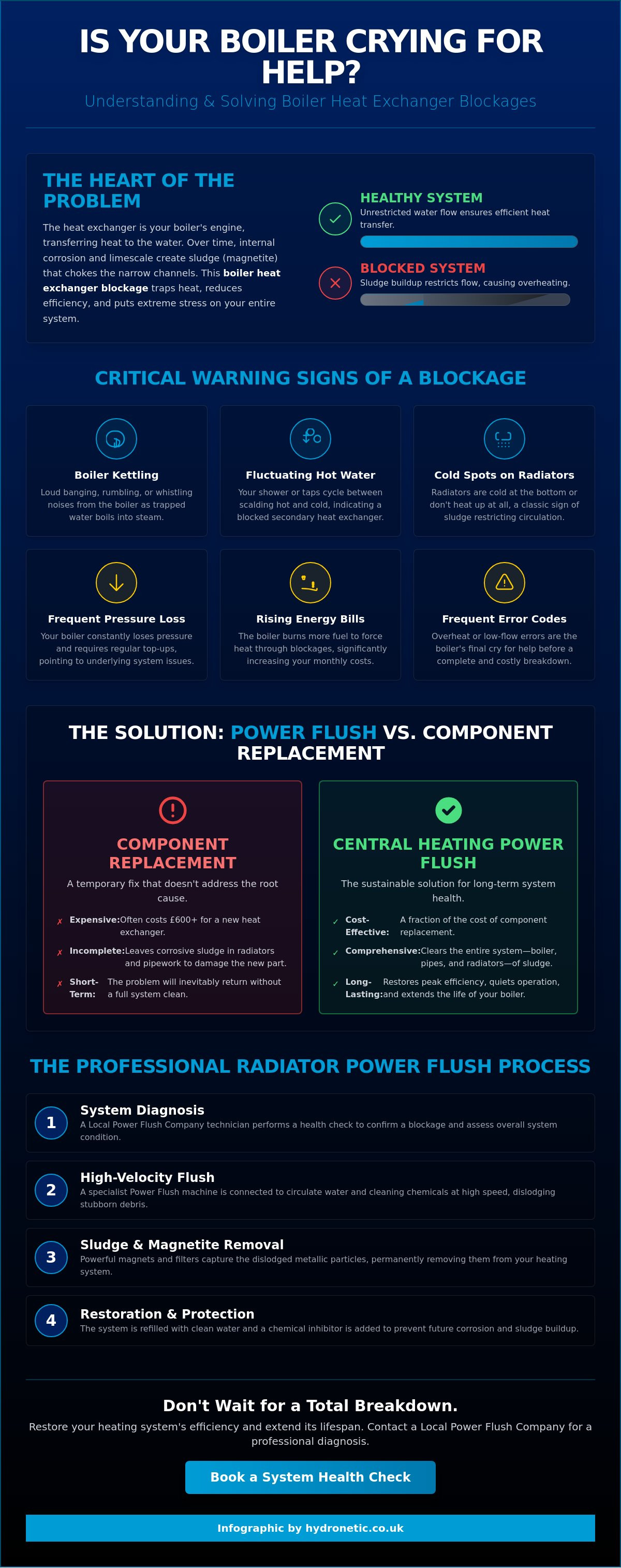
The heat exchanger is the heart of your heating system. It's the component responsible for transferring the intense thermal energy produced by the gas burner into the water that circulates through your home. Without it, your boiler is just a flame in a box. However, the very design that makes it efficient, narrow, serpentine pipework, also makes it a magnet for debris. A boiler heat exchanger blockage happens when solid particles like limescale and magnetite settle within these tight channels, creating a restrictive layer that chokes the system's circulation.
When this happens, the boiler can't move heat away from the burner fast enough. The internal temperature spikes, leading to component stress and eventual failure. Most modern units utilize condensing boiler technology to maximize energy savings, but these intricate designs have even smaller internal gaps than older models. This makes regular maintenance a necessity rather than an option if you want to avoid a total system shutdown.
Primary vs Plate Heat Exchangers
It's helpful to distinguish between the two types of exchangers found in many homes. In combi boilers, you'll typically find both a primary and a secondary (plate) exchanger. The primary heat exchanger is the main component that heats the water for your central heating. A blockage here often causes the boiler to "kettle" or overheat. The plate heat exchanger is a secondary component that provides instantaneous hot water for your taps. A blockage in the plate exchanger is usually the culprit when your shower temperature fluctuates wildly, while a primary blockage affects the entire home's warmth and radiator performance.
The Role of System Sludge and Magnetite
Sludge is the inevitable result of water meeting untreated metal inside your radiators. Over time, internal corrosion produces fine metallic particles that are carried by the water flow directly into the boiler's internal components. Magnetite is the primary cause of boiler circulation issues. Because these particles are heavy and often magnetic, they collect in the heat exchanger's narrow passages. This creates a thick, insulating layer that prevents efficient heat transfer. It forces the boiler to burn more gas to achieve the same temperature, significantly reducing your home's energy efficiency and increasing your bills.
The heat exchanger is the most vulnerable point for this debris collection because the water flow slows down as it passes through the intricate metal pathways. Once a layer of magnetite or limescale starts to form, it acts like a trap for even more debris, eventually leading to a complete boiler heat exchanger blockage that requires professional intervention to clear.
Common Symptoms of a Blocked Heat Exchanger
A boiler heat exchanger blockage rarely occurs without warning. It is a progressive issue where efficiency drops long before the system finally locks out. If you've noticed your energy bills creeping up despite similar usage habits, your boiler is likely working harder to push heat through a restricted pathway. Recognizing these early red flags is the difference between a simple maintenance fix and a costly emergency repair. Ignoring these signs doesn't just lead to higher monthly costs; it puts immense strain on the burner and internal seals.
You might find it difficult to distinguish between a faulty pump and an exchanger issue. While a failed pump usually results in a complete lack of circulation and stone-cold radiators, a blockage often allows the system to run, albeit noisily and inefficiently. Frequent error codes related to "overheating" or "low flow" are clear indicators that sludge has settled in the boiler's most narrow passages. If you aren't sure of the cause, consulting a local power flush company can provide a definitive diagnosis through a system health check.
Boiler Kettling and Unusual Noises
One of the most distinct symptoms is "kettling." This happens when the water flow is so restricted that it pauses inside the heat exchanger, reaches boiling point, and turns to steam. This creates a sound similar to a whistling tea kettle or loud banging. These noises are often caused by the causes of hard scale on boiler tubes, where mineral deposits create hotspots. This localized overheating is dangerous; it can cause the metal structure of the exchanger to warp or even crack under the intense thermal pressure.
Inconsistent Hot Water and "Cycling"
If your shower fluctuates between freezing and scalding, the secondary heat exchanger is likely the culprit. In a combi boiler, a blockage prevents the unit from meeting the sudden demand for hot water. You may also notice "short cycling," where the boiler fires up, realizes it is overheating due to poor circulation, and shuts down after only a few seconds. This constant on-off cycle wears out the ignition components and gas valve rapidly. To restore balance to your system, you should look for the following signs:
Radiators that take significantly longer to heat up than usual.
A boiler that makes vibrating or "droning" sounds during operation.
Hot water that never reaches its set temperature at the tap.
Frequent manual resets required to clear overheating fault codes.
The Solution Debate: Power Flushing vs. Component Replacement
Facing a boiler heat exchanger blockage often leads to a stressful choice for homeowners. Do you replace the component entirely, or attempt to clear the obstruction? A new heat exchanger typically costs between £400 and £600, and that is before you factor in the specialist labour required for the installation. In contrast, a comprehensive system cleaning is a more holistic investment. Replacing the part alone is often a temporary fix because the underlying cause, the sludge and magnetite circulating in your radiators, remains in the pipework. Without addressing this system-wide contamination, your brand-new heat exchanger will likely suffer the same fate within months.
There are specific instances where replacement is the only viable option. If the internal metal has cracked or developed a leak, no amount of cleaning will restore its integrity. However, if the issue is purely a restriction of flow caused by debris, a targeted restoration is the more logical and cost-effective path. It's about treating the disease rather than just the symptom. A boiler heat exchanger blockage is a sign of a neglected system, and clearing it professionally ensures the rest of your heating components are protected from similar failures.
Why a Power Flush is the First Line of Defence
A Central Heating Power Flush utilizes high-velocity water at low pressure to dislodge stubborn deposits without damaging delicate internal seals. This method is far superior to simply pouring a bottle of chemical cleaner into the system and hoping for the best. Professionals use a professional chemical cleaning process to break down hardened magnetite that has baked onto the internal surfaces. By mobilizing this debris and flushing it out of the property, you ensure that the "heart" of your boiler can breathe again. This process restores the flow rate across the entire property, ensuring every radiator heats up evenly and quickly.
Calculating the Long-Term Value
Choosing a Central Heating Power Flush offers benefits that go beyond just clearing a single blockage. A clean system places significantly less strain on other expensive components like the circulation pump and the diverter valve. When water flows freely, these parts don't have to work as hard, which naturally extends their operational lifespan. You avoid the "domino effect" where one failed part leads to another.
Efficiency is where the real savings appear for UK households. Even a thin layer of scale can reduce heat transfer by a measurable margin, forcing your boiler to run longer to reach the desired temperature. By restoring peak efficiency, you can see a noticeable reduction in your annual gas consumption. It's a proactive approach that safeguards your home's comfort while avoiding the recurring cycle of component failure and emergency call-out fees.
How a Professional Clears a Boiler Blockage
Clearing a boiler heat exchanger blockage requires more than just a standard flush of the radiators. It involves a methodical, diagnostic approach that addresses the unique geometry of the boiler's internal pipework. While many homeowners attempt a DIY fix using over-the-counter chemicals, these solutions rarely possess the concentration or the surfactants needed to dissolve baked-on magnetite. A Local Power Flush Company uses industrial-grade equipment that circulates water at high velocity but low pressure, ensuring that debris is dislodged without risking damage to the boiler's delicate internal seals.
During the process, we integrate powerful magnetic filtration. These magnets act as a trap, capturing the metallic sludge as it is mobilized from the heat exchanger. This prevents the debris from simply settling elsewhere in the system. Once the cleaning is complete, we perform rigorous testing to validate the recovery. We check flow rates and temperature differentials across the boiler to ensure that the "heart" of your system is once again operating at peak efficiency. This methodical validation provides peace of mind that the underlying issue has been fully rectified.
Targeted Heat Exchanger Cleaning
In severe cases, a general Radiator Power Flush might not be enough to clear a stubborn restriction. We often use specialized adapters to isolate the boiler and flush it independently. This allows us to use specific chemical concentrations directly where they are needed most. We also utilize thermal imaging cameras to identify cold spots or areas of restriction that are invisible to the naked eye. This data-driven approach ensures that every part of your sealed system is restored to its optimal pressure and flow capacity, preventing the "short cycling" issues common in blocked units.
Post-Flush Protection and Maintenance
A professional restoration doesn't end when the water runs clear. We prioritize long-term prevention by adding high-quality chemical inhibitors to the fresh water. These inhibitors create a protective film on the internal metal surfaces, slowing down the natural process of corrosion. We also strongly recommend the installation of a magnetic system filter. This device provides a permanent line of defence, catching any future debris before it can enter the boiler. Expert technicians often find that this single addition can prevent the majority of future boiler heat exchanger blockage incidents.
Regular maintenance is the key to avoiding a repeat of these issues. An annual system health check allows us to monitor inhibitor levels and clean the magnetic filter, ensuring your home remains warm and your bills stay low. If you're experiencing symptoms of a blockage, you can book a professional boiler blockage clearance today to safeguard your home's comfort and restore your system's efficiency.
Choosing a Local Power Flush Specialist
Selecting the right professional to handle a boiler heat exchanger blockage is a decision that impacts the long-term health of your home's heating. While many general plumbers offer a wide range of services, they often lack the specialized equipment and industrial-strength chemicals required for deep system restoration. A dedicated Local Power Flush Company focuses exclusively on the mechanics of circulation and heat transfer. This specialization is crucial because a blocked heat exchanger is often a symptom of a larger, system-wide contamination issue that a simple part swap won't solve.
When you're evaluating a specialist, look for transparency in their diagnostic process. A true expert will use flow meters and thermal imaging to prove the blockage exists and validate its removal. You should also check for a service guarantee that covers the clarity of the water and the restoration of heat. Booking a diagnostic visit is the first step toward avoiding the high cost of a full boiler replacement, which can easily exceed £2,000 in the current UK market. By focusing on restoration, you can often save hundreds of pounds compared to the price of a new unit.
Expertise Across the South East
Geography plays a significant role in how a boiler heat exchanger blockage develops. In areas like London and Kent, the water is predominantly "hard," meaning it contains high levels of calcium and magnesium. When this mineral-rich water is heated, it forms limescale that bonds with magnetite sludge, creating a stubborn, rock-hard obstruction. Homeowners in Essex and Surrey also face unique challenges with varying system ages and water pressures. Understanding these local water types allows a specialist to select the correct chemical surfactants for the job.
Hydronetic Power Flush understands these regional nuances. Unlike firms that prioritize new boiler installations, our focus remains entirely on system restoration and maintenance. We don't sell new boilers, which means our advice is always geared toward extending the life of your current appliance through a professional Central Heating Power Flush. This singular focus ensures that we use the most effective high-velocity equipment tailored to the specific water conditions of the South East.
Ready to Restore Your Heating?
Restoring your boiler to its original efficiency provides more than just warmth; it offers the peace of mind that comes with a quiet, reliable home. You don't have to live with the constant "kettling" noises or the fear of a sudden winter breakdown. By choosing a Radiator Power Flush now, you safeguard your comfort and ensure your energy bills remain manageable. A clean system is an efficient system, and the restoration of flow ensures every room in your house reaches the desired temperature without the boiler struggling.
Don't wait for a total system failure to occur during the coldest months of the year. Proactive maintenance is always more cost-effective than emergency repairs. Get a professional quote for your Power Flush today and take the first step toward a more efficient, reliable heating system.
Secure Your Home’s Comfort and Efficiency
Taking action at the first sign of a boiler heat exchanger blockage is the most effective way to protect your home’s heating infrastructure. Throughout this guide, we’ve explored how magnetite and scale compromise your system's performance, leading to noisy operation and fluctuating temperatures. Choosing a specialized restoration over a costly and often unnecessary replacement ensures your boiler operates at peak efficiency while significantly reducing your long-term maintenance expenses.
Our team of specialists across London, Essex, Kent, and Surrey is dedicated to providing thorough, diagnostic solutions that extend the life of your heating system. By focusing on high-velocity cleaning and preventive magnetic filtration, we help you avoid the stress of winter breakdowns. Book a Boiler Blockage Clearance with Hydronetic Power Flush today to restore the quiet, consistent warmth your home deserves. We are ready to help you safeguard your domestic comfort with technical excellence and professional care.
Frequently Asked Questions
Can a power flush clear a completely blocked heat exchanger?
A professional Central Heating Power Flush can clear the majority of obstructions, provided the blockage consists of mobile sludge and magnetite. If the debris has solidified into a rock-hard mass of limescale, a more intensive, targeted chemical restoration may be necessary. Our technicians use high-velocity equipment designed to dislodge these deposits and restore full circulation to the heart of your boiler.
Is it cheaper to power flush or replace a boiler heat exchanger?
Restoration is almost always the more cost-effective choice for UK homeowners. While a replacement part can cost between £400 and £600 before labour, it doesn't address the sludge remaining in your radiators. A Power Flush cleans the entire system, preventing a repeat boiler heat exchanger blockage and protecting your investment. This approach saves you money on future repairs and reduces monthly gas consumption.
How do I know if my heat exchanger is blocked or if the pump is broken?
Diagnostic signs usually differ between these two common faults. A broken pump often results in a boiler that won't circulate water at all, leaving all radiators stone cold. A blockage typically causes "kettling" noises or short cycling, where the boiler fires up and shuts down rapidly due to localized overheating. If your pump is vibrating but the boiler keeps locking out, the heat exchanger is the likely culprit.
Will a power flush damage my older boiler?
No, a professional Power Flush is a low-pressure, high-velocity process specifically designed to be safe for older appliances. It doesn't utilize the high pressures that might cause leaks in aged seals or joints. Instead, it relies on a high flow rate and specialized chemicals to mobilize debris. This process actually extends the life of an older boiler by reducing the thermal stress caused by internal restrictions.
How long does it take to clear a boiler blockage professionally?
A comprehensive Boiler Blockage Clearance typically takes between four and six hours to complete. The exact duration depends on the size of your property and the level of contamination within the pipework. A Local Power Flush Company will spend this time circulating chemicals, flushing each radiator individually, and testing the water quality to ensure the system is fully restored before they leave.
What causes a boiler heat exchanger to fail in the first place?
Failure is usually caused by the accumulation of magnetite and limescale. Magnetite forms when untreated water reacts with the internal steel of your radiators, creating a thick black sludge. In hard water areas like London and Kent, calcium deposits also build up. These materials settle in the narrowest part of the system, the heat exchanger, where they bake onto the metal and restrict water flow.
What are the first signs of a failing heat exchanger?
Early warning signs include unusual whistling or banging noises, often referred to as kettling. You might also notice that your hot water takes longer to reach temperature or fluctuates during use. If your boiler requires frequent manual resets due to overheating fault codes, it's a strong indication that a boiler heat exchanger blockage is beginning to form and requires professional attention.
Can I clear a blocked heat exchanger myself?
Attempting a DIY clearance is not recommended. Professional restoration requires specialized high-flow pumps and industrial-strength chemicals that aren't available to the general public. Standard "off-the-shelf" cleaners are rarely powerful enough to dissolve hardened magnetite. Improperly handling the process can also lead to stubborn airlocks or cause further damage to the boiler's internal sensors and delicate seals.


Comments