


Gas Safety Certificate for HMO Properties: The 2026 Landlord Guide
- Darrell Williamson
- 3 days ago
- 12 min read
Could a single missed inspection in a London townhouse cost you £6,000 and your entire HMO licence? Managing high-occupancy rentals is a relentless logistical marathon, especially when you're balancing borough-specific licensing with the constant demands of multiple tenants. Securing a gas safety certificate for HMO properties London isn't just a tick-box exercise; it's a high-stakes infrastructure challenge. You already know that the pressure on your heating system is immense. Coordinating access with various residents often feels like an impossible task, yet the legal burden rests entirely on your shoulders.
I'll help you master these complex 2026 regulations to ensure total compliance and tenant safety. This guide provides a clear roadmap for navigating mandatory Gas Safe Registered inspections and the MOT-style renewal window. We'll explore the latest carbon monoxide alarm laws and how to maintain a heating system that survives heavy, year-round use. By the end, you'll have a strategy for reliable heating and the clear documentation required to satisfy any council inspection with total confidence.
Table of Contents
Understanding Gas Safety Certificate Requirements for HMO Properties
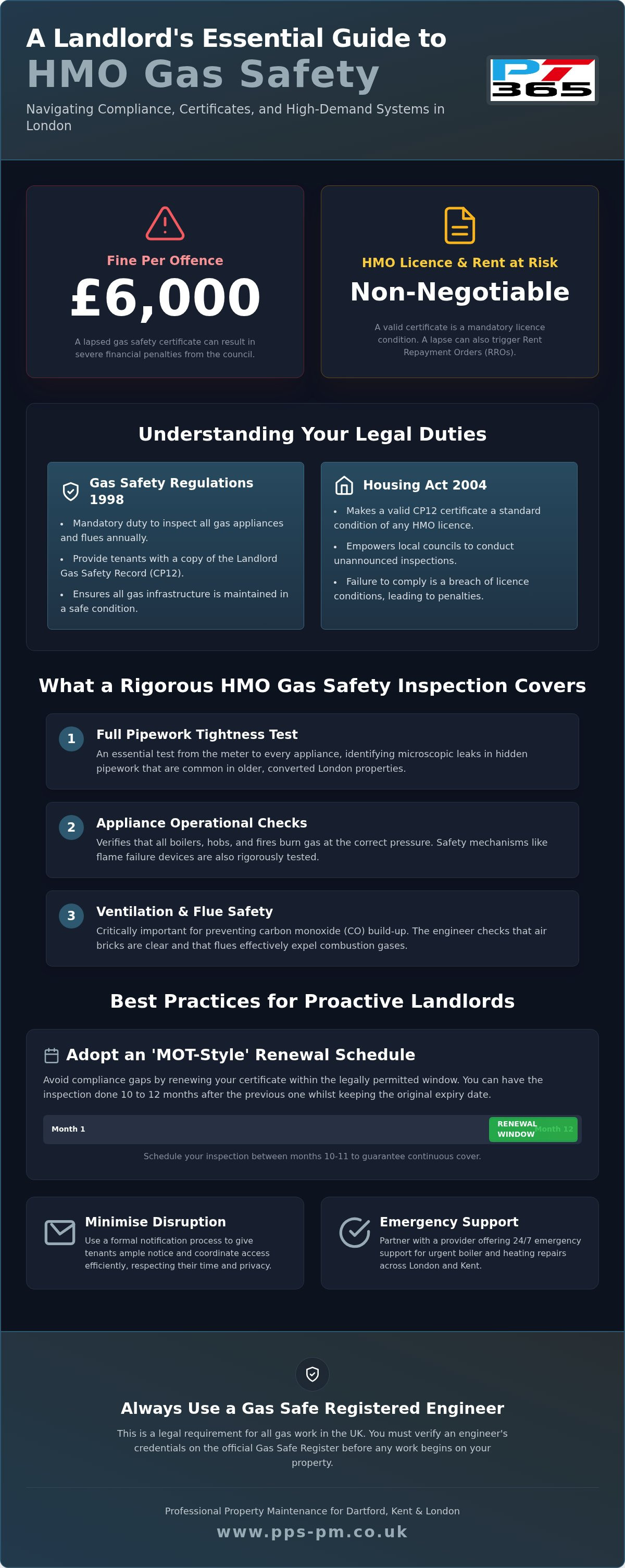
A Landlord's gas safety certificate, or CP12, is the legal proof that your property’s gas infrastructure is safe for use. Under the Gas Safety (Installation and Use) Regulations 1998, you have a mandatory duty of care to inspect all appliances every 12 months. While the document looks identical to a standard rental certificate, the context is entirely different for multi-occupancy homes.
HMOs face intense scrutiny because they house more residents than a single-family dwelling. High occupancy leads to accelerated wear on boilers and pipework, increasing the risk of leaks or carbon monoxide issues. For a landlord, this certificate isn't just a safety record; it's a non-negotiable pillar of your HMO licence that protects your investment and your tenants.
To better understand the broader landscape of property certification in the capital, watch this helpful video:
The Legal Framework: Housing Act 2004 vs Gas Safety Regulations
Your obligations are tied directly to the Housing Act 2004. For any licensable HMO, a valid certificate is a standard condition of your licence. Council inspectors often demand these records during unannounced visits to ensure the building remains habitable. Penalties for a lapse are severe, including fines of up to £6,000 per offence or Rent Repayment Orders (RRO) that force you to refund up to 12 months of rent to your tenants.
If you are managing a larger property development or conversion that requires planning permission, you might also need professional transport documentation; for example, mltraffic.co.uk offers specialised guidance on transport assessments for London developers.
Who Can Issue a Gas Safety Certificate for HMO Properties London?
You must hire a Gas Safe Registered engineer to carry out the check. We are a trusted plumbing & Heating company providing reliable, high-quality services across London and Kent. Our engineers are experts in the high-demand systems found in multi-tenant homes. Always verify an engineer’s credentials on the official register before they start. Hiring a specialist who understands commercial-grade domestic systems ensures that your gas safety certificate for HMO properties London is technically accurate and legally sound.
Mandatory HMO Gas Safety Checks: What the Inspection Covers
A gas safety certificate for HMO properties London involves a far more rigorous assessment than a standard domestic check. Because the infrastructure supports multiple households, the margin for error is zero. The inspection begins with a full tightness test of the entire gas installation. This starts at the meter and follows the pipework through every wall and floor void to each appliance. In older London townhouses converted into HMOs, this test often identifies microscopic leaks in hidden pipework that would otherwise go unnoticed until a crisis occurs.
Every gas appliance, including boilers, hobs, and gas fires, undergoes a functional check to ensure correct operation. We verify that gas is burning at the right pressure and that the flame failure devices are responsive. Adequate ventilation is equally critical. Our engineers check that air bricks and vents are unobstructed and that flues are effectively moving combustion by-products out of the building. In high-occupancy settings, even a slight restriction in flue flow can lead to a lethal build-up of carbon monoxide.
In an HMO, your fire strategy is inextricably linked to gas safety. If a leak is detected, the complexity of evacuating multiple households simultaneously is far greater than in a single-family dwelling. This is a core part of your landlord's safety responsibilities. Ensuring your gas systems are sound directly reduces the likelihood of a high-stakes evacuation event that could lead to licensing reviews or legal action.
Boiler and Water Cylinder Scrutiny
High-occupancy homes often rely on unvented hot water cylinders to meet peak morning demand. These systems require specific safety checks by G3-qualified engineers to ensure the pressure relief valves and expansion vessels are functional. We check the burner pressure and gas rate against the manufacturer's data plate to ensure the system isn't overworking. To maintain this efficiency, we often recommend a power flush to remove internal debris that causes boiler strain. Our local gas engineers specialise in keeping these heavy-duty systems running without interruption.
Carbon Monoxide and Smoke Alarm Compliance
By 2026, carbon monoxide alarm placement is strictly defined. You must have a functional CO alarm in every room containing a fixed gas appliance, excluding cookers. For HMOs, these alarms should ideally be interlinked with the smoke detection system. This ensures that if a fault occurs in a locked bedsit, every tenant in the building is alerted immediately. We test these systems to ensure they are audible in all habitable rooms, including bedrooms and shared living spaces, meeting both gas safety and HMO licensing standards.
Choosing the Right Heating System for High-Occupancy HMOs
Morning routines in a five-bedroom HMO are a brutal stress test for any boiler. When three or four tenants attempt to shower simultaneously at 7:30 AM, a standard domestic setup will fail. While a gas safety certificate for HMO properties London proves your system is legal, it doesn't guarantee it's fit for purpose. Standard combi boilers often struggle with "peak demand," leading to fluctuating temperatures and tepid water. This isn't just an inconvenience; consistent hot water is a basic habitability requirement that landlords must meet to avoid formal tenant grievances.
For larger properties in Dartford or Bexleyheath, we recommend moving away from instantaneous water heating. High-capacity unvented cylinders paired with a powerful system boiler are the gold standard for high-occupancy rentals. This configuration stores a large volume of hot water under mains pressure, allowing multiple outlets to run at once without a drop in performance. Maintaining these systems is part of the broader Gas safety for landlords framework that protects your residents and your investment from the risks of overstressed components.
We also advise landlords to consider the long-term viability of their hardware. With shifting environmental regulations, installing hydrogen-ready boilers is a smart way to future-proof your portfolio. These units are designed to run on a blend of natural gas and hydrogen, ensuring you won't face a forced, expensive replacement if the national grid transitions in the coming years. It's a proactive step that aligns your property with 2026 sustainability expectations whilst maintaining total reliability.
System Boilers vs High-Output Combi Boilers
A high-output combi boiler might seem like a space-saving win, but it lacks the redundancy of a stored water system. In an HMO, a system boiler provides superior flow rates because it doesn't rely on heating water on demand. While it requires space for a cylinder, the reliability benefits are significant. You'll face fewer emergency call-outs for "no hot water" when the system isn't constantly hitting its maximum threshold. For landlords seeking a gas safety certificate for HMO properties London, a robust system boiler often results in a cleaner bill of health during annual inspections.
Smart Controls for HMO Portfolio Management
Energy wastage is a major profit-killer in HMOs where bills are included in the rent. Professional smart thermostat installation allows you to regain control over the property's energy consumption. You can set temperature caps and schedules remotely, preventing tenants from leaving the heating on 25°C with the windows open. Many smart systems also offer early fault detection. Receiving an alert about a boiler pressure drop before the tenants even notice ensures you can organise a repair before it becomes a total system failure.
Best Practices for Landlords: Managing Renewals and Compliance
Organising a gas safety certificate for HMO properties London requires military-grade precision. You shouldn't wait for the final week of your current certificate to book an inspection. Under the current "MOT-style" regulations, you can carry out the annual check up to two months before the expiry date whilst still retaining the original renewal deadline. We recommend setting your renewal date 10 to 11 months after the last check. This buffer ensures that if a part is required or a tenant denies access, you have ample time to remain compliant without the certificate lapsing.
Coordinating access with multiple tenants is the most common cause of compliance failure. You must formalise your notification process. Send written notice at least 24 hours in advance, but aim for seven days to be respectful. If a tenant refuses entry, you must document every "reasonable step" taken. Keep a log of all emails, text messages, and letters sent. This paper trail is your only defence if a local authority questions why an inspection is overdue. Councils in London and Kent are increasingly strict; they won't accept "the tenant was out" as a valid excuse without evidence of repeated attempts.
Digital record-keeping is now the industry standard for 2026. Paper copies are easily lost or damaged in shared houses. Our engineers provide instant digital delivery of the CP12 certificate as soon as the inspection is passed. This allows you to immediately email copies to all tenants, satisfying your legal requirement to provide documentation within 28 days. It also ensures you have a permanent, searchable cloud backup ready for any unannounced council audit.
The 2026 HMO Compliance Calendar
Proactive maintenance is cheaper than emergency repairs. You should conduct quarterly visual inspections of all gas appliances to check for obvious signs of damage or blocked vents. Your annual boiler service should be synchronised with your gas safety check to minimise disruption. Use this visit to also test legionella and fire safety systems, ensuring your entire HMO compliance package is handled in a single, efficient window.
In addition to technical safety, maintaining high hygiene standards in shared spaces is a vital part of HMO management. To ensure your property remains in top condition for every inspection, learn more about DLT Cleaning Services Ltd and their professional cleaning services.
What to Do if an Appliance Fails the Safety Check
If an engineer identifies a fault, they will classify it as "At Risk" (AR) or "Immediately Dangerous" (ID). An ID classification means the appliance is a life-safety risk and must be disconnected immediately. As a landlord, you're legally obligated to provide temporary heating if the primary boiler is decommissioned. You must act fast to organise repairs. If a shared kitchen hob fails, you must ensure tenants have alternative cooking facilities whilst you arrange a replacement. Our local gas engineers carry common spare parts to resolve most issues on the spot, keeping your property safe and functional.
Professional Gas Safety Solutions for HMO Landlords
Managing a high-occupancy property requires more than just a certificate; it requires a partnership with a provider that understands the unique pressures of the capital's rental market. We are a trusted plumbing & Heating company providing reliable, high-quality services across London and Kent. Our team acts as a steady hand for landlords who cannot afford the downtime caused by failed inspections or boiler breakdowns. By securing your gas safety certificate for HMO properties London through an established firm, you ensure that every technical detail is handled with the urgency your business demands.
Our approach is built on immediate action and total competence. Unlike many providers who simply flag faults and leave you to source a separate contractor, we solve the issue on the spot. Our engineers carry a comprehensive stock of common spare parts, allowing us to complete 80% of necessary repairs immediately. If a system failure occurs in the middle of the night, our 24/7 emergency response ensures your tenants aren't left without heat, protecting you from potential habitability claims and licensing breaches.
We prioritise financial clarity through honest billing and transparent documentation. There are no hidden fees or unexpected surcharges; just a direct, professional service that keeps your portfolio operational. This no-nonsense methodology acts as a psychological handshake, building the trust required for long-term property management. Every assessment follows a logical, step-by-step progression that satisfies both your internal records and the requirements of local council auditors in boroughs across the region.
Why we are the Preferred Choice for HMOs
Founded in 1996, our firm has nearly three decades of experience navigating the London and Kent property sectors. We specialise in complex infrastructure, from unvented hot water cylinders to large-scale radiator fitting projects. This regional expertise means we understand the specific plumbing challenges found in Victorian conversions and modern developments alike. Our commitment is to keep your HMO properties safe and fully operational every day of the year, providing the local accountability you need.
Book Your HMO Gas Safety Inspection
Don't let a missed renewal jeopardise your licence. Organising your annual checks early allows you to take full advantage of the flexible renewal window discussed earlier in this guide. For landlords with multi-property portfolios, our Boiler Engineers provide a streamlined, professional solution that covers all your compliance needs. Contact us today to secure a reliable, high-quality service that keeps your gas safety certificate for HMO properties London current and your tenants safe.
Secure Your HMO Compliance for 2026
Maintaining an HMO in London or Kent is a high-stakes responsibility that demands total technical competence. You've seen how robust infrastructure, such as system boilers and unvented cylinders, prevents the common "peak demand" failures that frustrate tenants. Proactive management remains your best defence. By scheduling your inspections 10 to 11 months into your cycle and utilising digital record-keeping, you eliminate the risk of a lapsed licence or a £6,000 fine.
Securing a gas safety certificate for HMO properties London is the foundation of your legal operation. It isn't just about the paperwork; it's about the safety of every resident under your roof. Our Gas Safe Registered Engineers have provided this steady hand to the community since 1996. We offer 24/7 emergency support to ensure your property never stays cold. We combine technical expertise with a commitment to honest billing and local accountability across the region.
Protect your investment and your tenants with a service that prioritises speed and reliability. You have the knowledge to master 2026 compliance. Take the final step to secure your property's future with total confidence.
Frequently Asked Questions
Do I need a separate gas safety certificate for every room in an HMO?
No, you only need one gas safety certificate for HMO properties London per building. The Gas Safe Registered engineer will inspect every gas appliance and flue throughout the entire property and list them on a single CP12 record. This includes appliances in communal areas, such as shared kitchens, as well as any gas heaters or boilers located within individual tenant rooms.
How much does a gas safety certificate for HMO properties London cost in 2026?
The total cost depends on the number of gas appliances that require testing within your property. Because HMOs often have multiple hobs or boilers to support high occupancy, the price is calculated based on the scale of the installation. We prioritise financial clarity and honest billing to ensure you know the exact technical requirements before work begins.
What happens if one tenant refuses access for the gas safety check?
You must document at least three "reasonable steps" taken to gain access, including written notices and follow-up letters. A tenant's refusal doesn't absolve you of your legal duty, but a clear paper trail protects you from council fines or prosecution. If access is repeatedly denied, you may need to seek legal advice to satisfy your HMO licensing conditions.
Is a commercial gas safety certificate required for large HMOs?
Commercial certification is usually only necessary if your boiler's net heat input exceeds 70kW. Most domestic HMOs stay below this threshold, but properties with commercial-grade catering equipment or large-scale laundry facilities may require a commercial engineer. Our team can assess your system's output to ensure you receive the correct level of accreditation.
Can I carry out the gas safety check early without losing the expiry date?
Yes, the "MOT-style" renewal window allows you to complete the inspection up to two months before the current certificate expires. This ensures you retain your original renewal date whilst providing a vital buffer to handle any necessary repairs or tenant access issues. It's a proactive way to maintain permanent compliance for your London or Kent portfolio.
Does the gas safety certificate cover electrical appliances in the HMO?
No, the gas safety check is strictly limited to gas-fired appliances, pipework, and flues. To ensure your property is fully compliant, you will also need an Electrical Installation Condition Report (EICR) for the wiring and potentially PAT testing for portable appliances. These are separate legal requirements under the 2026 HMO licensing standards.
How long must I keep the CP12 records for my HMO property?
You are legally required to keep a copy of every gas safety record for at least two years. However, we recommend maintaining a digital archive for as long as you own the property. This provides a clear history of maintenance and safety for local authority inspectors and simplifies the process when you apply for HMO licence renewals.
What is the difference between a boiler service and a gas safety check?
A gas safety check is a mandatory legal inspection focused on identifying immediate hazards and ensuring safety devices work. A boiler service is a comprehensive maintenance procedure that involves cleaning internal components and optimising performance. Whilst the safety check keeps you legal, the service prevents the frequent breakdowns common in high-use HMO heating systems.


Comments