

Heating System Circulation Problems: A Specialist Guide to Restoring Efficiency in 2026
- Darrell Williamson
- 3 hours ago
- 13 min read
A cold radiator isn't just a minor annoyance; it's a symptom of a heating system that's slowly suffocating under the weight of internal corrosion. Many homeowners find themselves turning up the thermostat only to be met with uneven heat and rising energy bills, leading to genuine anxiety over a potential boiler failure. These heating system circulation problems are rarely about your settings and almost always about physical blockages. It's frustrating to pay more for less warmth, especially when you're worried about the long-term reliability of your home's most essential utility.
We're here to help you regain control over your domestic comfort. This guide explains the mechanics of internal sludge buildup and how a professional Central Heating Power Flush restores your system's efficiency. As a Local Power Flush Company, we've seen how a targeted Radiator Power Flush can transform a noisy, sluggish system into one that's quiet and cost-effective. We'll walk you through the diagnostic signs of poor circulation and show you how a comprehensive Power Flush ensures consistent heat in every room while protecting your boiler for years to come.
Key Takeaways
Identify the root cause of cold spots and learn how heating system circulation problems are typically physical blockages rather than simple air pockets.
Discover why standard maintenance like bleeding or balancing often fails to solve deep-seated sludge issues within your pipework.
Follow our specialist diagnostic steps to evaluate your system's health by comparing temperature variations between upstairs and downstairs radiators.
Learn how a professional Central Heating Power Flush safely clears internal debris to restore consistent warmth and lower your monthly energy bills.
Understand how a targeted Radiator Power Flush performed by a Local Power Flush Company can eliminate boiler noise and prevent premature component failure.
Table of Contents
What Are Heating System Circulation Problems?
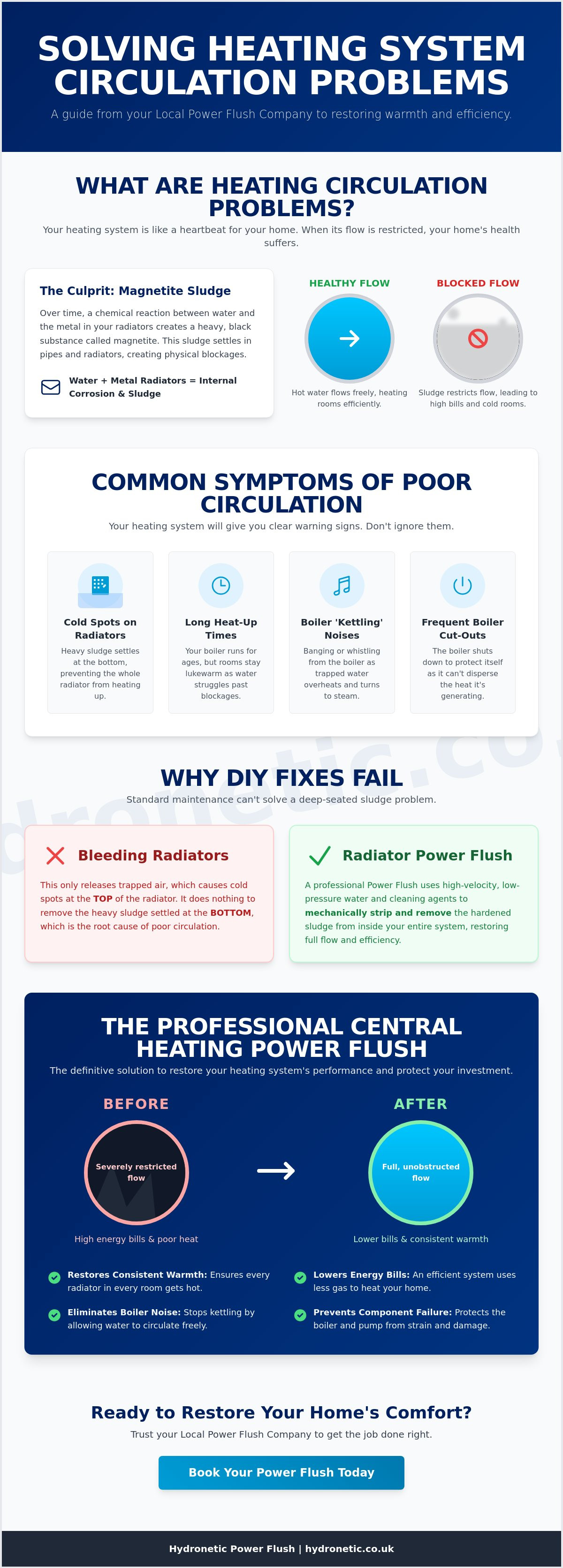
Understanding What Are Heating System Circulation Problems? begins with viewing your home's heating as a closed-loop delivery service. The boiler heats the water, and the circulator pump ensures it reaches every radiator before returning to be reheated. When this loop is interrupted, the system's efficiency collapses. We often describe circulation as the "heartbeat" of a home. If the flow is restricted, the boiler must cycle more frequently, leading to increased wear and higher gas bills without the reward of a warm house.
Internal resistance is the primary culprit behind these issues. Over time, the water inside your pipes reacts with the metal of your radiators, creating a substance known as magnetite. This heavy, black sludge settles in low-flow areas, narrowing the path for hot water. It's a physical blockage that no amount of thermostat adjusting can fix. If left unaddressed, this debris can eventually lead to a total system breakdown or a damaged pump.
The Difference Between Flow and Heat
You might hear your pump running and assume everything is fine, but flow doesn't always guarantee heat. If the water is moving too slowly due to debris, it loses its thermal energy before it reaches the end of the circuit. Pipework diameter plays a massive role here. Modern systems often use thinner pipes that clog easily. In many traditional London homes, "dead legs", which are sections of old pipework left behind during past repairs, act as traps for sludge, further compounding heating system circulation problems.
Open Vent vs. Sealed Systems
The architecture of your system dictates its vulnerability. Open vent systems rely on a feed and expansion tank, which allows air to come into constant contact with the water. This oxygen ingress accelerates the rusting process. While combi boiler setups and sealed systems are under pressure and closed to the atmosphere, they still suffer from magnetite buildup caused by the chemical reaction between water and different metals.
Regardless of the system type, the solution involves mechanical removal. A Central Heating Power Flush is the most effective way to clear these pathways. By hiring a Local Power Flush Company, you ensure that high-velocity water and specialized chemicals strip away the buildup that a standard drain-down would leave behind. A targeted Radiator Power Flush restores the full internal diameter of your pipes, allowing the "heartbeat" of your home to return to its optimal rhythm. Without a thorough Power Flush, these blockages will continue to restrict your comfort and waste your money.
Common Symptoms of Poor Circulation: Identifying the Culprits
Identifying the symptoms of heating system circulation problems early can save you from a complete boiler breakdown. When your system's flow is restricted, it communicates its distress through specific, audible, and tactile signs. Recognizing these "red flags" allows you to intervene before the damage becomes irreversible and expensive. It's a common mistake to assume that a cold radiator simply needs bleeding; if the air isn't the issue, the problem is likely much deeper within the pipework.
Cold spots at the bottom of radiators: This is the classic indicator of internal contamination. While air trapped at the top causes cold patches there, heavy sludge settles at the base, preventing hot water from circulating through the entire panel.
Excessive heat-up times: If your boiler runs for an hour but your radiators are only lukewarm, the water is likely struggling to bypass internal restrictions.
Boiler kettling: A banging, whistling, or vibrating sound from the boiler unit suggests that water is restricted within the heat exchanger, causing it to overheat and turn to steam.
Frequent cutting out: Most modern boilers have safety sensors that trip when they detect the internal temperature is rising too fast because the heat isn't being carried away to the rooms.
The Role of Magnetite Sludge
Magnetite is a black, metallic oxide that forms when water reacts with the steel components of your radiators. Because this substance is significantly heavier than water, it doesn't stay in suspension. Instead, it settles in low-flow areas, particularly at the bottom of radiators and in horizontal pipe runs. This creates an "insulation effect" where the sludge layer acts as a barrier, stopping the heat from the water from reaching the radiator's metal surface. A targeted Radiator Power Flush is the only reliable method to dislodge and remove this heavy, stubborn material from the system.
Mechanical Failures vs. Blockages
It's vital to distinguish between a mechanical component that has reached the end of its life and one that is being strangled by debris. A circulator pump may feel hot and vibrate, but if it's trying to push "thick" water full of magnetite, it's under immense strain. Replacing the pump without performing a Central Heating Power Flush often leads to the new part failing within months. Similarly, internal boiler components can become choked. Boiler Blockage Clearance focuses on removing the physical debris trapped within the appliance's internal components rather than simply replacing a mechanical part that has failed due to that debris.
If you've noticed these symptoms in your home, your system is likely suffering from heating system circulation problems that require professional attention. Ignoring these signs leads to higher fuel consumption and the risk of a total system failure during the coldest months. Consulting a Local Power Flush Company can provide the diagnostic clarity needed to restore your home's warmth. A comprehensive Power Flush ensures that every component, from the boiler to the furthest radiator, operates at peak efficiency.
Why Bleeding and Balancing Often Fail to Solve the Issue
Many homeowners assume that a cold radiator is simply full of air. While bleeding can release trapped gases, it's often a temporary fix for much larger heating system circulation problems. If you find yourself bleeding the same radiator every week, the issue isn't air ingress; it's likely a chemical reaction occurring deep within the system. Releasing the pressure might provide a few hours of warmth, but it does nothing to address the physical blockages that are restricting the water's path.
System balancing is another common recommendation that often falls short in a contaminated system. Balancing involves adjusting the lockshield valves to ensure water is distributed evenly across all radiators. However, in a dirty system, this is a futile exercise. Sludge creates random, internal restrictions that shift as the water moves. Closing one valve to force water elsewhere often just pushes debris into a different narrow pipe, moving the cold spot from one room to another rather than eliminating it. You can't balance a system that is physically choked.
It's also tempting to increase the filling loop pressure to "blast" through a blockage. This is a dangerous tactic. Over-pressurizing puts unnecessary stress on the boiler's expansion vessel and can lead to leaks at the weakest joints or seals. Similarly, Thermostatic Radiator Valves (TRVs) are particularly sensitive. The tiny internal pins and seats can easily become jammed by the metallic particles we discussed earlier, leaving the valve stuck in the 'off' position even when the room is freezing.
The Limits of DIY Troubleshooting
If you bleed a radiator and the water is jet black, your system is sending a clear warning. This discolored water indicates heavy magnetite levels that have already begun to corrode your pipework. While DIY "sludge remover" chemicals are available at hardware stores, they are often too weak to break down years of hardened buildup. Plus, fiddling with old, corroded valves can frequently lead to stubborn leaks that require professional intervention. Diagnostic accuracy is key; guessing with chemicals can sometimes make the problem worse by loosening large chunks of debris that then block the boiler's heat exchanger.
When a Radiator Power Flush is the Only Answer
A professional Radiator Power Flush is fundamentally different from a standard mains flush. A mains flush simply uses the house's water pressure to push water through the pipes, which isn't strong enough to lift heavy metallic sludge from the bottom of a radiator panel.
A professional Central Heating Power Flush uses a high-velocity, low-pressure pump combined with specialized magnetic filters. This mechanical force is essential to scrub the narrow internal channels of your radiators. By hiring a Local Power Flush Company, you ensure that the debris is physically captured and removed from the property. A comprehensive Power Flush is the only way to truly restore the system's design capacity and ensure every radiator reaches its full temperature.
Diagnosing Circulation Issues: When to Call a Local Power Flush Company
Identifying the exact nature of your system's failure requires a methodical approach. While you've recognized the symptoms, a structured diagnosis determines whether you need a simple part replacement or a full system restoration. Performing a basic home audit helps confirm if you're facing deep-seated heating system circulation problems that require professional intervention. We recommend following these diagnostic steps before the cold weather intensifies.
Step 1: Surface Temperature Check. Carefully run your hand across the radiator surface. If the top is hot but the bottom remains stone cold, you've confirmed a physical blockage at the base of the panel.
Step 2: Floor Comparison. Compare the heat levels between your upstairs and downstairs radiators. Pumps often struggle to push heavy, contaminated water to the lower levels of the house first, leaving downstairs rooms significantly colder.
Step 3: Audible Inspection. Listen for metallic tapping or a sound like a boiling kettle coming from the boiler casing. This indicates that the water isn't moving fast enough to carry heat away from the internal burner.
Step 4: Timing. Monitor how long it takes for the system to reach its target temperature. If the boiler shuts off quickly but the house remains chilly, the circulation loop is likely choked.
Step 5: Professional Consultation. A specialist can perform a turbidity test to measure the concentration of suspended solids in your system water, providing definitive proof of contamination.
The Specialist Diagnostic Approach
A professional diagnosis goes beyond what's visible to the naked eye. We use thermal imaging cameras to reveal hidden blockages within your pipework and radiators, showing exactly where the flow has stopped. Water analysis is also critical. In London and the South East, high mineral content in the water accelerates the formation of scale and magnetite. Choosing a Local Power Flush Company familiar with these regional water issues ensures that the chemical treatment used during your Power Flush is specifically formulated for your local conditions.
Preventing Total System Failure
Ignoring these diagnostic signs leads to more than just a cold house. There's a direct link between poor circulation and premature pump burnout. When the pump has to work twice as hard to move "thick" water, its internal bearings fail rapidly. Even worse, blockages within the boiler can lead to cracked heat exchangers, which are often the most expensive components to replace. If your system has already reached a critical point, you may need a specialized Heating System Blockage Repair to clear the most stubborn obstructions before a full Central Heating Power Flush can be performed.
Early diagnosis is the most effective way to safeguard your home and your wallet. If your home diagnostic confirms these heating system circulation problems, it's time to speak with a specialist at Hydronetic Power Flush to restore your system's health and prevent a winter breakdown. A targeted Radiator Power Flush now can save you thousands in future repair costs.
Restoring Efficiency with a Professional Central Heating Power Flush
Once you've identified heating system circulation problems, the path to restoration lies in mechanical removal. A professional Central Heating Power Flush is the most effective way to clear the internal blockages that are strangling your comfort. This process doesn't rely on brute pressure, which could damage older joints; instead, it utilizes high-velocity water flow to scrub the internal surfaces of your pipes and radiators. By keeping the pressure low but the velocity high, we can safely dislodge heavy magnetite without risking the integrity of your system.
We use specialized chemical cleaners that are specifically formulated to break down stubborn rust and scale. These agents work in tandem with the flushing pump to ensure that even the most calcified debris is mobilized for removal. It's vital to clean the boiler's internal components, such as the secondary heat exchanger, to prevent the overheating issues that cause modern boilers to lock out. The result is a system that isn't just warmer, but significantly quieter and more reliable.
The Hydronetic Power Flush Process
As a Local Power Flush Company, our approach is disciplined and thorough. We begin by connecting our specialized pumping equipment to your system, usually at the circulator pump or a radiator, to create a closed loop. We then isolate each radiator individually. This ensures that the full force of the Central Heating Power Flush is concentrated on a single point of resistance, lifting the sludge that a standard drain-down would leave behind. We take immense pride in our respect for your environment, using heavy-duty floor protection and waterproof workstations to safeguard your carpets and furniture throughout the procedure.
The final stage of our service is the most critical for long-term prevention. After the water runs clear, we introduce high-quality corrosion inhibitors into the system. These chemicals neutralize any remaining acidity and provide a protective coating on the internal metal surfaces. This step is your primary defense against future heating system circulation problems, ensuring your energy bills stay low and your boiler stays quiet for years to come. It's a methodical transition from a failing system to one that operates at its original design capacity.
Next Steps for Homeowners in London and the South East
If you're living in London, Surrey, Kent, or Essex, you're likely dealing with some of the hardest water in the UK, which accelerates system degradation. Booking a Power Flush with Hydronetic Power Flush is a simple, transparent process. We provide a clear quote based on the number of radiators in your home, and the entire service is usually completed in a single day. You don't need to worry about being without heat for days on end. Restoring central heating heat through this specialist recovery process is an investment that adds immediate value and peace of mind to your property.
Secure Your Home's Warmth and Efficiency
Resolving persistent heating system circulation problems requires moving beyond temporary fixes and addressing the physical debris within your pipework. We've explored how magnetite sludge settles in radiators and why standard balancing often fails to restore a comfortable environment. By choosing a comprehensive Power Flush with Hydronetic Power Flush, you aren't just cleaning your pipes; you're extending the life of your boiler and ensuring your energy bills remain manageable. A quiet, reliable system is the foundation of a comfortable home.
Hydronetic Power Flush has been a trusted Local Power Flush Company since 2010, providing specialist maintenance across London, Essex, Kent, and Surrey. Our technicians are experts in the removal of magnetite sludge and the resolution of complex boiler blockages. We take pride in restoring optimal heat distribution through a precise Radiator Power Flush tailored to your home's specific needs. Book your Central Heating Power Flush with Hydronetic Power Flush today and take the first step toward a more efficient future. You deserve a heating system that works perfectly when you need it most.
Frequently Asked Questions
Why is the top of my radiator hot but the bottom is cold?
This temperature difference indicates a buildup of magnetite sludge at the base of the radiator panel. This heavy, metallic debris settles in areas where the water flow is slowest, creating a physical barrier that prevents hot water from circulating through the bottom half of the unit. A targeted Radiator Power Flush is the most effective way to dislodge this sediment and restore uniform heat distribution across the entire surface.
Can a blocked heating system cause my boiler to keep turning off?
Yes, internal blockages often trigger safety sensors that force the boiler to shut down to prevent damage. When water cannot move quickly enough to carry heat away from the burner, the internal temperature spikes, leading to a condition known as kettling. This cycle of cutting out is a definitive sign of advanced heating system circulation problems that require a professional mechanical cleaning to resolve.
How much does a professional power flush cost in London?
The cost of a professional Power Flush depends on several factors, including the number of radiators in your home and the specific type of boiler system you have. Because every property is different, a Local Power Flush Company will typically provide a quote based on the size of the system and the severity of the internal contamination. Contacting a specialist for a bespoke assessment ensures you receive an accurate price for your specific requirements.
Is it worth power flushing an old heating system?
Restoring an older system is almost always more cost-effective than a full replacement of pipework and radiators. A Central Heating Power Flush removes years of accumulated corrosion, significantly improving the efficiency and lifespan of your existing components. It's also a vital step to take before installing a new boiler, as it protects the sensitive new heat exchanger from being damaged by old, circulating sludge.
How long does it take to fix heating circulation problems?
Most professional cleaning procedures are completed within a single working day. A standard domestic property with up to ten radiators usually takes between six and eight hours to flush and treat thoroughly. If your system has severe blockages or a much higher radiator count, the process may take slightly longer to ensure every circuit is restored to its optimal design capacity.
Will a power flush fix noisy pipes and banging sounds?
Yes, a Power Flush is highly effective at eliminating the whistling, vibrating, and banging sounds often caused by restricted flow. These noises usually occur when water trapped by sludge turns to steam inside the boiler's heat exchanger. By removing these physical obstructions, the water can flow smoothly and quietly again, which reduces the mechanical strain on your boiler's internal parts and the surrounding pipework.
How often should I have a Central Heating Power Flush performed?
We generally recommend having a Central Heating Power Flush performed every five to ten years to maintain peak efficiency. However, the frequency can depend on the age of your system and the local water quality in your area. If you notice signs of heating system circulation problems, such as cold spots or increased boiler noise, you should consult a specialist regardless of when the system was last cleaned.
Can poor circulation lead to a higher gas bill?
Poor circulation directly increases your fuel consumption because the boiler must run for longer periods to reach the temperature set on your thermostat. When radiators are partially blocked, the system struggles to transfer heat into your rooms efficiently. This means your boiler works significantly harder and consumes more gas to provide the same level of warmth, resulting in higher monthly energy costs.


Comments