

Landlord Gas Safety Certificate Cost: 2026 UK Price Guide
- Darrell Williamson
- 9 hours ago
- 12 min read
Failing to secure your annual CP12 isn't just a minor oversight; it's a legal gamble that can lead to a £6,000 fine or even a prison sentence. You likely understand that keeping your property compliant is non-negotiable, yet the total landlord gas safety certificate cost often feels unpredictable. It's stressful to worry about hidden fees for additional hobs or the headache of coordinating with tenants for access. You deserve financial clarity and the peace of mind that comes from knowing your gas appliances are safe.
This 2026 guide explains the factors influencing current market rates and how you can secure a transparent, fixed-price inspection. We'll explore why regional location affects your bill and how combining a safety check with a boiler service can simplify your maintenance schedule. Our central heating engineers provide the technical expertise needed to keep you compliant for another 12 months. We focus on delivering safety assurance for tenants and legal immunity for you, ensuring every gas meter, boiler, and flue meets the highest standards without any hidden surprises on your final invoice.
Key Takeaways
Secure your legal compliance by understanding why the CP12 is a mandatory annual requirement for every UK rental property.
Get a clear breakdown of the 2026 landlord gas safety certificate cost to avoid hidden fees and ensure honest billing for your portfolio.
Learn what Gas Safe registered engineers look for during technical checks, including system tightness and burner pressure testing.
Identify how property size and appliance location, such as boilers in lofts or basements, influence your total service price.
Discover how to coordinate efficient inspections with your tenants to maintain safety standards and avoid costly repair delays.
Table of Contents
What is a Landlord Gas Safety Certificate (CP12)?
A Landlord Gas Safety Certificate (CP12) is a mandatory legal document required for all UK rental properties that use gas. It's the only official way to prove that your property's gas system and appliances are safe for occupancy. While the industry frequently refers to it as a CP12, the name actually stands for "CORGI Proforma 12". This terminology dates back to when CORGI was the official regulatory body before the Gas Safe Register assumed control. Every landlord must renew this certificate every 12 months to remain compliant with the Gas Safety (Installation and Use) Regulations 1998.
Managing the landlord gas safety certificate cost is a standard part of your annual property overhead. Once our boiler engineers complete the inspection, you're legally required to provide a copy of the certificate to your existing tenants within 28 days. If you're starting a new tenancy, the law is even stricter. You must provide a valid copy to new tenants before they move in. This record-keeping isn't optional; it's a core requirement that protects both the resident and the property owner from legal disputes.
To better understand this concept, watch this helpful video:
Why UK Landlords Cannot Skip This Check
Managing your landlord gas safety certificate cost effectively starts with understanding the high stakes of neglect. Skipping this annual check carries severe risks. Non-compliance can result in unlimited fines or even imprisonment for up to six months. Beyond these legal penalties, failing to hold a valid certificate often invalidates your landlord insurance policy. This leaves you financially exposed if a gas-related incident occurs. Perhaps most critically for property management, you cannot serve a Section 21 notice to regain possession of your property if you haven't provided a valid CP12 to your tenants. Compliance is your best defense against legal and financial ruin.
Which Properties and Appliances are Covered?
The law applies to all residential tenancies. Whether you manage a single flat, a large HMO, or a short-term holiday let, the rules remain the same. Our central heating engineers inspect every gas appliance you provide as a landlord. This typically includes:
Gas boilers and unvented hot water cylinders.
Gas hobs, ovens, and cookers.
Gas fires and their associated flues.
Gas pipework and meters.
It's a common misconception that you're responsible for everything in the building. Landlords aren't legally responsible for gas appliances owned by the tenant, such as a portable gas heater they brought into the property themselves. However, you're still responsible for the safety of the permanent pipework that supplies gas to those tenant-owned devices. Maintaining a clear boundary between your appliances and theirs helps streamline the inspection process and keeps your billing transparent.
What’s Included in a Gas Safety Inspection?
A professional gas safety inspection is much more than a quick visual walkthrough. While the landlord gas safety certificate cost often varies between providers, the depth of the technical check defines the level of protection you receive. Our central heating engineers perform a rigorous assessment of your entire gas infrastructure to ensure total compliance. We start with a comprehensive tightness test. This involves using a manometer to monitor pressure drops within the system; if the pressure falls, it indicates a leak that must be traced and repaired immediately.
Next, we verify the burner pressure and gas rate for every appliance. This ensures your boiler and hobs are burning fuel efficiently and safely. We also conduct a detailed visual inspection of all exposed gas pipework. We check for signs of corrosion, inadequate support, or physical damage that could lead to future failures. Proper ventilation is equally critical. We verify that every appliance has a sufficient air supply for combustion, meeting the legal landlord's safety responsibilities outlined by the government. When calculating your annual landlord gas safety certificate cost, remember that these technical tests are what actually prevent household crises.
Testing Flues and Ventilation Systems
The flue system is your property's exhaust, and its integrity is paramount. We check the entire length of the flue to ensure harmful combustion byproducts exit the building safely without obstruction. Our engineers perform flue flow tests to confirm that smoke and gases are being pulled away effectively. Carbon monoxide spillage testing is the most vital part of the flue check because it ensures that lethal, odorless gases aren't entering the living space. We don't take shortcuts with ventilation; every vent and air brick is inspected for blockages.
Safety Device and Control Checks
Safety devices are the final fail-safes in your system. We test flame failure devices on hobs and ovens to ensure the gas supply cuts off instantly if the flame goes out. On boilers, we inspect thermostats and pressure relief valves to prevent overheating or dangerous pressure build-up. Every appliance must operate at the precise pressure levels specified by the manufacturer. Our goal is to ensure that all controls are responsive and functioning correctly. If you're concerned about a specific appliance, our local gas engineers can provide a thorough assessment during your next scheduled check.
Landlord Gas Safety Certificate Cost Breakdown 2026
Calculating your annual landlord gas safety certificate cost requires looking beyond the headline figure. Most professional boiler engineers utilize a two tier pricing structure. This typically starts with a base fee that covers the gas meter and the primary boiler. From there, you'll encounter a per appliance charge for additional items like gas hobs or secondary heaters. This model ensures you only pay for the work actually performed. When comparing quotes, always verify if VAT is included. Some national providers hide this until the final checkout, while local independent engineers often provide a more transparent, all inclusive price from the start.
Choosing between a large national energy firm and a local central heating engineer often comes down to service quality versus brand recognition. National firms may offer slightly lower introductory rates, but they often lack the personal accountability of a local tradesman. A local expert understands the specific housing stock in your area and provides a more thorough annual gas safety check that meets all HSE requirements. They're invested in the community and rely on their reputation for honest billing and technical competence.
Average Costs by Number of Appliances
Your total bill scales with the complexity of your property's gas system. A single appliance check is the most straightforward and cost effective option for small flats. However, adding a gas hob or a fireplace increases the time required for testing. Gas fires are particularly complex. They require detailed flue flow tests and spillage monitoring to ensure the chimney is drawing correctly. Because of this technical difficulty, engineers often charge a higher premium for gas fires compared to a standard kitchen hob. It's a vital investment to prevent carbon monoxide risks in living areas.
The True Cost of a 'Cheap' Certificate
Cutting corners on your landlord gas safety certificate cost can lead to catastrophic financial consequences. Beware of "drive by" certificates offered at suspiciously low prices. These individuals often skip critical safety steps, leaving you legally vulnerable if an accident occurs. If an engineer identifies a fault, you'll face the cost of remedial works and potential re-test fees. Investing in a professional boiler service london package is often the smartest move. By combining maintenance with your safety check, you reduce the likelihood of a failed inspection and ensure your rental property remains a safe, compliant home for your tenants.
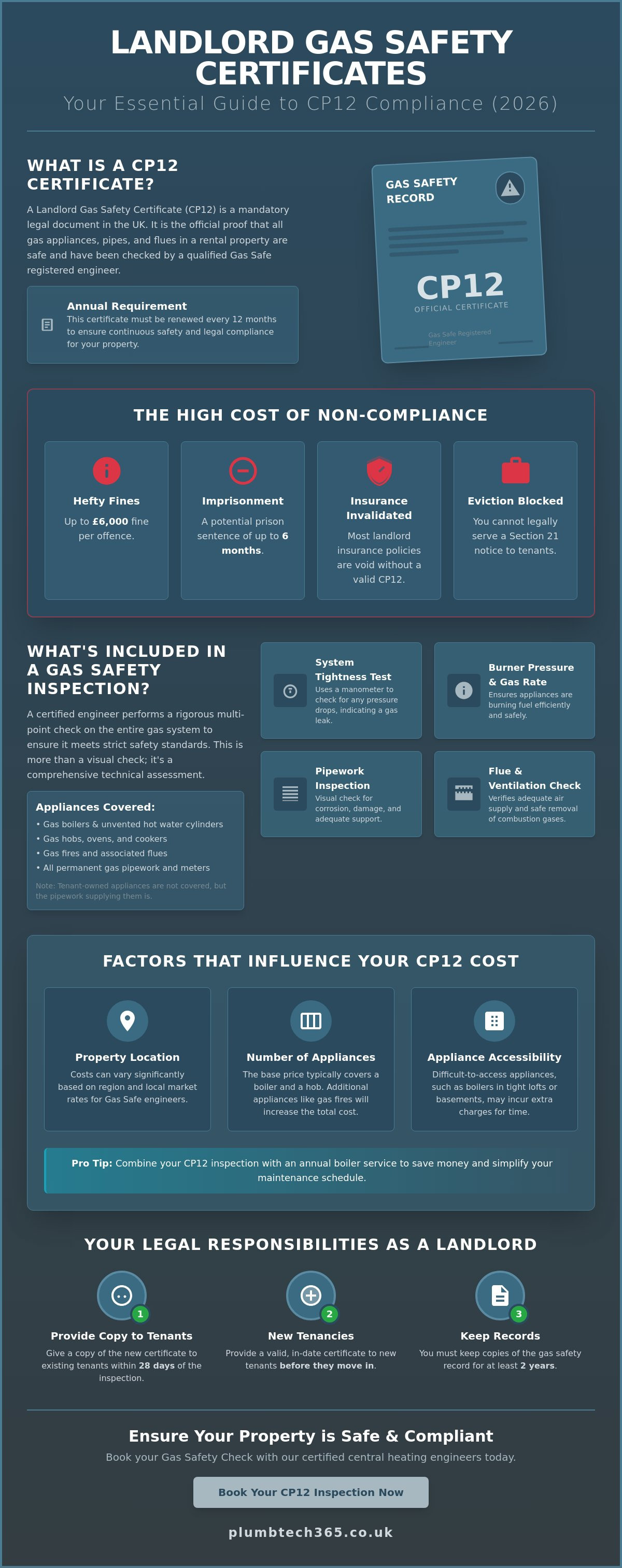
Factors That Influence Your CP12 Inspection Price
Your total landlord gas safety certificate cost depends on the specific layout and scale of your property. A standard one-bedroom flat with a single boiler is a straightforward job. In contrast, a large House in Multiple Occupation (HMO) often requires more intensive testing across several kitchenettes or communal areas. Accessibility is another major variable. If your boiler is tucked away in a cramped loft or the flues are hidden behind decorative boxing, our engineers need more time to perform a safe inspection. Basements with limited ventilation also present technical challenges that can impact the final bill.
Timing and system condition play equally important roles in your final quote. Last-minute or weekend bookings often attract surcharges because they require rapid dispatch of our local gas engineers. We recommend booking at least two weeks before your current certificate expires to avoid these premium rates. Additionally, the age and state of your gas installation matter. Older properties with complex pipework or outdated fittings may require more rigorous testing to ensure they meet modern safety standards. If our boiler engineers find minor issues that need immediate attention to pass the inspection, this will naturally influence the overall service time.
Bundling Services for Maximum Value
Savvy landlords often combine their CP12 check with an annual boiler service to reduce the total visit fee. This approach is far more efficient than booking two separate appointments. Performing preventative maintenance during the safety check identifies potential leaks or component failures before they become expensive emergency repairs. For landlords managing multiple properties, the 'bundle benefit' provides a significant reduction in administrative overhead and travel costs by streamlining several inspections into a single, organized schedule.
Administrative and Digital Features
Modern compliance management adds value through digital features that simplify your life as a landlord. We provide digital certificate storage and automatic renewal reminders so you never miss a deadline. For those with larger portfolios, we offer multi-property discounts that make managing several units more affordable. Choosing a professional heating engineer ensures you receive clear, honest billing without hidden surprises. This transparency is worth a slight premium because it guarantees your property remains safe and legally compliant year-round. Ready to secure your property? Book your local gas engineer today to ensure your rental remains fully compliant.
Booking Your Gas Safety Check with Plumbtech 365
Securing your property shouldn't be a source of stress. When you choose Plumbtech 365, you get direct access to Gas Safe Registered engineers who prioritize your legal compliance and tenant safety. We understand that as a landlord, you need results, not excuses. Our team provides a rapid response to ensure your legal deadlines are never missed, preventing the administrative headaches of lapsed certificates. Whether you require a single CP12 or a comprehensive maintenance package including major boiler installations and minor repairs, we handle every technical detail with total competence. You'll receive a transparent, upfront landlord gas safety certificate cost with no hidden surprises on the day of the visit.
Our versatile service profile means we are a one-stop solution for your entire rental portfolio. Beyond gas safety, our local plumbers are equipped to handle all bathroom plumbing requirements, from urgent toilet repairs to fixing persistent leaks. We don't hide behind call centers; instead, we offer a steady hand and professional expertise to keep your properties fully functional and compliant year-round. This honest billing approach builds instant rapport, allowing you to manage your maintenance budget with precision and clarity.
The Dependable Expert Approach
We position ourselves as the steady hand during your annual maintenance cycle. Our central heating engineers bring a sense of calm authority to every job, ensuring that even complex inspections in older buildings are handled efficiently. We provide detailed reporting that goes beyond the basic CP12 requirements, offering you a clear picture of your system's health. Our team excels at leak detection and repair, ensuring that small drips don't turn into major household crises. You get the local accountability of a neighborly tradesman combined with the high-standard service levels of a sophisticated, modern operation.
Next Steps for Landlords
Preparing for your inspection is simple and efficient. Start by notifying your tenants at least 24 hours in advance to ensure our engineers have clear access to the gas meter and all appliances. While we are on-site for the gas check, our team can also address minor maintenance tasks like tap replacements or general plumbing adjustments to save you a second call-out fee. Our booking process is streamlined for your convenience. Simply reach out to our team to secure a fixed-price gas safety inspection at a time that suits your schedule. Don't leave your compliance to chance. Contact Plumbtech 365 today for a reliable, compliant gas safety check and expert trade assistance for all aspects of your property maintenance.
Secure Your Property and Legal Compliance
Protecting your investment requires more than just meeting a deadline; it's about total property safety and legal immunity. Understanding your landlord gas safety certificate cost allows you to eliminate the stress of hidden fees while ensuring your appliances operate at peak efficiency. By prioritizing regular inspections and combining them with preventative maintenance, you safeguard your tenants and avoid the severe penalties associated with non-compliance.
Our Gas Safe Registered Engineers are ready to provide the professional oversight your rental portfolio deserves. We offer 24/7 availability for emergency repairs and maintain a strict policy of transparent, fixed-price billing. Don't leave your legal status to chance or settle for "drive-by" inspections that miss critical faults. Book Your Landlord Gas Safety Certificate with Plumbtech 365 today to secure a compliant, safe home for your tenants.
Stay proactive with your maintenance schedule and enjoy the peace of mind that comes from a job done right by local experts.
Frequently Asked Questions
How long does a landlord gas safety check take?
A standard gas safety inspection typically takes between 30 and 60 minutes. The exact timing depends on the number of appliances and how quickly our boiler engineers can access the meter and flues. While on-site for this check, our team can often address minor general plumbing tasks, such as simple tap replacements or investigating a slow-draining sink, to maximize the efficiency of the visit.
Can I get a gas safety certificate if my boiler fails the inspection?
You cannot receive a pass certificate if any gas appliance is deemed unsafe. If your unit is beyond repair, our central heating engineers provide expert boiler installations to get your property back into legal compliance quickly. We prioritize these urgent replacements to ensure your tenants aren't left without heat or hot water, maintaining our reputation as a reliable local service provider.
Is a gas safety certificate required for a property with no gas appliances?
You don't legally require a CP12 if there are no gas appliances or active supplies in the property. For all-electric homes, many landlords shift their focus to other maintenance areas like bathroom plumbing or leak detection and repair. Ensuring your toilets and taps are in good working order is just as vital for tenant satisfaction as gas safety is for compliance.
Does a gas safety check include a full boiler service?
A gas safety check is a specific legal inspection, whereas a boiler service is a comprehensive maintenance procedure. They are different services with different goals. While the landlord gas safety certificate cost covers the mandatory safety tests, we highly recommend combining it with a service. This prevents future breakdowns and allows us to check other home essentials like radiator installations and unvented hot water cylinders.
How much does an additional appliance cost on a CP12?
Most engineers charge a base fee for the first appliance and a smaller surcharge for each additional item, such as a gas hob or fire. When calculating your total landlord gas safety certificate cost, remember that professional billing should always be transparent. This visit is also a great time to have our local plumbers look at toilet repairs or other minor plumbing issues that might be bothering your tenants.
Can a tenant refuse entry for a gas safety check?
Tenants cannot legally prevent you from carrying out mandatory safety duties, provided you give at least 24 hours' notice. Our engineers are experienced in handling these visits with calm authority and professional expertise, which often alleviates tenant stress. We focus on getting the job done quickly and correctly, whether we are performing a safety check or complex bathroom plumbing tasks.
How often should I renew my landlord gas safety certificate?
You must renew your certificate every 12 months without exception. We provide automatic reminders to our clients to ensure no deadlines are missed. Staying proactive with your gas safety and general plumbing maintenance, including leak detection, helps you avoid the high-stakes crisis of an expired certificate or an emergency plumbing failure.
What is the difference between a CP12 and an EICR?
A CP12 certificate confirms the safety of your gas system, while an EICR relates to the electrical installation. Our expertise lies in the heating and plumbing sector. We handle everything from boiler installations to toilet repairs and all aspects of bathroom plumbing, ensuring your property's water and gas systems meet the highest professional standards.


Comments