


Landlord Responsibilities for Water Damage UK: The 2026 Legal & Practical Guide
- Darrell Williamson
- Jun 26
- 12 min read
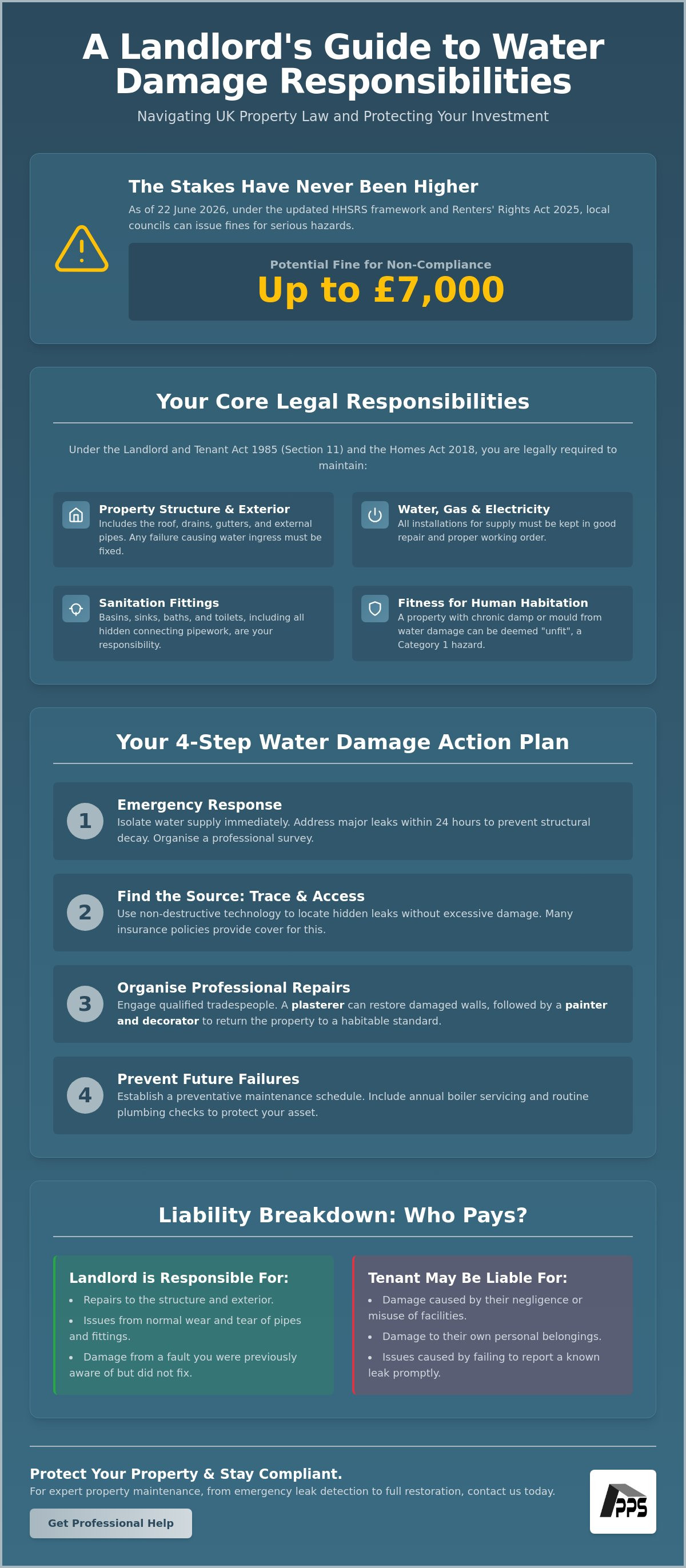
Did you know that as of 22 June 2026, local councils can fine you up to £7,000 for failing to fix serious hazards like damp or plumbing failures? It's a sharp reminder that staying on top of landlord responsibilities for water damage UK is now a legal necessity rather than a choice. With the Renters' Rights Act 2025 now in full force, the stakes for property owners have never been higher.
It's natural to feel concerned about the potential for legal action or the spiralling costs of hidden structural damage. You need a reliable plan to protect your investment whilst staying compliant with the updated Housing Health and Safety Rating System (HHSRS). We're here to provide that professional reassurance and technical expertise to help you manage these risks effectively.
This guide explains your specific legal duties and provides a clear strategy for handling emergencies. You'll discover how to use trace and access to find leaks behind walls without causing excessive damage and learn exactly when a tenant's behaviour might shift liability away from you. We'll ensure you have the facts to act fast, maintain compliance, and keep your property in top condition.
Table of Contents
Understanding Landlord Responsibilities for Water Damage UK
Landlords often feel a sense of dread when a tenant reports a damp patch or a leaking ceiling. You must act fast because the legal framework doesn't offer much room for delay. Under the Landlord and Tenant Act 1985, your duties are strictly defined. You're responsible for keeping the property's structure and exterior in good repair, alongside the installations for water, gas, electricity, and sanitation. When we talk about landlord responsibilities for water damage UK, these core obligations form the basis of every tenancy agreement in the country.
To better understand who is responsible when things go wrong, watch this helpful video:
The Landlord and Tenant Act 1985 Explained
Section 11 is the most critical part of this legislation for property owners. It mandates that you maintain basins, sinks, baths, and all other sanitary fittings in a functional state. This duty extends to the hidden pipework within the walls. If a structural failure like a leaking roof or cracked masonry allows water ingress, the law requires you to intervene immediately. Failing to address these issues can lead to severe consequences. As of June 2026, local councils have the power to fine landlords up to £7,000 for failing to resolve serious hazards. Engaging handyman services or a professional handyman near me for initial inspections can help you identify these risks before they become legal liabilities.
Fitness for Human Habitation Standards
The Homes (Fitness for Human Habitation) Act 2018 ensures that properties are safe for tenants throughout their stay. A property might be declared "unfit" if water damage leads to chronic damp or mould growth that threatens a tenant's health. These are often classified as Category 1 hazards under the updated HHSRS framework that launched on 23 June 2026. You have a proactive duty to prevent damp from spreading amongst your rental units. If a leak causes significant damage to internal surfaces, you'll likely need a plasterer near me to restore the walls and a painter and decorator near me to ensure the property meets habitable standards again.
Urgent plumbing failures require a rapid response to prevent permanent structural decay. Whilst the law refers to a "reasonable time" for repairs, the current 2026 regulatory climate suggests that major leaks must be addressed within 24 hours. Delaying these works allows moisture to penetrate floorboards and joists, leading to far more expensive restoration projects. Keeping the contact details of a reliable property maintenance company near me ensures you can fulfil your landlord responsibilities for water damage UK whilst protecting your property's market value and your tenants' wellbeing.
Solving Hidden Leaks: Trace and Access for Hidden Water Leaks
Finding a puddle on the kitchen floor is straightforward. Finding the pinhole leak spraying behind a tiled bathroom wall is a nightmare. This is where trace and access for hidden water leaks becomes your most valuable tool. It is the professional process of locating the exact source of a leak using non-destructive technology. Since landlord responsibilities for water damage UK mandate that you maintain the property's structure, you must identify these issues before they cause rot or subsidence.
Many landlords hesitate to investigate hidden damp because they fear the cost of ripping up floorboards. However, modern leak detection is precise and clean. In 2026, many specialist insurance policies provide trace and access cover with limits often reaching £10,000. This coverage pays for the work required to find the leak and make good the surfaces afterwards. If you're uncertain about your legal position regarding these repairs, Citizens Advice on housing repairs offers a comprehensive overview of your obligations to act once a fault is reported.
The Trace and Access Process
Professional engineers use a combination of thermal imaging, acoustic sensors, and tracer gases to find moisture. Thermal cameras identify temperature differences caused by escaping water, whilst acoustic equipment "listens" for the hiss of a pressurized pipe failure. This moisture mapping allows for a surgical approach. Instead of destroying an entire wall, a technician might only need to remove a single tile or a small patch of plasterboard. This efficiency keeps your property maintenance costs low and ensures your tenants face minimal disruption.
Signs You Need Professional Leak Detection
Don't wait for a ceiling to collapse. You must stay alert for subtle warnings that indicate a system failure. Common signs include:
Boiler Pressure Drops: If your tenant has to top up the boiler daily, water is escaping somewhere in the heating circuit.
Water Meter Fluctuations: Ask your tenant to turn off all taps; if the meter continues to spin, you have a live leak.
Audible Hissing: The sound of running water behind walls when no appliances are active is a critical red flag.
Physical Changes: Peeling wallpaper, damp patches on ceilings, or a persistent musty odour amongst the rooms.
Acting on these signs immediately protects your structural investment. Small drips lead to mould, which can result in heavy fines under current UK housing laws. Professional leak detection ensures you meet your legal duties whilst preventing minor plumbing issues from becoming total structural failures. A proactive approach keeps your insurance premiums stable and your property fit for habitation.
Liability Breakdown: Who Pays for Water Damage Repairs?
Determining who picks up the bill depends entirely on the root cause of the failure. Under landlord responsibilities for water damage UK, the law distinguishes between structural decay and tenant behaviour. If a pipe bursts due to age or freezing temperatures, the financial burden rests with you. However, if a tenant leaves a tap running or fails to report a visible drip, the liability can shift. You need a clear understanding of these boundaries to protect your cash flow and maintain your property's integrity whilst avoiding unnecessary disputes.
When the Landlord is Liable
You are legally responsible for the "bricks and mortar" and the essential services that keep the home habitable. This includes the external pipes, the roof, and the guttering systems. If a failing damp-proof course allows moisture to enter the building, that is a landlord repair. You must also ensure that high-pressure systems, such as an unvented hot water cylinder or the central heating boiler, are serviced and safe. Burst pipes caused by poor insulation or general wear and tear are your responsibility to fix. It's your duty to restore the property to a habitable state, which often involves hiring a painter and decorator near me to repair water-damaged ceilings or a plasterer near me to fix blown walls.
When the Tenant is Responsible
Tenants have a "duty of care" to use the property in a tenant-like manner. They are typically liable for damage caused by negligence or misuse. Common examples include:
Accidental Overflows: Leaving a bath or sink to overflow, causing damage to the floorboards and the ceiling of the flat below.
Blocked Drains: Disposing of grease, wet wipes, or foreign objects down the sink or toilet that lead to a backup.
Failure to Report: If a tenant notices a leak under the sink but says nothing for weeks, they may be held liable for the resulting rot and mould growth.
Whilst you must repair the building's structure, you are generally not responsible for the tenant's personal belongings. Their clothes, electronics, and furniture should be covered by their own contents insurance. Your buildings insurance handles the walls, floors, and fixed installations. If the damage was clearly caused by tenant negligence, you may be entitled to deduct the repair costs from their security deposit. You must follow the correct legal procedures under the Renters' Rights Act 2025 to ensure these claims are successful. Always document the damage with photos and professional reports from a property maintenance company near me to provide clear evidence for any potential disputes. Engaging handyman services for a quick assessment can also help clarify the cause before costs spiral.
Practical Steps for Landlords Dealing with a Water Crisis
When your tenant calls to report a flood, every second counts. Your immediate priority is to stop the flow and ensure the property is safe. Instruct your tenant to turn off the main stopcock immediately. If water is leaking near light fittings or plug sockets, tell them to turn off the electricity at the consumer unit. Taking these rapid steps is the first phase of fulfilling your landlord responsibilities for water damage UK. It prevents a plumbing failure from turning into a life-threatening electrical fire or structural collapse.
Emergency Plumbing Response
You must act within hours, not days. You'll need an emergency plumber to isolate the burst pipe and assess the damage. If the leak involves the heating system or a boiler, ensure you dispatch a Gas Safe registered engineer to inspect the appliance. In the first 24 hours, the goal is stabilisation. A temporary repair might be necessary to restore basic water supply whilst a more permanent solution is organised. This prevents the property from being declared uninhabitable under the HHSRS standards discussed earlier in this guide.
Insurance and Documentation
Clear evidence is your best defence against legal disputes and rejected insurance claims. Take high-resolution photographs and videos of the damage before any repairs begin. Document the source of the leak, the extent of the water spread, and any affected fixtures. Keep in mind that your buildings insurance typically covers the structure and fixed installations, whilst landlord contents insurance covers any furniture or appliances you provided. Professional invoices from accredited firms are crucial. Insurers often reject claims that lack a technical breakdown of the fault and the subsequent repair.
Finally, keep your tenants informed. Provide a clear timeline for repairs and explain the steps you're taking. Effective communication reduces tenant anxiety and lowers the risk of them seeking legal advice through the Renters' Rights Act 2025. By acting as the dependable expert, you maintain control of the situation and ensure the property returns to a revenue-generating state as quickly as possible. If you need a reliable partner to manage the entire recovery process, our property maintenance company can provide the technical reports and expert repairs required to satisfy your insurers and protect your investment.
Maintaining Compliance and Preventing Future Water Damage
Proactive management is the only way to safeguard your property and your profit margins over the long term. Whilst emergency repairs are necessary during a crisis, a preventative approach significantly reduces the ongoing burden of landlord responsibilities for water damage UK. You shouldn't wait for a structural failure to discover a corroded pipe or a failing window seal. Regular inspections allow you to identify small drips before they cause major decay. Hiring handyman services for quarterly walk-throughs ensures that minor issues, like loose grout or dripping taps, are resolved before they escalate into a Category 1 hazard.
Annual Maintenance and Gas Safety
One of the most efficient ways to manage your property is to integrate your plumbing checks with your mandatory Landlord Gas Safety Certificates. A boiler engineer isn't just there to check for carbon monoxide leaks. During a standard CP12 inspection, a professional can spot pressure drops that indicate a hidden leak in the heating circuit. Scheduling your annual plumbing health check alongside your gas safety visit ensures your heating system remains efficient and leak-free throughout the winter. This combined approach prevents the nightmare of frozen pipes, which remains a leading cause of insurance claims amongst UK landlords. If you need a handyman near me to check loft insulation or lag external pipes, organise this work well before the first frost hits.
Tenant Education and Communication
Your tenants are your first line of defence against rising repair costs. You must educate them on how to respond to a water failure the moment they move in. Provide every new tenant with a "welcome pack" that clearly identifies the location of the main stopcock and provides instructions on how to use it. Include emergency contacts for your preferred property maintenance company near me. Setting clear expectations for reporting damp is vital. If a tenant knows you'll act quickly on a report of peeling wallpaper, they're far more likely to notify you early. This avoids the need for a plasterer near me or a painter and decorator near me to fix a whole room due to a neglected leak.
Maintaining a rental property requires a steady hand and consistent technical expertise. Choosing a reliable property maintenance company allows you to outsource the stress of scheduling and compliance. From simple tap replacements to complex leak detection, having a single point of contact ensures all work meets professional accreditation standards. It creates a robust paper trail of diligence that is invaluable if you ever face a council inspection or an insurance dispute. Invest in professional handyman services and regular maintenance today to avoid the high costs of structural failure tomorrow.
Secure Your Property and Maintain Legal Compliance Today
Managing a rental property in 2026 demands more than just occasional repairs. It requires a commitment to safety and a deep understanding of your legal duties. Fulfilling your landlord responsibilities for water damage UK protects both your tenants and your financial future. You now know that prioritising trace and access technology preserves structural integrity, whilst regular boiler servicing catches hidden leaks before they escalate into hazardous mould issues.
Staying compliant shouldn't be a source of constant stress. Clear communication with tenants and a robust emergency response plan ensure that when a plumbing failure occurs, you're ready to lead. The Renters' Rights Act 2025 has raised the stakes, but with the right technical support, you can maintain a safe and profitable portfolio.
Don't leave your property's safety to chance. Our Gas Safe Registered Engineers provide a rapid 24/7 emergency response and are specialists in landlord compliance and CP12 certificates. Book your professional trace and access or Gas Safe inspection with Premier Property Solutions, Property Maintenance Services today. You have the facts to protect your investment; we have the expertise to make it happen.
Frequently Asked Questions
How long does a landlord have to fix a water leak in the UK?
Landlords must repair serious leaks within a "reasonable time," which typically means within 24 hours for emergencies. Non-urgent repairs should be addressed within 14 days of being reported. Act fast to avoid structural decay that might later require extensive work from a local painter and decorator near me.
Is a landlord responsible for water damage to a tenants furniture?
No, you are generally not responsible for damage to a tenant’s personal belongings or furniture. Your buildings insurance covers the structure and fixed installations, whilst the tenant should have their own contents insurance for personal items. This is a clear boundary in landlord responsibilities for water damage UK.
Can a tenant refuse to pay rent due to water damage?
Tenants cannot legally refuse to pay rent due to water damage without a court order or formal agreement. Doing so risks eviction under a Section 8 notice. Instead, they should follow the formal complaints procedure if repairs are delayed. You should always aim to resolve the issue quickly to maintain a professional relationship.
What happens if a landlord ignores a reported leak?
Ignoring a leak can lead to local council fines of up to £7,000 as of June 2026. Under the Renters' Rights Act 2025, tenants can also take legal action for breach of contract. Serious water ingress often creates a Category 1 hazard under the HHSRS, which requires immediate remediation to avoid further penalties.
Does landlord insurance cover trace and access for hidden leaks?
Most modern landlord insurance policies include trace and access cover, often up to a limit of £10,000. This specifically pays for the cost of finding the leak's source, such as removing floorboards or tiles. Standard repair costs for the pipe itself are usually a separate maintenance item that you must cover.
Is a leaking pipe considered an emergency in a rental property?
A leaking pipe is considered an emergency if it risks structural damage, electrical safety, or leaves the property without a water supply. You should dispatch a professional plumber or gas engineer immediately. Urgent action prevents minor drips from turning into major plastering and decorating projects later on.
Who is responsible for damp and mould caused by a leak?
Landlords are responsible for damp and mould if the root cause is a structural failure or a leaking pipe. Under the Homes Act 2018, you must ensure the property remains fit for human habitation. Proactive inspections by a property maintenance company can help catch these issues before they become serious health hazards.
What is the difference between trace and access and standard plumbing repairs?
Trace and access is the process of locating a hidden leak, whereas standard plumbing repairs involve fixing the pipe once it is found. Trace and access uses thermal imaging and acoustic tools to avoid unnecessary damage to your walls. Once the source is pinpointed, a plumber can carry out the specific repair needed to stop the leak.


Comments