


How to Balance Radiators for Even Heat Around Your Home
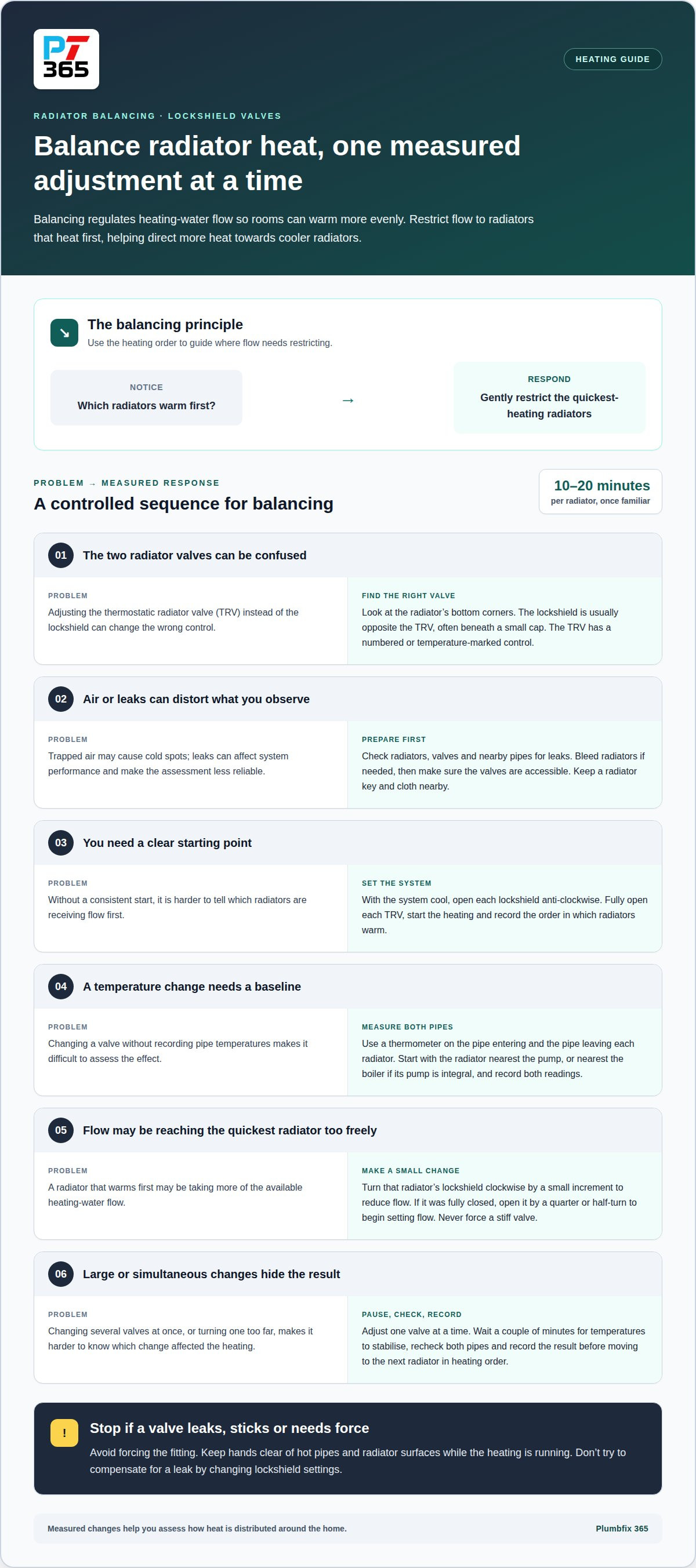
Balance radiators by adjusting their lockshield valves so hot water flows more evenly through the system. To balance radiators with lockshield valves step by step, open the valves, note which radiators heat up first, then gradually restrict flow to the quickest-heating radiators while checking pipe temperatures. This helps direct more heat towards cooler radiators.
If a radiator has cold spots, trapped air may be the cause; balancing addresses uneven heat across the system. The lockshield valve is usually at the opposite end from the thermostatic radiator valve, often beneath a small cap. Identify the right valve and make small changes to avoid disrupting the heating system.
This guide explains what balancing does, how to identify the lockshield valve and how to use the temperature difference between a radiator’s inlet and outlet pipes to guide adjustments. You’ll also learn how to spot signs that balancing may help, what to do without a thermometer and when to call a heating professional.
Table of Contents
How do you find the lockshield valve?
To balance radiators, identify each lockshield valve, open the system’s valves and note which radiators warm first. Then restrict flow to the fastest-heating radiators. Make small adjustments and check pipe temperatures to assess the effect before changing another valve.
Find the lockshield. Look at the bottom corners of each radiator. The lockshield is usually opposite the thermostatic radiator valve, or TRV, and often sits beneath a small cap. Remove the cap to reveal the valve stem. A TRV has a numbered or temperature-marked control; don’t adjust it as the lockshield.
Prepare the heating system. Check radiators, valves and nearby pipes for leaks before starting. Bleed radiators first to help prevent trapped air causing cold spots, as the UK Government advises. Keep a cloth and suitable radiator key nearby, and make sure you can reach every valve safely.
Open the valves and record the heating order. With the system cool, turn each lockshield anti-clockwise to open it, using an adjustable spanner only if needed. Fully open each thermostatic radiator valve too. Start the heating and note which radiator warms first, then record the sequence across the home.
Take baseline pipe readings. Use a thermometer at the pipe entering each radiator and the pipe leaving it. Begin with the radiator nearest the pump, or nearest the boiler if its pump is integral. Record both readings so you can compare the change after an adjustment.
Restrict the fastest-heating radiator. Turn its lockshield clockwise in a small increment to reduce flow. If the valve was fully closed, open it by a quarter or half-turn to begin setting flow. Avoid forcing a stiff valve; resistance can signal that it needs attention.
Pause, measure and repeat. Allow a couple of minutes after each adjustment for temperatures to stabilise. Recheck both pipes, then make another small change if needed. Work through the radiators in heating order, beginning with the quickest to warm, rather than making large changes to several valves at once.
Common mistakes include adjusting the TRV instead of the lockshield, changing several valves at once or turning a valve too far. These make it harder to tell which adjustment affected the heating.
Adjust valves gently and keep your hands clear of hot pipes and radiator surfaces while the heating runs. If a valve leaks, sticks or needs force, stop to avoid damaging the fitting.
What is balancing radiators?
Balancing regulates the flow of heating water through radiators, helping rooms warm more evenly. This section explains how to balance radiators with lockshield valves step by step, including the preparation, tools and time needed for useful results.
Allow time for balancing
Set aside enough time to work through the radiators methodically, rather than rushing between adjustments. Once the process is familiar, balancing one radiator can take between 10 and 20 minutes. The overall time depends on the number of radiators and how readily their valves respond.
Record each adjustment and its effect. After changing a lockshield, allow temperatures to settle before making another adjustment. Rushing can lead to misreading the result or restricting flow too far. A steady sequence makes it easier to understand how to balance radiators with lockshield valves step by step.
Prepare the central heating system
Before balancing, check radiators, valves and pipes for leaks, and bleed radiators to help prevent trapped air causing cold spots. The UK Government recommends bleeding radiators for this reason. Open the radiator valves fully and run the central heating system consistently while assessing the radiators.
Gather a thermometer, an adjustable spanner if a valve needs one, and a cloth to catch small drips. Keep a radiator key nearby in case bleeding is needed. Use the spanner carefully, as forcing a stiff valve can damage it. A pen and notes help you record which radiator warms first and any pipe readings.
Make sure the valves are accessible before starting. Deal with any leaks before balancing, as they can affect system performance and make observations less reliable. Don’t try to compensate for a leak by changing lockshield settings.
Wait between radiator adjustments
After each lockshield adjustment, wait a couple of minutes for the temperature to stabilise before checking again. This gives the changed water flow time to affect the radiator. Compare the readings only once they have settled, then decide whether another small adjustment is needed.
Change one valve at a time. Adjusting several together makes it difficult to tell which change affected the heating. Record the setting and result before moving to another radiator. This keeps the process controlled and makes each adjustment easier to assess.
Set out a thermometer, adjustable spanner, cloth, radiator key and notes.
Check for leaks, bleed radiators if needed, then open the radiator valves.
Run the heating and record the order in which radiators warm.
Adjust one lockshield valve, wait for readings to stabilise and record the result.
How radiator balancing distributes heat around the home
Balancing controls how much hot water passes through each radiator, helping heat reach rooms throughout your home. This is particularly useful in two-storey homes, where radiators may warm unevenly.
Understand how balancing distributes water flow
Restrict flow through radiators that heat first. Central heating water follows the available paths through the pipework. A radiator with an unrestricted lockshield can receive more flow than it needs, leaving less available to reach radiators further around the circuit. Closing its lockshield slightly reduces that flow and helps direct hot water towards cooler radiators.
Make small changes and observe their effect. A fully closed lockshield stops hot water flowing through that radiator, diverting it to other radiators. Don’t close a valve completely as a routine adjustment: the aim is to regulate flow, not stop that radiator heating. For example, if a downstairs radiator warms quickly while an upstairs one stays cool, restrict the faster radiator gradually.
Work through the system in heating order. Start with the radiator that heats first, then continue towards the one that heats last. The fastest-heating radiators are usually nearest the boiler, though the pump position and pipe layout affect the order. Adjusting in sequence helps prevent one radiator taking too much flow while another struggles.
Test radiator heat distribution
Run the heating and compare radiators. Note which radiators heat first, which warm later, and whether any remain cool. Check radiators on each floor, not only those in the same room or along one wall. In a two-storey home, compare an early-warming downstairs radiator with a slower upstairs radiator.
Recheck after each adjustment. Observe whether the slower radiator begins to warm more evenly after restricting flow to a faster one. Allow a couple of minutes for temperatures to stabilise before deciding whether another change is needed. Record each valve adjustment and its effect; changing several valves together makes the result harder to assess.
Check the whole system before finishing. With the heating running, look for radiators that still heat much earlier than others or remain cool. If radiators appear to heat evenly with valves open, further balancing may not be necessary. If uneven distribution continues, avoid repeatedly closing valves; persistent problems may involve the system’s design or another fault.
Balanced flow helps each radiator receive heat as the central heating operates. Use the observed heating order and the effect of each adjustment to guide the process, rather than relying on a single radiator to judge the whole home.
Measuring the temperature difference across radiator pipes
Use a thermometer to compare the water temperatures entering and leaving each radiator. This guide explains where to measure, how to interpret the difference and how to use the readings when adjusting valves.
Run the heating system consistently. Take readings while the heating is operating and each radiator is warming. Record the radiator’s position and both pipe temperatures. Measuring under similar conditions makes comparisons between radiators more useful than taking isolated readings at different times.
Identify the two pipes. Find the pipe carrying hot water into the radiator and the pipework leaving it. Take one temperature reading where the inlet pipe enters, then another where the outlet pipe leaves. Use the same thermometer for both readings and keep each measurement point consistent.
Calculate the temperature difference. Subtract the outlet reading from the inlet reading. For example, if the inlet reads 60°C and the outlet reads 48°C, the difference is 12 degrees. Record the result beside the radiator’s name or room, so you can compare readings across the system.
Use the recommended difference as a guide. A recommended temperature difference between the incoming and outgoing water at each radiator is 12 degrees. For condensing gas boilers, a typical flow-to-return drop is 20°C, subject to the appliance manufacturer’s guidance. Follow the boiler manufacturer’s instructions where they set a different target.
Adjust one lockshield at a time. If readings show that a radiator’s temperature difference needs adjustment, make a small change to its lockshield valve. Wait a couple of minutes for the temperature to stabilise, then measure both pipes again. Changing one valve at a time helps show whether the adjustment moved the readings towards the intended difference.
Compare results across radiators. Take readings at every radiator, using the same inlet and outlet points. A single reading doesn’t show how heat is distributed throughout the home. If one radiator differs from the others, consider its position and heating order before adjusting its valve.
Use touch only as a rough check. Without a thermometer, comparing pipe warmth can help identify obvious differences, but it takes longer and is less accurate. Don’t treat a hand’s impression as a measured temperature difference or assume it confirms the 12-degree target.
Keep a simple record of each radiator’s two readings and valve adjustments. After balancing, recheck the inlet and outlet temperatures, then return thermostatic radiator valves to their normal settings.
Signs that radiators need balancing
Compare how quickly radiators heat and how evenly warmth reaches each room. If every radiator heats at the same time with its valves fully open, the system doesn’t need balancing adjustments.
Note the heating order. Turn on the central heating and observe which radiators warm first, then record which take longer. A radiator that heats quickly while another remains cool can indicate uneven water flow. Check radiators throughout the home, including those on different floors, rather than judging the system from one room.
Look for a repeated pattern. A single slow radiator may have a local issue, but several radiators heating later than others can point to flow imbalance. For example, if radiators close to the boiler warm rapidly while those further away lag, compare their heating order before adjusting any valves.
Check whether all radiators warm together. If every radiator heats at the same time with valves fully open, leave the lockshields as they are. Balancing is intended to address uneven heat distribution, not to change a system that already warms radiators evenly. Recheck under consistent heating conditions before deciding adjustments are needed.
Separate balancing from a local cold spot. Uneven warmth across rooms can suggest balancing is worth assessing. A cold area on one radiator alone doesn’t prove the lockshield needs adjustment. Note whether the whole radiator warms slowly or only a particular section stays cool, then consider that pattern alongside the other radiators’ performance.
Make gradual adjustments only when signs persist. Start with the radiator that heats fastest. Turn its lockshield clockwise by a small amount, such as a quarter-turn, then allow the system to respond before assessing the change. Closing the valve too far can restrict flow excessively, so avoid large turns or adjusting several radiators together.
Review changes after heating again. Compare the same radiators and rooms after each adjustment. If the slower radiators begin warming more evenly, the change may be helping. If one radiator remains cold or the pattern doesn’t improve, stop making repeated valve changes and reassess the issue rather than forcing a lockshield.
Consider recent heating-system changes. Reassess radiator balance after a repair or alteration, including when a new radiator has been installed. Changed pipework or added radiators can alter how water flows through the system. Record which radiators now heat first and whether the previous pattern has changed.
If uneven heating persists or a lockshield is difficult to turn, We are a trusted Property Maintenance company providing reliable, high-quality services across London and Kent to get help with radiator heating issues instead of forcing the valve.
We are a trusted Property Maintenance company providing reliable, high-quality services across London and Kent
For radiator problems that persist after careful adjustments, the business can help assess the heating issue and identify a practical next step. Its Property Maintenance Services support homeowners and property managers across the UK.
If a lockshield valve sticks, leaks or fails to resolve uneven warmth, don’t force further changes. A plumber can assess the radiator and heating system to help distinguish a balancing issue from another fault.
Contact the team to discuss your radiator or heating concern and agree on a suitable next step.
Keep your heating working evenly
Give your heating system time to respond after adjustments. If uneven warmth remains, or a valve sticks or leaks, stop rather than forcing further changes. Persistent problems may need more than lockshield adjustments, so identifying the cause is the sensible next step.
Our property maintenance team can help homeowners and property managers across the UK with radiator and heating concerns. If the system still isn’t heating evenly, contact us to discuss the issue and practical options for your home.
Explain which radiators or rooms are affected and what changes you’ve tried. This gives the team a useful starting point for helping you work towards a more comfortable home.
Frequently Asked Questions
To bleed or to balance?
Bleed a radiator when trapped air causes cold spots or prevents it from heating fully. Consider balancing when radiators across the system heat unevenly. For example, one radiator that stays cold at the top suggests a different issue from several radiators warming at different rates. Bleeding removes air, while balancing regulates water flow. Check the pattern across your home before deciding which process fits.
What tools do I need?
For a basic check, gather a radiator key, a cloth and a way to record your observations. Use the key to open the radiator’s bleed valve and the cloth to catch small drips. Notes help you track which rooms warm first. You won’t need a thermometer if you’re judging uneven warmth by touch, though temperature readings give a clearer comparison.
What tools are needed to balance radiators with lockshield valves?
Use a thermometer to compare inlet and outlet pipe temperatures, and an adjustable spanner if a lockshield needs careful turning. A notebook helps match each reading to its radiator. Use the spanner on the valve fitting, not the pipework, and don’t force a stuck control. If the valve resists or leaks, stop adjusting it and arrange professional help.
How do you identify a radiator’s lockshield valve and TRV in the UK?
The lockshield is usually at one end of the radiator, often beneath a small protective cap. The thermostatic radiator valve, or TRV, is generally at the other end and has a numbered or temperature-marked control. A dial with marked settings is likely the TRV; a capped valve is likely the lockshield. Identify both before turning anything.
What temperature difference should you aim for across a radiator when balancing?
A recommended difference between the water entering and leaving each radiator is 12 degrees. For condensing gas boilers, the typical flow-to-return drop is 20°C, subject to the appliance manufacturer’s guidance. These figures describe different recommendations, so follow the boiler instructions when they specify a target. Measure at the inlet and outlet pipes, using the same thermometer and consistent points.
How should lockshield valves be adjusted on radiators nearest and farthest from the boiler?
Start with the radiator that heats fastest, often one nearer the boiler, and gradually restrict its lockshield. Continue in heating order, assessing each radiator instead of applying the same setting throughout. Radiators farther away may need more available flow, so don’t close their valves to match nearer ones. Pipe layout and pump position affect heating order, so observed performance is more useful than distance alone.
When should you bleed radiators or call a heating engineer instead of balancing them?
Bleed a radiator when air appears to cause cold spots or incomplete heating. Consider balancing when several radiators heat unevenly across the system. Contact a plumber or heating engineer if you encounter problems, lack confidence, or find a leaking or difficult valve. A radiator that remains cold after bleeding or careful adjustments needs assessment, not repeated turns that could damage its controls.
Comments