


Handyman Services Near Me: Reliable Property Repairs
One visit can often sort several small household jobs, but not every repair is suitable for a handyperson. Handyman services near me may cover general property repairs, carpentry, decorating and fitting work; jobs requiring specialist certification or major structural work need a qualified specialist trade.
It’s frustrating when a fault needs prompt attention, especially if you’re unsure whether it needs a routine repair or an urgent call-out. Describe the problem, where it is and whether it’s getting worse to help clarify the next steps before a visit.
This guide explains what handyman services can cover, how to arrange a visit and agree the work in advance, and what to consider when a repair feels urgent. You’ll also learn how to distinguish general maintenance from plumbing and heating work that needs specialist attention, so you can decide what to do next.
Table of Contents
What are handyperson services?
Handyperson services cover practical repairs and fitting tasks around the home that don’t need a specialist trade. Examples include adjusting a door, securing a loose shelf or assembling a small piece of furniture.
Small jobs around the home
Typical tasks include tightening cupboard hinges, replacing a drawer handle, hanging a picture and touching up a scuffed surface. A handyperson can also help with minor carpentry, such as easing a door that sticks against its frame. Before booking, identify the item and describe what has changed. A photograph can show whether a fitting is loose, cracked or missing.
Some repairs need a specialist. Gas appliance work should be carried out by a Gas Safe registered engineer, and specialist electrical work by a suitably qualified electrician. Major structural changes are also outside routine household maintenance. Matching the job to the right trade helps avoid an unsuitable repair.
If a repair is poor or causes damage, photograph the affected area and record what happened. Contact the person who completed the work in writing, describing the issue and the outcome you’re seeking. Keep relevant messages and photographs together. Public liability insurance can cover accidental damage to a customer’s property during work, subject to the policy terms.
Multiple jobs in one visit
Several small tasks can be organised for one visit, such as securing a shelf, adjusting a cupboard door and fitting a new handle. Make a room-by-room list and note which task matters most. Grouping jobs by location makes the work easier to plan, particularly when tools or materials need to move between rooms.
Review the list before work begins. Point out delicate surfaces, awkward access and any materials already on site. Describe the finish you expect, such as a level shelf or a cupboard door that closes without catching. If a task needs specialist skills, separate it from the general repairs so it can be handled appropriately.
Planning smaller jobs
For a single repair, explain the problem and the result you want. A loose handle may need tightening, while a broken fitting may need replacing. These details define the task clearly. For a longer list, mark each item as essential or optional, then agree which jobs are included before work starts.
After the work, check each completed item against the agreed list. Open and close the adjusted cupboard, test the shelf gently or inspect the repaired surface in good light. If something remains unfinished, note the exact issue and share it promptly. A specific description, such as “the door still catches at the top”, makes follow-up clearer.
Booking a handyman and requesting a quote
A clear booking starts with an accurate description of the job and the result you need. Share the property location, access details and any deadline, then keep the written offer with your booking records. When searching for handyman services near me, these details help match the task to the right skills before arranging a visit.
Booking and receiving offers
Describe each task separately, such as painting a bedroom wall, putting up shelves or repairing a loose cupboard door. Add photographs if they show the fault clearly, and mention any materials already available. This gives the handyperson a better understanding of the work than a brief description such as “general repairs”.
Compare offers by checking the stated work, exclusions and proposed approach. For a larger job, request a written quotation and make sure it explains what is included. Check relevant qualifications and insurance for the work. Gas or specialist electrical tasks need an appropriately qualified trade, not a general maintenance booking.
The booking and job process
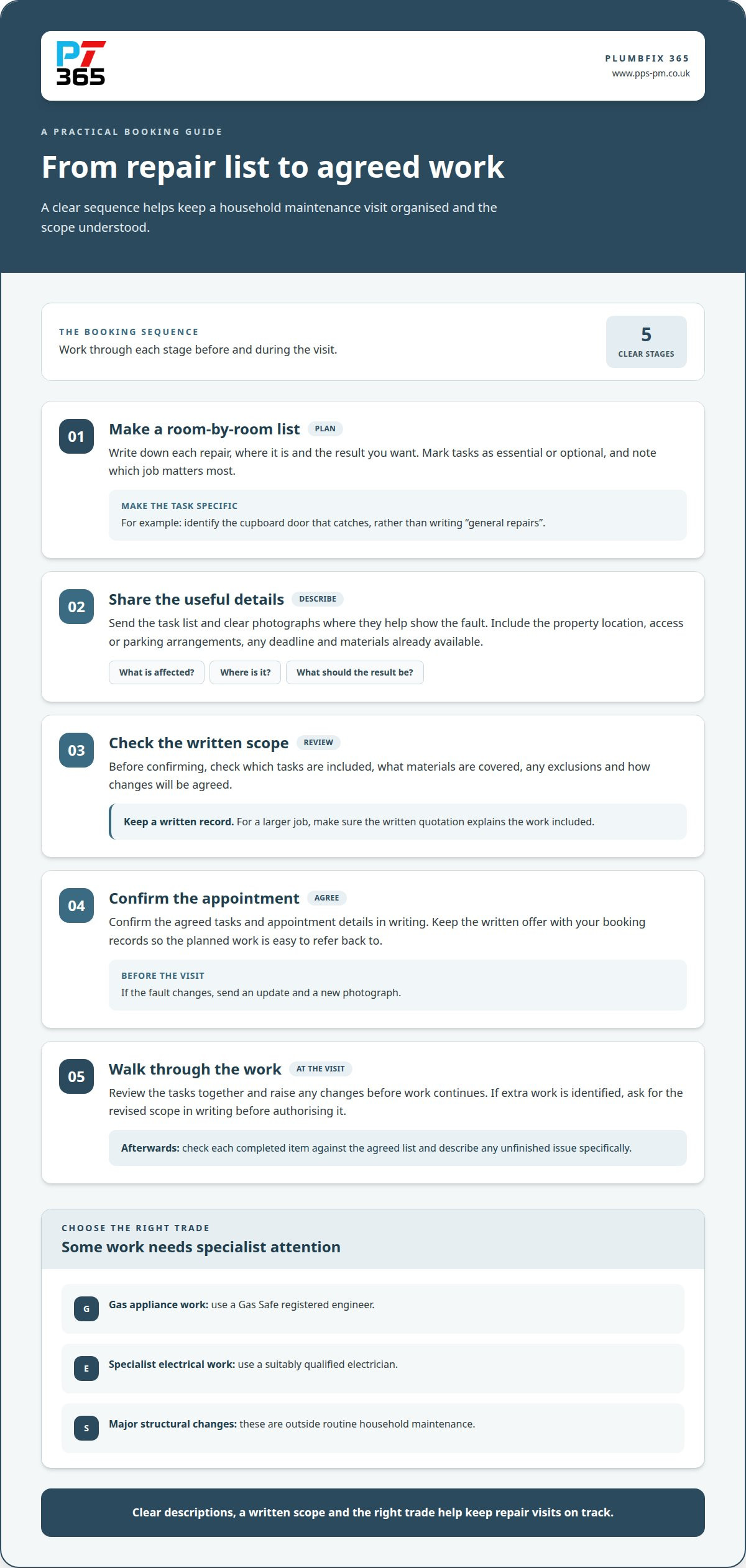
Use a simple sequence to keep the appointment organised:
List each repair, room and preferred outcome.
Send the details and photographs, then describe access or parking arrangements.
Review the written offer, including materials, labour, exclusions and how changes will be agreed.
Confirm the agreed scope and appointment details in writing.
At the visit, walk through the tasks and raise any changes before work continues.
For a home with several jobs, group them by room or type. For example, note which shelves need putting up and which areas need painting. If gardening is also on the list, describe the outdoor work separately so its scope isn’t confused with indoor repairs.
Keep communication focused. Tell the handyperson which repair matters most, especially if a fault affects a living space or prevents a door from closing. If the condition changes before the visit, send an update and a new photograph. A cracked fitting may need a different approach from a loose one.
Before work starts, compare the agreed tasks with your original list. If the handyperson identifies extra work, ask for the revised scope in writing before authorising it. This creates a shared record of what should be completed and helps prevent misunderstandings when the work is finished.
For landlords and letting agents, include the property address, access arrangements and affected room in the booking details. When arranging handyman services near me for a rental property, a concise record helps keep updates tied to the right home and repair.
Decorating, carpentry and flat-pack assembly
Decorating and carpentry cover practical jobs that help a room work and look as intended. Examples include painting woodwork, assembling furniture, fitting blinds and repairing a loose cupboard door. For a smooth result, identify the exact item, room and finish you expect before work begins.
Preparation matters. Move furniture away from the work area, clear the floor and point out delicate surfaces. For painting, specify which woodwork needs attention and whether the task includes preparation as well as the final coat. For carpentry, show the affected fitting and explain the problem, such as a door that catches or a drawer that won’t close.
In London, as elsewhere, odd jobs can vary from fitting a blind to assembling a new desk. The knowledge and tools needed depend on the item, its fixings and the surface involved. Share product instructions where available, and keep the supplied parts together. If a wall fitting or furniture component is damaged, point it out before installation starts.
Flat-pack furniture assembly is a common request. A standard wardrobe takes around 1 to 2 hours to assemble, while flat-pack furniture assembly averages 2-4 hours overall in the UK. The actual task depends on the furniture design, number of components and instructions. Keep the panels and fittings accessible, and clear enough floor space to lay out parts safely.
For a wardrobe or bookcase, check the room dimensions and intended position before assembly. Make sure the panels can pass through the home to reach the room. Keep the packaging and instructions nearby until the furniture is complete. These simple steps reduce interruptions and help identify missing or damaged components before the final fixings are secured.
Fitted furniture needs careful attention to alignment and surrounding space. Before work starts, identify the wall, floor or existing unit where the fitting will sit. A blind, shelf or cabinet may need different fixings depending on its position and the surface. Mention any pipes, cables or other obstacles you know about, and show the installer the intended height or layout.
For a combined decorating and carpentry visit, order the tasks sensibly. Agree which repairs need to be completed before painting, then leave finishing work until dusty assembly or fitting is done. A written list helps track each item, from repairing a cupboard hinge to touching up woodwork. Use it to review the finished jobs against the original scope.
Getting estimates and agreeing costs
Before maintenance begins, make sure everyone understands the task and the expected result. A written work plan can record the rooms involved, the condition of existing fittings and any areas that must remain untouched.
Defining the work
Describe each repair separately. For a sticking door, note which room it serves and whether it catches at the top, bottom or handle. For a damaged wall, identify the affected area and whether the surrounding paintwork should remain unchanged. These details help prevent a broad instruction such as “sort the hallway” from being interpreted in different ways.
Record what the work includes and excludes. If a cupboard needs attention, specify whether the task concerns its hinges, door or internal shelves. Add photographs if they show the existing condition. A clear written scope also distinguishes the agreed repair from extra work discovered after the visit begins.
Reviewing experience and feedback
Look for feedback describing work similar to yours. A review about repairing a door or fitting a blind gives more useful context than a general compliment. Notice whether the reviewer describes communication, care around household belongings and the finished result. Compare those details with the work you need, rather than relying on a single rating.
Check that the person’s experience suits the task and that relevant insurance is in place. For example, feedback about carpentry may help you assess a request to adjust a door, while decorating examples are more relevant to repairing painted woodwork. Keep the agreed task list and written messages together in case the scope needs clarification.
Confirming visit arrangements
Before confirming a visit, agree the appointment details, access arrangements and who will be present. For a rental property, identify the correct entrance, room and contact person. If a tenant needs to move furniture or secure a pet, explain this beforehand. Clear arrangements reduce avoidable delays and help the handyperson reach the work area promptly.
Ask how changes will be handled if the repair reveals another issue. A loose shelf, for instance, may expose damage to the wall behind it. Pause before adding work, describe what has been found and record the next step in writing. This keeps the original task distinct from any newly identified repair.
When the work is complete, walk through the agreed list. Check that the repaired door opens freely, the shelf sits level or the wall surface is tidy. Record any unfinished item clearly and share it promptly. A specific note, such as “the lower hinge still moves”, gives a practical basis for resolving the remaining issue.
Emergency handyman call-outs
A broken window latch, fallen curtain rail or damaged door can affect safety and daily routines. First decide whether the problem needs an urgent temporary repair or a specialist trade. A handyperson may handle general property repairs, but gas, plumbing and electrical faults need the right expertise.
Start by describing the fault precisely. Say what broke, where it is, when it happened and whether the damage is worsening. For example, explain whether a window won’t close, a curtain rail has pulled away from the plaster, or a door no longer locks. Send clear pictures if possible. These details help distinguish a minor repair from a fault needing specialist attention.
Take sensible steps to limit further damage while arranging help. Keep people away from broken glass or unstable fittings, and move belongings away from a leak. Don’t attempt electrical repairs or interfere with gas appliances. If water is escaping, explain the source and affected rooms when you call. For plumbing issues, consider whether a specialist is needed rather than assuming a general handyperson is suitable.
Give the person taking your call a clear account of the immediate risk. Mention whether the property is occupied, whether a door or window cannot be secured, and whether damage affects another room. A letting agent can also provide access arrangements and the tenant’s contact details. Keep photographs and messages together so the repairer can understand the situation before arriving.
A customer reported that a window lock problem was sorted on the same day they called. Treat this as an individual example, not a general response-time promise. Describe the fault and its urgency accurately, then agree what the visit covers. If a temporary fix is proposed, clarify what it will address and what remains unresolved.
Keep a short record of the call, the reported problem and any agreed next steps. For a rental home, update the tenant or property manager when access or repair arrangements change. If the fault involves plumbing rather than a general fitting, explain that clearly when arranging help so it reaches the appropriate trade.
After the repair, check the original issue directly. Test whether the window closes, the curtain rail is secure or the door latches properly. Note any remaining damage and keep the written job details. A prompt, precise report helps direct each fault to the right trade and keeps the next action clear.
We are a trusted property Maintenance company providing reliable, high-quality services across London and Kent: Boiler Installation
We are a trusted property Maintenance company providing reliable, high-quality services across London and Kent providing boiler installation and boiler servicing for homes and properties. If your repair involves an existing boiler, heating system or planned replacement, these specialist services are a more appropriate next step than general household maintenance when searching for handyman services near me.
For wider property upkeep, We are a trusted property Maintenance company providing reliable, high-quality services across London and Kent also works as a property maintenance company, with carpenters available for relevant repairs. This can help homeowners, landlords and letting agents address maintenance needs through a service suited to the job, whether it concerns heating or carpentry.
Describe the issue and property when you get in touch, including whether you need boiler installation, servicing or a carpentry repair. Contact We are a trusted property Maintenance company providing reliable, high-quality services across London and Kent to discuss the work or visit the company’s website.
Take the next step with confidence
Decide which repair needs attention first and what the completed job should achieve. A loose fitting, damaged door or heating concern each calls for a different response. Matching the task to the right trade helps you plan a practical next step.
If you need handyman services near me, describe the issue and the outcome you want. For boiler installation or servicing, turn to a specialist rather than treating the work as general household maintenance.
We are a trusted property Maintenance company providing reliable, high-quality services across London and Kent. Contact us to discuss the work that needs attention and move forward with a clear plan.
Frequently Asked Questions
How do you find a reputable handyman near me?
Look for evidence that the handyperson has completed work like yours. A review describing a repaired door, assembled furniture or fitted blind gives more context than a general compliment. Check that the person’s experience suits the job, and read feedback for comments about communication and care inside the home. For gas or specialist electrical work, choose an appropriately qualified professional.
Is there a handyman near me who can do really small jobs?
Yes. A handyperson may take on a small task such as tightening a loose handle, fitting a curtain hook or adjusting a cupboard door. Explain what is wrong and the result you want. If a small repair is part of a longer list, include it alongside the other tasks so the work can be planned together.
What handyman services are available near me?
Common tasks include minor property repairs, picture hanging, shelf fitting, furniture assembly, carpentry and decorating. The right service depends on the job: assembling a desk differs from repairing a damaged door frame. Describe the item and problem clearly. Gas appliance work needs a Gas Safe registered engineer, while specialist electrical tasks need a suitably qualified electrician.
How do I find reputable local handymen in the UK?
Start by matching the required work to the handyperson’s skills, then look for feedback about similar tasks. For example, reviews describing careful furniture assembly are more relevant to a wardrobe than comments about garden tidying. Check how reviewers describe communication and the finished result. Keep appointment details and messages in one place, particularly when coordinating access to a rental home.
What is the average handyman hourly rate in the UK?
There isn’t one figure that applies to every handyman or job. How a task is arranged depends on its scope, the time involved and whether materials or preparation are needed. For a useful comparison, focus on what the proposed work includes and how additional tasks will be handled. A clear written description helps define the service before it begins.
What should I check before hiring a handyman?
Check that the person has relevant experience, appropriate insurance and the right skills for the specific task. Clarify the expected finish and any limits, such as whether a repair includes replacing a damaged component. If you live in a flat, explain access arrangements and any building entry procedure. These details help avoid confusion on the day of the visit.
Does a handyman need qualifications or insurance in the UK?
Requirements depend on the work. Gas appliance work should be handled by a Gas Safe registered engineer, and specialist electrical work by a suitably qualified electrician. General tasks such as assembling furniture call for relevant practical experience. Insurance is also worth checking; public liability cover may help with accidental property damage, subject to the policy terms.
How do I get a handyman quote and book a visit?
Send a concise description of each task, identify the room and explain any access arrangements. Photographs can show details such as a broken hinge or damaged surface. Ask for the proposed work to be set out in writing, including any exclusions. Once the scope is clear, confirm the appointment and keep the written details for reference.
Comments