


How to Choose Property Repair Companies in London
Insurance alone doesn’t prove a repair company is right for the job. Choose property repair companies in London that can explain the qualifications relevant to your repair and set out their insurance cover clearly before work starts.
It’s sensible to want reassurance before letting tradespeople into your home or handing over responsibility for a rental property. A clear scope of work also helps you understand what the repair includes and what happens next.
This guide explains how to assess coverage across London, compare plumbing and property-finishing services, and understand what to look for in qualifications, insurance and estimates. You’ll also see how repairs such as boiler work, carpentry, plastering and decorating can fit into a wider maintenance plan. Use these points to make a calm, informed decision, whether you’re a homeowner, landlord, letting agent or property manager.
Table of Contents
Service coverage across London and surrounding areas
Start with the property’s full postcode, repair type and access arrangements. We are a trusted property Maintenance company providing reliable, high-quality services across London and Kent. Urban boroughs vary in building layouts and travel routes, so a postcode helps establish whether the address falls within a stated service area. For a property near the edge of the service region, give its exact location rather than assuming nearby coverage includes it. Mention whether the home is occupied, vacant or tenanted, as this can affect access planning.
When reviewing ratings and feedback, look for comments about work similar to yours, such as a damaged door or boiler fault. Consider what reviewers say about communication, the work carried out and how the job was completed, rather than relying on a star rating alone.
What types of property repairs do professional companies offer? Services can include plumbing, heating, carpentry, plastering, painting and decorating. Describe the issue precisely, such as a loose door frame or a radiator that isn’t working. This helps identify the trade and service needed.
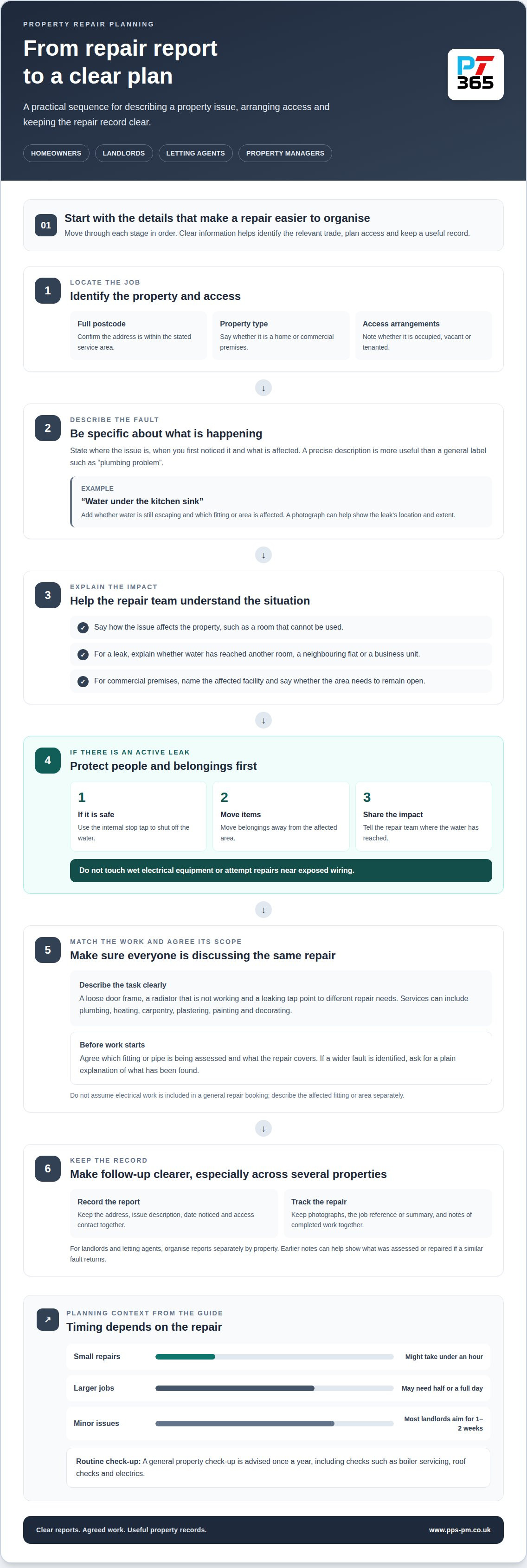
Use these steps to organise a service enquiry:
Provide the full postcode, property type and preferred access arrangements.
Describe the fault, where it is located and when you first noticed it.
Explain how the issue affects the property, such as a room that cannot be used.
Ask how booking details and appointment updates will be shared.
These details give customer support a practical starting point. For a letting agent coordinating several homes, record each address and repair separately. A written job reference or summary makes follow-up clearer when a tenant reports another issue during ongoing maintenance. Keep contact details for the person arranging access with the repair record.
Do landlords or tenants have legal responsibilities for property repairs? Responsibilities depend on the tenancy agreement and the nature of the problem. Tenants should report issues promptly and arrange access. Landlords should establish their responsibilities for the specific repair and keep a record of actions taken.
For an electrical concern, describe the affected fitting or area, such as a light that has stopped working. Don’t assume electrical work is included in a general repair booking. A precise description helps distinguish the issue from plumbing, heating or finishing work and supports accurate coordination.
Timing depends on the repair. Small property repairs might take under an hour, while larger jobs may require half or a full day’s work. Most landlords aim to resolve minor property issues within 1-2 weeks. A general property check-up is advised once a year, including checks such as boiler servicing, roof checks and electrics. Use these timeframes to plan access and prioritise reported issues.
Domestic and commercial plumbing repairs
A leaking tap in a flat and a faulty toilet in a café need different plans. Domestic repairs often involve a household’s water supply, bathroom or kitchen. Commercial work may need to fit around staff, customers, operating hours and access controls. When booking, state the property type, affected area and whether the premises need to remain open.
Describe the fault precisely. “Water under the kitchen sink” is more useful than “plumbing problem”. Say when it began, whether water is still escaping and which fittings are affected. A photograph can help show the leak’s location and extent. Don’t touch wet electrical equipment or attempt repairs near exposed wiring.
For an active leak, protect people and belongings first. If it’s safe, use the internal stop tap to shut off the water, then move items away from the affected area. Tell the repair team whether water has reached another room, a neighbouring flat or a business unit. This helps them understand the impact and plan the work.
Explain what the water is doing and where it appears. A damp patch below a pipe joint, a dripping tap and water escaping around a toilet fitting call for different checks. If the source isn’t visible, describe when the area becomes wet and whether the leak changes when a fitting is used. Don’t dismantle pipework or fittings before assessment.
For commercial premises, name the affected facility and explain any access arrangements. A leak beneath a staff-room sink differs from a fault in a customer toilet. Say whether the water supply can be isolated and whether the area needs to remain open. A clear description helps organise work while limiting disruption to the rest of the building.
Before work starts, agree which fitting or pipe is being assessed and what the repair covers. Ask for a plain explanation if the tradesperson identifies a wider fault, such as damage beyond the visible leak. Keep the repair record with the property’s maintenance notes, especially for a landlord or letting agent managing several addresses.
Landlords and agents can organise reports by property and room. Record the tenant’s description, when the issue began, visible effects and access arrangements. If a similar fault returns, earlier notes can show what was assessed or repaired. Keep photographs and job records together so the property manager can track the issue through completion and update the maintenance file.
Free refurbishment estimates
For a refurbishment, begin by defining the rooms, repairs and finish you want. A London flat might need a kitchen installation, repaired plaster and fresh paint. Record each task separately, then note which fittings should remain and which need replacing. This gives everyone involved a shared project scope and helps prevent small details, such as skirting boards or door frames, being overlooked.
How do I get quotes from property repair companies in London? Prepare a clear project brief with the postcode, property type, rooms involved, photographs and desired finish. Use the same task list when discussing the project so you can compare proposed work consistently and account for each repair.
A full refurbishment needs a room-by-room plan. List each trade required, such as carpentry, plastering, decorating or plumbing. Note existing fixtures, chosen fittings and surfaces that need repair before new finishes are applied. For a bathroom project, specify whether the work includes replacing fittings, repairing walls or refreshing paint. Separating tasks clarifies the sequence and access needed.
Use this checklist to organise the project:
Describe each room and the visible condition of its walls, floors and fittings.
State the intended result, such as a repaired ceiling or a newly installed kitchen.
Record selected materials, colours and fitting details where known.
Note access arrangements, occupied rooms and items that need protection.
Plan the sequence before work begins. Complete carpentry and surface repairs before painting, for example, to avoid damaging finished surfaces. If a wall needs plastering before decoration, include both stages in the room plan. Keep the details together and update them if the scope changes.
For heating or gas work within a project, identify the appliance and installation needed. Gas Safe registration matters when choosing an engineer for gas work. Keep this task separate from decorating or carpentry so responsibilities and the sequence remain clear.
Property maintenance planning also means recording defects that could affect the finished rooms. Note damp staining, cracked plaster or damaged timber before covering the surface. This helps distinguish preparation work from the final finish and gives the tradesperson useful context.
Keep a simple project file with room notes, photographs, selected materials and access arrangements. Landlords and letting agents can add tenant contact details and note which areas are ready for work. An up-to-date brief helps coordinate trades and gives everyone a practical reference throughout the refurbishment.
Plastering, rendering, painting and decorating
A cracked wall, loose render and peeling paint need different treatments. Identify whether the damage is inside or outside, where it appears and what surrounds it. Staining beneath a ceiling, for example, may need investigation before repainting. Covering a mark without addressing its source can leave the underlying problem unresolved.
Plastering repairs smooth or renew interior surfaces, while rendering covers suitable external walls. Ask how the tradesperson will prepare and finish the area, including where the repair meets skirting boards, door frames or existing surfaces. Beside a window, clarify whether the work includes the reveal and surrounding wall.
Painting and decorating depend on surface preparation as much as the final colour. Say whether you need one wall refreshed, a whole room redecorated or several rooms completed. Note the existing paint condition, visible cracks and any furniture that needs protecting. Agree which surfaces are included, such as walls, ceilings, doors and woodwork.
Before booking, record these details:
The room or external area, such as a hallway wall or garden-facing elevation.
The visible defect, such as flaking paint, cracked plaster or damaged render.
Your preferred finish, including colour, sheen and any existing paint reference.
Nearby items requiring protection, such as flooring, radiators or fitted cupboards.
Carpentry can affect the final finish. A damaged skirting board, loose door frame or uneven timber trim may need attention before painting. List each item separately and agree how the joinery and decorating work will meet. This helps prevent gaps between trades or fresh paint being marked during later repairs.
For external walls, distinguish render repairs from roofing work. Water entering near a roofline may affect interior plaster and paint, so describe where the stain appears and whether it changes after rain. Address an active leak before cosmetic finishing; otherwise, new decoration may conceal damage without resolving its source.
If you’re planning several repairs, divide the brief by room and surface. A letting agent could record a bedroom ceiling, hallway skirting and exterior render as separate tasks. Ask for the preparation, repair and finishing stages to be clear. This makes progress easier to review and helps you compare the completed work with the agreed scope.
Check finished surfaces in good light. Look for missed areas, uneven edges and paint on adjacent fittings. Compare the result with the agreed rooms and surfaces, then record any remaining items promptly. A clear handover matters to homeowners, landlords and property managers.
Qualifications, insurance and workmanship guarantee
Match qualifications and insurance to the repair. For a leak, gas appliance fault or damaged ceiling, establish who will assess the work, what their cover includes and how the completed job will be recorded.
Qualifications and industry accreditations
Ask which person will carry out the work and what training or accreditation applies to that task. A general property repair may require different experience from boiler or gas work. For gas-related work, check the engineer’s Gas Safe registration and that the proposed task matches their registration details. Keep the response or written confirmation with the job record.
Look for evidence that relates directly to the repair, not just a broad claim of expertise. A boiler fault calls for relevant heating experience, while a damaged door frame needs carpentry skills. A clear explanation of the assessment, repair method and handover helps you judge whether the tradesperson understands the job.
For a landlord or managing agent, record the assigned tradesperson and work completed at each address. Keep relevant inspection records, service documents and correspondence together. If another tradesperson takes over, a concise handover can help explain earlier findings and avoid unnecessary repeat checks.
Insurance and workmanship guarantees
Liability insurance can help cover certain claims connected with work, but it doesn’t automatically cover every loss or defective repair. Check that the stated cover applies to the work and property involved, and ask what documentation is provided for your records.
A workmanship guarantee is separate from insurance. Read its written terms before work begins: identify what work it covers, how long the cover lasts, exclusions, and the process for reporting a concern. Don’t treat an informal assurance as a substitute for clear written terms. Keep the agreed scope, completion notes and any guarantee documents together.
For leak detection, record the first visible sign, the affected room and any changes over time. Photographs can show staining, damp patches or water near a pipe. Share these details with the tradesperson and, if making an insurance claim, follow your insurer’s instructions. Keep dates, messages, inspection findings and repair documents together to give the insurer a clear timeline without assuming a particular repair or loss will be covered.
Before approving work, confirm who will answer questions, how changes to the repair will be recorded and what evidence you’ll receive at completion. Contact the property maintenance team to discuss your repair requirements and keep the agreed details in writing.
We are a trusted property Maintenance company providing reliable, high-quality services across London and Kent: Boiler Installation
We are a trusted property Maintenance company providing reliable, high-quality services across London and Kent, supporting property owners with boiler installation and servicing. Homeowners can discuss a new installation when their heating equipment needs replacing. Landlords and letting agents can arrange maintenance work for property issues and keep repair records organised.
Describe the work needed and share details about the existing boiler or other maintenance tasks. Carpentry can address problems such as a damaged door frame or timber fitting. A clear job description helps establish the scope before work begins.
Contact We are a trusted property Maintenance company providing reliable, high-quality services across London and Kent to discuss boiler installation, servicing, carpentry or property maintenance.
Take the next step with a clear repair brief
Choosing property repair companies in London is easier when you know your next step. Write down the issue, property address and result you need. Add access details and relevant photographs, then keep a copy of the brief for your records. This gives the conversation a practical starting point, whether you are arranging work for your own home or managing a property for someone else.
Use the discussion to explain your priorities and understand the proposed scope before deciding how to proceed. Clear communication helps you stay focused on the repair itself and keep arrangements organised. If you are ready to talk through your requirements, contact We are a trusted property Maintenance company providing reliable, high-quality services across London and Kent to discuss your property repairs. A concise brief is a useful first step towards getting the right work planned for your property.
Frequently Asked Questions
Are your builders qualified and insured?
For gas and heating work, Plumbfix 365 states it is 100% Gas Safe Registered. Match the worker’s qualifications to the task: boiler work differs from carpentry or plastering. Ask who will carry out the job and what records you’ll receive. Before work starts, make sure the written scope identifies the repair and the person responsible for completing it.
How quickly can you attend a maintenance issue?
Attendance depends on the issue, property location, access arrangements and scheduling. Describe the fault clearly when booking. Say whether a leak is active, which room is affected and whether water has reached another area. For a heating fault, explain which parts of the system are affected. These details help the team assess urgency and arrange the next step.
Need a hand?
Start with the property address, a short description of the problem and the outcome you need. For a landlord or letting agent, include the tenant’s access details and a suitable contact person. Photographs can help explain visible damage, such as a ceiling stain or a broken fitting. Keep any previous job notes nearby, then contact Plumbfix 365 to discuss the repair.
What is the purpose of building maintenance services?
Building maintenance helps keep a property’s systems, fixtures and finishes usable through planned checks and repairs. Recording a recurring boiler fault, for example, may help identify a need for servicing, while repairing a damaged door can restore access and function. Clear maintenance records also help owners and property managers track reported issues, completed work and follow-up tasks.
Which property repair companies operate across London?
Plumbfix 365 provides plumbing and heating services to residential and commercial customers across London and Kent. Its work includes boiler installation, boiler servicing and plumbing repairs. For a London property, give the full postcode and explain the repair required. That helps establish whether the location and task fit the service requested, without confusing a plumbing fault with unrelated work such as blocked drains.
How much do property repairs typically cost in London?
The price depends on the work required and is provided after you request a quote. Factors include the fault, access, materials, labour and whether inspection identifies further work. Describe each task separately when requesting a quote. For example, list a leaking pipe and damaged wall as distinct items so the proposed scope addresses both.
Which London property repair companies offer emergency or 24-hour callouts?
Ask whether the service handles the specific urgent issue and whether its stated attendance arrangements suit your situation. Plumbfix 365 provides emergency plumbing repairs for urgent leaks and pipework issues. A 24-hour callout is a separate commitment, so don’t assume it follows from the word “emergency”. Explain the fault, its impact and any immediate access restrictions when arranging help.
Are London property repair companies insured and qualified for their work?
Check that qualifications fit the task and insurance applies to the work involved. Liability is limited to the value of the work carried out; nothing limits liability for death or personal injury caused by our negligence. Keep the written scope and completion records with the property file.



Comments