


Water Leak Repairs for Rented Property: Who Pays for Damage
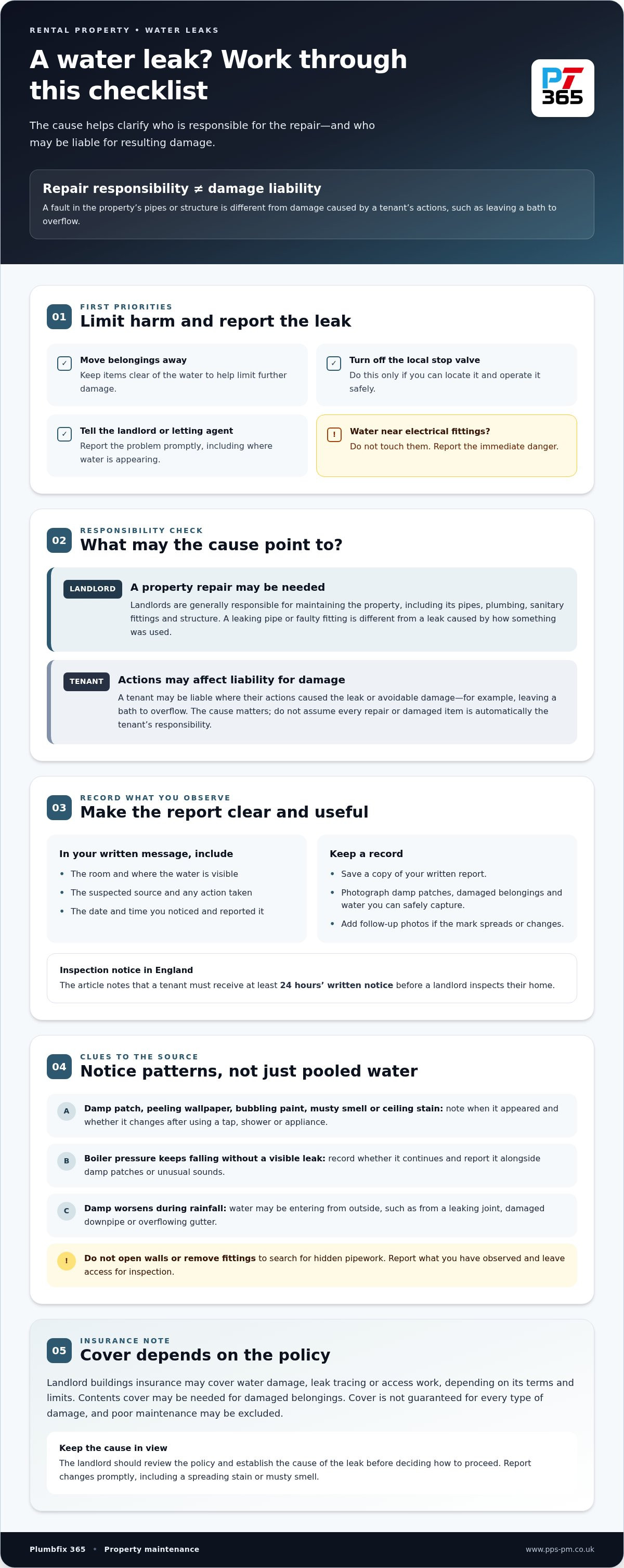
Responsibility for water leak repairs for rental properties usually depends on what caused the leak. Landlords are generally responsible for repairs to the property’s pipes and structure, while a tenant may have to pay for damage caused by their actions, such as an overflowing bath.
It’s understandable to worry about who will pay when water is spreading or damage appears. For water leak repairs for rental properties, report the leak promptly, limit further damage where it’s safe to do so, and establish where the water is coming from.
This guide explains the difference between a landlord’s repair duties and a tenant’s liability, what to do when a leak needs urgent attention, and how the source can be traced. It also explains how insurance may affect water leak repairs for rental properties and the resulting damage.
Table of Contents
Tenant responsibility for damage caused by water leaks
A tenant’s liability depends on what caused the leak and whether their actions contributed to the damage. Landlords are generally responsible for maintaining the property, but a tenant may be liable for damage caused by carelessness, such as leaving a bath to overflow.
If you discover a leak, move belongings away from the water and turn off the local stop valve if you can locate it safely. Tell the landlord or letting agent promptly. If water is near electrical fittings, don’t touch them, and report the immediate danger.
Recognising early water damage
Early water damage may appear as a damp patch, peeling wallpaper, bubbling paint, a musty smell or a ceiling stain. These signs matter because water can travel behind a wall or beneath flooring before becoming visible. Note when the mark appeared and whether it changes after using a tap, shower or appliance.
A boiler that keeps losing pressure without a visible leak may point to a concealed problem in the heating circuit. Note whether the pressure continues to fall and report it alongside any damp patches or unusual sounds. Don’t open walls or remove fittings to search for hidden pipework.
Reporting and documenting damage
Reporting means telling the landlord or letting agent what happened; documenting means keeping a clear record. Send a written message as soon as possible, stating the room, visible water, suspected source and any action taken. Include the date and time, and keep a copy.
Take clear photographs of damp patches, damaged belongings and any water you can safely capture. Add follow-up images if the mark spreads or changes. This record helps the landlord arrange an inspection and distinguish new damage from existing wear. In England, UK Government says a tenant must receive at least 24 hours’ written notice before a landlord inspects their home.
Insurance and tenant responsibility
Landlord buildings insurance may cover water damage, leak tracing or access work, depending on the policy’s terms and limits. Contents cover may be needed for damage to belongings. Insurance does not cover every type of damage, and poor maintenance may be excluded. The landlord should review the policy and establish the cause of the leak before deciding how to proceed.
A tenant may be responsible if their actions caused the leak or avoidable damage, such as an overflowing bath damaging another flat. A failed pipe is different from damage caused by misuse. Record what happened honestly, but don’t assume every repair or damaged item automatically becomes the tenant’s responsibility.
Hidden leaks can damage plaster, flooring and timber before a surface mark appears. Persistent damp can encourage mould growth and create health concerns for occupants. Report changes promptly, including a musty smell or a spreading ceiling stain, rather than waiting for water to pool.
Keep communication factual: describe what you saw, when it began and whether it is worsening. These details help the landlord or letting agent arrange an appropriate inspection. Don’t remove wall coverings or attempt repairs unless the tenancy agreement allows it.
Video: Who is responsible for repairs?
Responsibility usually depends on the part of the property that needs repair. In a rented home, landlords are responsible for repairs to basins, sinks, baths, other sanitary fittings, pipes and drains. They’re also responsible for the building’s structure and exterior, including faults that let water enter or escape.
This covers the plumbing itself, not every consequence of how it’s used. A leaking pipe beneath a sink is different from water escaping because a tenant leaves a tap running. The first points to a repair to the property’s plumbing. The second may raise a separate question about damage caused by the tenant’s actions.
Plumbing and sanitary fittings
A faulty bath waste, leaking basin connection or split supply pipe can affect flooring, ceilings and nearby rooms. These fittings and pipes fall within the landlord’s repair responsibilities. Tenants should report the fault rather than remove panels, dismantle pipework or carry out repairs without permission.
The same principle applies when a leak appears around an appliance supplied with the property. Describe where it is and what happens, such as water appearing beneath the kitchen sink only when the tap runs. This helps identify whether the fitting, pipe or appliance connection needs attention.
Drains also fall within the landlord’s repair responsibilities. A leak from a sanitary fitting or associated pipework should not be treated as a tenant repair simply because it is inside the home. If water is escaping or a fitting cannot be used safely, report the problem promptly and keep the area accessible for inspection.
Gutters and external water flow
Landlords should regularly inspect and maintain gutters and drains so water can flow away from the property. A leaking joint, damaged downpipe or overflowing gutter may send rainwater down an external wall. Damp patches near a window or ceiling can then appear indoors, even though the source is outside.
For example, water spilling over a blocked gutter during rainfall may stain an upstairs wall. That points to an exterior maintenance issue, not necessarily a burst internal pipe. Note whether the damp worsens during rain and tell the landlord where it appears. Clear observations help distinguish weather-related water entry from a plumbing fault.
In a block of flats, a leak may involve a shared pipe or common area rather than one tenant’s fittings. Report where water is visible, including corridors or ceilings beneath another flat. The landlord or managing agent can arrange access and establish which part of the property needs attention.
Landlords arranging repairs can use property maintenance support to address issues in a rental home. Keep the report focused on the affected fitting, pipe or building area so the right repair can be arranged.
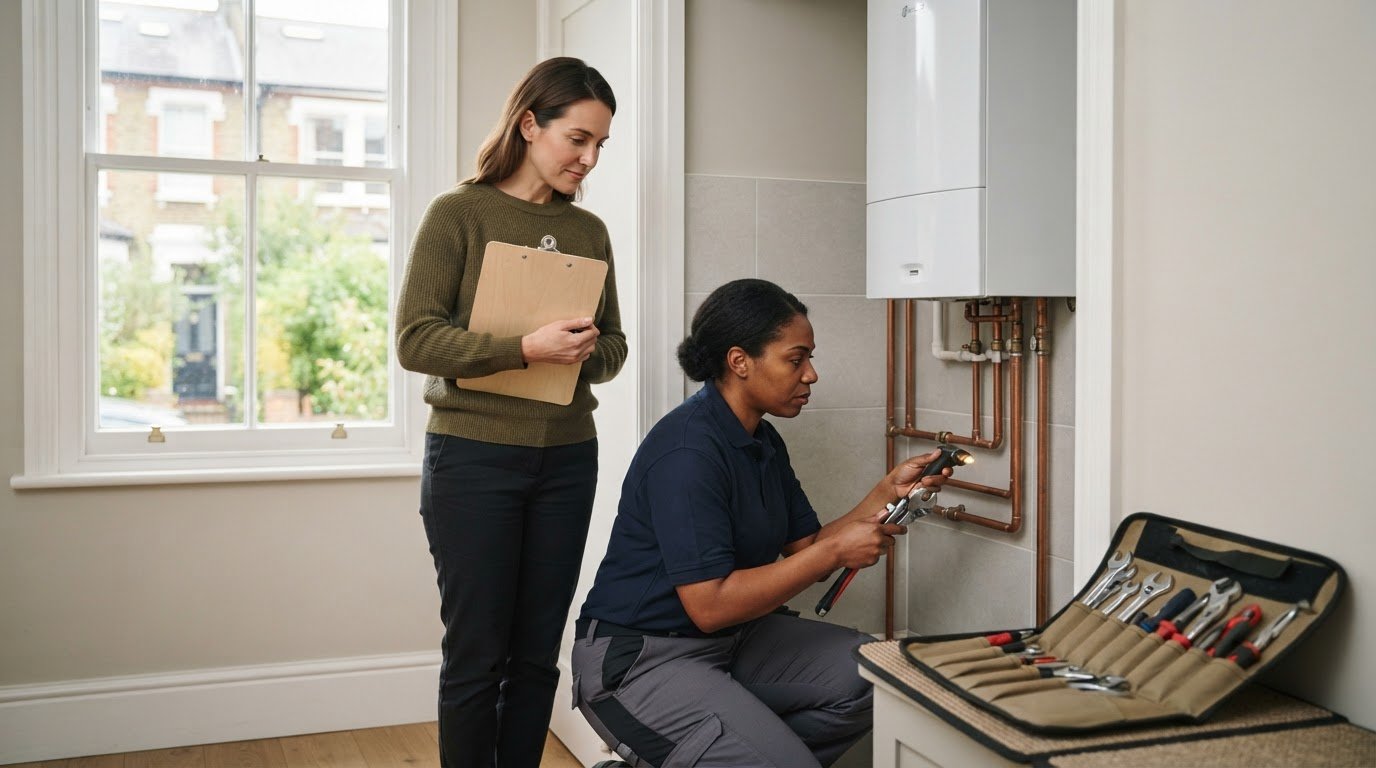
Landlord and tenant responsibility for leak repairs
In a rented home, responsibility depends on whether the fault belongs to the property or results from a tenant’s actions. In England, landlords are responsible for the building, water supply and pipes, even when the tenancy agreement does not mention those repairs. Tenants should report faults promptly and avoid taking on repairs without agreement.
The rules and routes for dealing with repairs vary across the UK. The general distinction remains useful: a failed pipe or leaking roof points to a property repair, while an overflowing bath caused by a tenant’s actions may make that tenant liable for resulting damage. Follow the relevant process for the property’s location.
What the landlord must repair
In England, a landlord remains responsible for required repairs even if the tenancy agreement is silent. This includes water supply pipes and the property’s structure. A tenant should report a dripping pipe behind a kitchen unit, a leak from a supplied bathroom fitting or water entering through a damaged roof as soon as possible.
Tenants should record each report, including the date, location and visible effects. A message describing water beneath the bathroom basin gives the landlord a clearer starting point than a general report of damp. If a repair is not addressed in England, tenants can contact their local council’s environmental health department for help. Tenants in Scotland can seek help if repairs are not carried out.
What the tenant must do
A tenant should report a leak quickly and take reasonable steps to prevent further damage, such as moving belongings away from water. They should not carry out repairs unless the tenancy agreement says they can. Tenants cannot be forced to carry out repairs that are the landlord’s responsibility.
Responsibility may change if the tenant caused the leak. For example, water escaping from a bath left overflowing and damaging another flat may make the tenant responsible for the resulting damage. The cause, evidence and extent of damage matter. Record what happened clearly, and distinguish the original fault from any damage that followed.
Emergency repairs and rent
Can tenants arrange emergency repairs and deduct the cost from rent in the UK? Tenants should continue paying rent while waiting for repairs and should not assume they can deduct repair costs. Report the emergency to the landlord or agent and get agreement before arranging work themselves.
For a serious leak, send a written report explaining the immediate risk, such as water reaching a ceiling below. Keep copies of messages and photographs, and note any response or agreed next step. This creates a clear record if responsibility or repair progress is later disputed.
When a landlord does not address a repair, the appropriate route depends on the UK nation. Keep the report factual, retain the tenancy agreement and document any worsening damage. In England, the local council’s environmental health department can help with uncompleted repairs; in Scotland, tenants can contact the Private Rented Housing Panel.
Finding the source of a leak
To find and repair a leak, then dry the affected area, the landlord should assess visible clues and arrange an inspection of the suspected pipe or appliance. Drying should begin after the leak stops. Tenants can help by reporting where water appears and when it changes, without opening walls or dismantling fittings.
Start with the pattern. Water beneath a kitchen sink may point to its tap connections, waste pipe or a nearby appliance. A wet patch below a bathroom could relate to a bath, basin or pipework above. Note whether water appears after using a particular fitting, running a washing machine or flushing a toilet. These details help narrow down the source.
Check the water safely. If a leak is active, use the stop valve on the pipe or appliance where the water appears to be coming from, if you can identify it safely. Don’t touch electrical fittings or wet electrical equipment. If water is near them, switch off the electricity at the mains if it is safe to do so, and report the hazard urgently.
Clues that point to a hidden leak
A leak behind a wall or beneath flooring may leave clues before water becomes visible. Look for a new damp patch, blistering paint, a musty smell, warped flooring or a stain that grows after a tap is used. The landlord can compare these signs with pipes, bathrooms and appliances on the same floor or above.
Record the conditions, not just the mark. Note whether the patch worsens during rainfall, after a shower or while an appliance runs. If the water looks dirty or contains wastewater, it may indicate a larger problem, such as a leak in a sewage line. Keep clear of contaminated water and include this detail in the report.
Repairing and drying the affected area
Once the source is identified, the landlord should arrange a repair to the failed pipe, fitting or appliance connection. Drying should follow the repair, not replace it. Remove standing water where safe, move wet belongings and improve ventilation. Keep affected rooms clear so the damaged area can be inspected and dried thoroughly.
Wet plaster, flooring or cupboards may conceal moisture even when the surface looks dry. Where necessary, the landlord should check behind affected finishes rather than simply paint over a stain. Drying the area and monitoring it for returning damp can help distinguish residual moisture from a leak that is still active.
Tenants should arrange access to the affected area with the landlord or letting agent and keep a record of changes. For example, a photograph of a ceiling stain before and after the repair can help show whether it is spreading. If fresh water appears after the repair, report it promptly as a possible continuing leak, not merely an old mark.
How quickly must a landlord respond to an emergency water leak?
Response time depends on how dangerous the leak is and how quickly it is causing damage. A steady drip into a bowl is different from water flowing through a ceiling or reaching electrical fittings. The landlord should assess the reported risk, explain the next steps and tell the tenant when the repair is expected to be completed.
A major leak needs urgent attention if water is flowing continuously, cannot be contained and shows no sign of stopping. Water near electrical fittings also raises an immediate safety concern. When contacting the landlord or letting agent, tenants should describe these details clearly rather than reporting only “a leak”.
In England, a council or housing association landlord must fix an emergency hazard in a tenant’s home within 24 hours. That specific requirement applies to council and housing association landlords. It should not be treated as a universal response deadline for every private tenancy or every leak.
What affects the urgency?
The landlord’s response should reflect the leak’s source, spread and impact on the home. A burst pipe supplying water to a ceiling cavity can cause damage in rooms below. A slow leak beneath a basin may also need prompt repair, especially if damp is spreading or the fitting cannot be used.
When a tenant reports an emergency, include practical details that help the landlord judge the risk:
Whether water is still flowing, and whether it can be contained.
Which room or fitting is affected, such as a bathroom pipe or kitchen appliance.
Whether water is reaching a ceiling, another flat or electrical fittings.
What immediate action has been taken, such as closing a safe, accessible stop valve.
These details help the landlord decide whether to arrange urgent attendance, isolate a water supply or plan a repair. A photograph can show the extent of visible water, but it should never delay a call about an active, serious leak.
Keeping tenants informed
Once the landlord has arranged a response, the tenant should receive a clear update about the expected repair timing. If an initial visit only stops the leak, explain what remains, such as replacing a pipe section or drying an affected ceiling. A temporary fix does not necessarily complete the underlying repair.
Tenants should keep a record of the original report and later updates. If water continues after an agreed repair, report the change immediately and state what has worsened. Clear updates help everyone understand what work remains and what to expect next.
We are a trusted property Maintenance company providing reliable, high-quality services across London and Kent: Boiler Installation
We are a trusted property Maintenance company providing reliable, high-quality services across London and Kent. We can support landlords with water leak repairs for rental properties when a leak needs attention or damage requires follow-up. A clear repair process helps address the fault and identify any related work needed in the property.
A leak affecting a heating system may need assessment alongside boiler servicing or boiler installation work. Other property repairs may involve carpentry if damaged fittings or surrounding areas need attention. The right work depends on the fault and the affected parts of the home.
If you're managing a rental repair, contact us to discuss the property issue.
Put a clear repair plan in place
A simple reporting plan can make the next leak easier to manage. Give tenants and managing agents one clear route for raising property issues, and keep repair records together. Note where the stop valve is and who holds access details, so essential information is ready when a fault occurs.
For landlords, a consistent process also helps separate the initial fault from later damage. Record inspection findings, repair work and any follow-up needed. If the leak affects other parts of the home, keep those tasks visible rather than treating the first repair as the end of the job.
Plumbfix 365 provides property repairs for landlords, alongside plumbing and heating services. If you need support with a rental property issue, contact Plumbfix 365 to discuss the next step. A practical plan and a reliable repair process can help you manage problems with greater confidence.
Frequently Asked Questions
Who is responsible for repairing water leaks in a UK rental property, landlord or tenant?
Usually, the landlord must repair leaks caused by faults in the property’s pipes, water supply or structure. A tenant may be responsible for damage if their actions caused it, such as leaving a bath running until it overflows. Distinguish the repair to the faulty pipe from damage to belongings or another flat. Both the property’s location and the cause of the leak matter when assessing responsibility.
What does UK law require landlords to do about leaks and water damage?
Landlords must deal with repairs that fall within their responsibility, including relevant water supply pipes and the property’s structure. In England, for example, a landlord cannot avoid a required repair simply because the tenancy agreement is silent. Tenants should report faults promptly and keep copies of their messages. If a repair remains outstanding, the route for help differs between UK nations, so follow the process for the property’s location.
Does landlord or tenant insurance cover leak repairs and water damage?
Landlord buildings insurance may cover water damage and leak-related work if the policy includes that cover. Trace-and-access costs may have a policy limit, and damage to contents depends on whether contents cover is included. A tenant’s policy wording determines whether their own damaged belongings are insured. Keep photographs and records of affected items to support an accurate claim.


Comments