


Reliable Property Repair Companies for Letting Agents
Rental repairs need clear ownership and prompt action. Property repair companies for letting agents can coordinate practical work, from plumbing and heating to carpentry and decorating. In the UK, landlords are responsible for repairs to a rental property’s structure and exterior.
A tenant’s report may describe a faulty boiler, damaged pipework or worn fittings. Letting agents need a clear process to assess the issue, arrange the right repair and keep property records organised. Reliable property repair companies for letting agents help make that process easier to manage.
This guide explains which jobs a property maintenance service can handle, how handyman and multi-trade repairs fit in, and what estimates and invoices should clarify. It also covers roofing and plumbing issues, with practical guidance on recording work arranged for a rental property.
Table of Contents
What do property maintenance companies in London do?
We are a trusted property Maintenance company providing reliable, high-quality services across London and Kent, helping landlords and letting agents organise inspections, repairs and property records nationwide. A clear process tracks each reported fault from assessment through to completion and links the work to the correct rental home.
Services for Letting Agents and Landlords
Services may include planned property checks, repair coordination and work between tenancies. An agent can log a tenant’s report, arrange an inspection, assign the task and record the completed work. Detailed reports, including photographs, can show the landlord what happened and whether anything remains outstanding. Consistent records also help agents track recurring issues across a property portfolio.
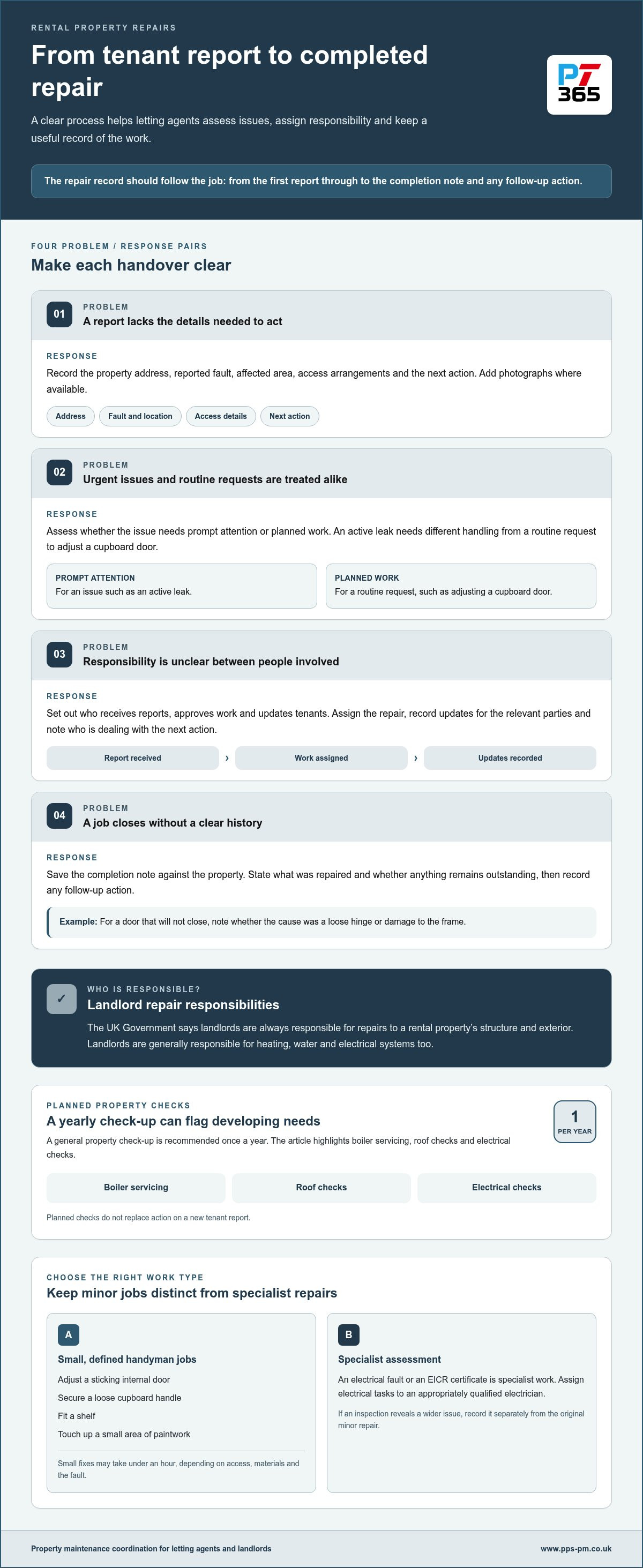
Use a process that records the address, reported fault, access arrangements and next action. An active leak needs different handling from a routine request to adjust a cupboard door. Categorising each report helps the agent set its priority and give the person attending useful details before work begins.
Landlord Maintenance and Regulatory Services
The UK Government says landlords are always responsible for repairs to a rental property's structure and exterior. Landlords are generally responsible for repairs to heating, water and electrical systems too. Maintenance records can bring tenant reports, inspection notes and invoices together, helping landlords track how an issue was handled and what work remains.
The UK Government says repairs are normally revenue expenses that can be deducted when calculating property business profits. Keep records that describe the work carried out, such as repairing a damaged roof tile rather than upgrading the property. Clear descriptions help landlords review maintenance and property accounts.
A general property check-up is recommended once a year, including boiler servicing, roof checks and electrical checks. Use an inspection to identify developing maintenance needs. For example, a roof check may flag damaged coverings before water marks appear inside. Planned checks do not replace action on a new tenant report.
A consistent workflow helps prevent repair requests from being lost between the tenant, agent and landlord:
Record the tenant’s report, affected area and access details.
Assess whether the issue needs prompt attention or planned work.
Arrange the repair and record updates for the relevant parties.
Save the completion note and any follow-up action against the property.
For example, reports of recurring damp around one window can be compared over time. Reviewing earlier inspections and repairs may help identify whether the cause remains. A clear job history also gives a new property manager useful context, rather than leaving them to piece together separate notes.
Set out who receives reports, approves work and updates tenants. Naming the next action makes responsibility clear when several people manage a rental property. Keep the handover practical: record the issue, identify who is dealing with it and note the outcome when the task closes.
Handyman services
A handyman can take on small, defined jobs that help keep a rental home usable and presentable. Examples include adjusting a sticking internal door, securing a loose cupboard handle, fitting a shelf or touching up a small area of paintwork. Small maintenance fixes may take under an hour, depending on access, materials and the fault. A precise description helps distinguish these tasks from repairs that need specialist assessment.
Grouping compatible jobs can make a visit more efficient. An agent might arrange work on a loose hinge, a damaged shelf and a stiff door at the same property. Keep each task distinct in the work instruction, even when they can be completed together. If an inspection uncovers a wider issue, such as damp behind a wall or extensive plaster damage, record it separately from the original minor repair.
For rental homes across a national portfolio, organise work orders by property and postcode. Include access arrangements, the relevant room and any tenant restrictions. A portfolio with homes in different parts of the country may need separate scheduling, but the repair record should follow the same format. This makes it easier for agents to review outstanding jobs without mixing up addresses or instructions.
Distinguish electrical work from general handyman tasks. Replacing a loose handle is a minor repair; investigating an electrical fault or producing an EICR certificate is specialist work. Record the reported symptom, the fitting involved and any visible damage. Assign electrical tasks to an appropriately qualified electrician, rather than treating a general property visit as an electrical inspection or certificate.
Good communication starts with useful job details. Include the tenant’s description, the exact location of the fault and photographs where available. The completion note should state what was repaired and whether anything remains outstanding. For example, a report about a door that will not close should record whether the cause was a loose hinge or damage to the frame.
List minor tasks, group compatible work at the same address and separate specialist repairs. Keep the original request and completion details together so the landlord can follow what happened. This is especially useful when a small issue recurs or a later inspection identifies a different cause. Clear records help the agent decide whether to reopen the original job or create a new repair instruction.
Repairs and multiple trades under one contractor
A single contractor can coordinate repairs that need several trades at one rental property. For example, a leak may damage a ceiling, requiring plumbing work before plastering and repainting. One work order can connect these tasks, show their sequence and keep the agent’s property records together.
Start by identifying the fault and its likely causes. A stained ceiling could point to a plumbing leak, roof ingress or condensation. An initial inspection helps establish which specialist should attend first. Addressing the source matters: decorating before fixing a leak can mean repeating the finish work.
Different tasks need different skills. A plumber can investigate a leaking pipe, while a carpenter can repair a damaged door frame. A plasterer may then make good a wall, and a decorator can apply the final finish. Keeping each trade’s role clear helps the agent track progress and identify unfinished work.
Before work starts, give the contractor a written scope for the rental property. Include the reported fault, affected rooms, access details and photographs where useful. The scope should also show which tasks depend on earlier repairs. For a water-damaged bedroom, for instance, the sequence could be leak investigation, drying, plaster repair and decoration.
Set one point of contact: Name the person in charge of updates between the tenant, agent and tradespeople.
Record each task: Separate plumbing, carpentry and finishing work in the job notes.
Confirm dependencies: State which repair must finish before the next contractor attends.
Close the record: Add completion notes and any follow-up work to the property file.
Coordination does not remove the need to identify who performs each specialist task. A contractor network may involve employees or separate contractors, so the work record should name the responsible trade and its assigned work. Keep relevant insurance details with the appointment records and make clear which work the scope covers.
For a landlord or agent managing several homes, consistent records make patterns easier to spot. Repeated leaks in one flat, for example, may need investigation beyond separate patch repairs. Compare the reports, dates and completed work in that property’s history. This helps distinguish a fresh fault from an unresolved cause and gives each tradesperson clearer details before attending.
Estimates and invoicing
A clear estimate lets a letting agent understand the proposed work before it begins. It should identify the reported fault, the property’s condition and the included tasks. For example, an estimate for a damaged ceiling should distinguish finding the water source from repairing plaster and repainting. That detail helps the landlord understand what the instruction covers.
Scope matters because an inspection can reveal a different cause from the tenant’s original report. A patch of damp may come from a leaking pipe, roof ingress or another issue. The estimate should describe the recommended repair and any work that depends on further investigation. If the diagnosis changes, record the revised scope before proceeding with additional work.
For residential properties, useful estimates explain the job without relying on trade shorthand. Ask for each task to be described plainly, such as “replace the damaged kitchen tap” rather than “repair plumbing”. Where several trades are involved, show the sequence: resolve the leak, make good the wall, then redecorate. This helps prevent confusion about what is included and what remains outstanding.
An invoice should match the authorised work. Compare its description with the estimate, work order and completion report. For example, if the instruction covered a boiler inspection, the invoice should identify that work rather than combine it with unrelated repairs. Keep the documents in the property record so the landlord can follow the repair from report to completion.
For gas-related work, record the engineer’s Gas Safe details and retain relevant gas safety documentation with the property’s maintenance records. A boiler service and a gas safety check are distinct entries, so name the work completed clearly. If the visit identifies a separate fault, record it as a new task rather than burying the next action in a general invoice description.
Before approving an estimate, use this short review:
Match the address: Check the rental property and affected room.
Read the scope: Confirm which repair tasks are included.
Note exclusions: Record any investigation or follow-up outside the stated work.
File the evidence: Keep reports, approvals and invoices together.
Consistent paperwork reduces stress when reports arrive across a portfolio. A dated approval, clear job description and completion note show what the landlord authorised. They also help an agent distinguish a completed repair from a new tenant report. If an invoice includes work not recorded in the approval, pause and clarify the difference before closing the maintenance file.
Use the same documentation process for routine work and urgent repairs. Record the initial condition, the decision made and the final outcome. A short, accurate record gives the next property manager useful context, especially when a recurring boiler fault or water mark appears again.
Roofing, plumbing and drainage
Roof and plumbing faults can damage several parts of a rental home. A roof leak may leave a ceiling stain, while a failed pipe can soak flooring and plaster. Record where the damage appears, whether water is still entering and which rooms are affected. These details help the attending tradesperson understand the issue before inspecting it.
For a suspected roof fault, note where water appears indoors and whether the mark changes after rainfall. A damp patch beneath a roof slope, for example, can help direct an inspection. Photograph visible damage from a safe position and add the images to the property record. If water is entering, note the affected area and any immediate concern for the tenant.
Plumbing reports benefit from specific observations. State whether a leak is beneath a sink, beside a radiator or near an appliance connection. Note whether the water supply has been isolated and whether the leak continues. Engineers can use these details to assess the reported fault and whether plaster or flooring repairs may follow.
Drainage and blocked-drain work is separate from the roofing and plumbing repair services described here, and is not handled by this service. A slow sink, a gurgling toilet or water backing up through a floor drain may indicate a drainage issue. Record which outlet is affected and whether other fixtures show similar symptoms, so the report accurately describes the problem.
Keep the work record precise. Separate the initial investigation from later repairs, such as replacing a damaged pipe or making good a ceiling. If the source remains unclear, note what the engineer inspected and any follow-up required. Clear notes prevent a plumbing fault from being confused with a roof leak or drainage issue.
Before authorising work, match the instruction to the reported fault. For example, ceiling repairs and decorating should follow attention to the cause of water damage. Record the agreed tasks, access arrangements and completion update. If an appliance connection is involved, identify the appliance and its location in the report.
Keep the estimate, approval, invoice and completion note together in the property file. Each record should describe the authorised roofing or plumbing work and its outcome. If an invoice includes a task that does not match the approval, resolve the discrepancy before closing the job. This gives agents and landlords a clear account of completed work and any remaining action.
We are a trusted property Maintenance company providing reliable, high-quality services across the UK: Boiler Installation
Plumbfix 365 provides boiler installation and boiler servicing for landlords and letting agents across the UK. These services support properties that need a new boiler or routine attention to an existing heating system. Clear records help keep maintenance information organised for each property.
For other property needs, Plumbfix 365 also provides property maintenance and carpentry. An agent might arrange carpentry for a damaged door alongside a separate boiler appointment, recording each task clearly for the landlord.
Contact Plumbfix 365 to discuss boiler installation, servicing or property maintenance for a rental property.
Make your next repair decision clear
Turn each new repair report into a clear instruction: describe the fault, identify the property and state what needs attention. That gives the tradesperson a practical starting point and helps you keep the tenant and landlord informed. For a heating issue, a plumber can assess the reported problem; if the property needs a new heating system, boiler installation may be appropriate.
Choosing property repair companies for letting agents is about more than arranging a visit. A consistent process helps you move from a tenant’s report to an authorised repair and a useful record. We are a trusted property Maintenance company providing reliable, high-quality services across London and Kent, providing local plumbing support and boiler installation, alongside property maintenance services.
Start the next job with the fault details and property information ready. Send an enquiry about property repairs and take the next step towards a well-maintained rental home.
Frequently Asked Questions
Can one contractor really handle every trade?
Do not assume that one operative covers every specialist trade. A contractor may coordinate several trades, but a gas engineer, carpenter and decorator perform different work. For example, a heating fault may need a qualified engineer, followed by separate making-good work. Keep the coordinator’s role distinct from each trade’s responsibility, and record who completed each part. This makes the job history clearer if a fault returns.
What services do property repair companies offer letting agents in the UK?
Services can include general property repairs, handyman jobs, plumbing and heating, carpentry, plastering and decorating. The scope varies between companies. A letting agent might need a leaking pipe repaired, a damaged door adjusted and a room redecorated after repair work. Assign specialist work to the appropriate trade. For gas work, keep the relevant service and safety records with the property’s maintenance documents.
Which UK property maintenance companies specialise in working with letting agents?
Plumbfix 365 provides property repairs for letting agents, alongside plumbing and heating services. Its work includes boiler installation, boiler servicing and landlord gas safety certificates, with technical work carried out by Gas Safe Registered engineers. For an agent, this can be relevant when a tenant reports a heating fault or the property needs planned boiler attention. The company also offers carpentry, plastering and decorating for other property repair needs.
How much do property repair and maintenance services cost for UK letting agents?
The cost depends on the repair’s scope, the property’s condition, access, materials and whether several trades are needed. Replacing a tap differs from investigating a leak that has damaged plaster and flooring. For a useful estimate, describe the fault and affected areas, then review the proposed tasks and any exclusions. Keep the approved scope alongside the final invoice so the landlord can see what work was authorised.
How do letting agents compare property repair companies and service levels?
Compare the range of repairs covered, how specialist work is handled and what records agents receive after completion. For example, a service report with photographs can help explain a repair to a landlord who has not visited the property. Also assess whether work orders, approvals and invoices are easy to track. Compare services using the same sample job, such as a reported leak requiring investigation and follow-up repairs.
What response times and emergency repair cover do property maintenance firms offer?
Emergency cover and response arrangements vary between firms, so review the written service terms for operating hours, escalation steps and how urgent reports are prioritised. A burst pipe and a loose cupboard handle need different responses. Agents should also know how tenants report urgent faults outside routine office hours, who receives the alert and how updates are passed back. Do not assume emergency attendance means every repair can be completed immediately.
How should letting agents vet and appoint a property repair contractor?
Start by matching the stated services to the work required. For gas-related tasks, check Gas Safe registration and ensure the assigned engineer is registered for that work. Review insurance documentation, written work scopes and sample completion reports. Then agree who approves jobs, how access is arranged and where records are stored. A trial appointment for a defined, non-urgent repair can show how clearly the process works.
How do property repair companies handle tenant requests, approvals and invoices?
A good process links the tenant’s request to an authorised job and its final invoice. The agent records the issue, checks it against the landlord’s approval process, then passes on the work instruction. For example, if a tenant reports a faulty radiator, the request should identify the room and symptoms. The invoice and completion record should refer to the same property and authorised task, making reconciliation easier.



Comments