


Landlord Guide to Planned Preventative Heating Maintenance
What if the best way to prevent a heating emergency is to plan for small warning signs before tenants feel the chill? A landlord guide to planned preventative maintenance (PPM) for heating should do more than list service dates. It should connect each property’s heating equipment, planned checks and recorded follow-up.
It’s easy to see routine boiler servicing and landlord gas safety checks as the whole maintenance plan. They’re essential, but a clear PPM process also helps you track reported faults, radiator issues, outstanding repairs and completed work across your properties. This guide explains how to organise records, plan checks around each system and keep follow-up actions visible.
We are a trusted property Maintenance company providing reliable, high-quality services across London and Kent. Heating and gas work is carried out by Gas Safe Registered engineers. The company is 100% Gas Safe Registered and holds £5 million public liability insurance. Documented job reports and dedicated account management can help keep maintenance organised. Call 01322 252015 or 01322 251520 to discuss heating support.
Key Takeaways
A landlord guide to planned preventative maintenance (PPM) for heating helps you link each property’s heating assets, planned checks and follow-up actions.
Build a property-by-property plan using existing records, service history, observed issues and relevant manufacturer guidance.
Understand how PPM planning differs from boiler servicing, landlord gas safety checks and reactive repairs, so each activity has a clear purpose.
Keep a consistent record of checks, tenant reports, findings, recommendations and whether each action is complete or outstanding.
Coordinate boiler servicing, installation and radiator fitting with documented job reports and a clear point of contact.
Table of Contents
What does planned preventative maintenance for rental heating involve?
Planned preventative maintenance (PPM) is planned work to monitor heating assets and address developing issues before they escalate. For a landlord, it means organising checks and follow-up around the equipment in each property, rather than relying only on faults reported after the heating stops working.
Heating PPM is a repeatable process for recording a rental property’s heating equipment, monitoring its condition and arranging suitable follow-up work before observed issues become more disruptive. The aim is dependable heating, clearer records and fewer unplanned surprises. It can help you spot a pattern, such as repeated reports about one radiator, and decide what needs attention next.
PPM is a plan, not a promise that breakdowns or repairs will never happen. Equipment can still develop faults between checks. The value lies in having an organised way to track what is installed, what has been done and what remains outstanding. The Preventive maintenance (PM) is a routine for periodically inspecting equipment to fix small problems before they become major ones. overview explains the wider maintenance approach behind this kind of planned work.
Which heating assets should a landlord record?
Start with a separate inventory for each property. Record the main heating and hot-water components so that maintenance notes can be linked to the right equipment, not just to a general address record. Include:
The boiler, with its known age and any available instructions.
Radiators, noting their locations and any reported concerns.
Heating controls, including the type of control where known.
Hot-water components connected with the property’s heating arrangement.
Service history and previous faults reported by tenants or identified during work.
Keep known facts distinct from details you haven’t established. If the boiler’s age is unknown, mark it as unknown rather than guessing. This makes the inventory more dependable and helps anyone coordinating work understand what is recorded and what still needs clarifying.
What should a useful baseline record contain?
A baseline is the starting record you can update after checks, tenant reports and repair visits. Bring existing documents together by property, then add clear notes from each new job. Keep the record practical: someone managing the property should be able to see what happened, what was found and whether any action remains.
Date of the visit or reported issue.
Work completed and the heating asset involved.
Condition reported or observed during the work.
Recommendations or follow-up actions, with their current status.
Relevant certificates, service records and job reports.
Missing history is a reason to establish a baseline, not to assume the system has a defect. Record what you know now and add new findings as they arise. Clear job reports can also provide useful context when considering what to look for in heating engineer reviews and keeping property records consistent.
How to build a heating PPM plan around each rental property
Build the plan around the equipment and its history, not a single schedule copied across every rental. The landlord guide to planned preventative maintenance (PPM) for heating starts with an accurate property record, then turns findings into assigned actions that can be checked and updated. Timing should reflect the equipment, its service history and relevant manufacturer guidance. Don’t assume every boiler or heating system needs the same inspection frequency.
Move from asset inventory to documented follow-up: gather records, assess each property’s heating, plan suitable checks, assign actions and review their status.
Gather existing records. Bring together property-specific asset details, service history, available instructions, certificates, job reports and previous tenant reports. Note gaps rather than filling them with assumptions.
Review the equipment and history. Consider the type and known age of the boiler and other heating assets, past faults, completed work and any recurring reports. This helps distinguish a one-off concern from an issue that has appeared more than once.
Set planned checks. Use relevant manufacturer guidance and recorded professional recommendations to decide what checks are appropriate and when they should be scheduled. Routine system upkeep is explained in this central heating maintenance guide.
Prioritise and assign actions. Record each task with an owner, status and next step. Keep overdue or unresolved items visible until they’re addressed or reviewed.
Review and update the plan. After a visit or new tenant report, update the property record. Change future plans when new findings, replacement equipment or professional advice make the existing schedule unsuitable.
How should landlords prioritise heating tasks?
Keep safety-related concerns distinct from reported faults, routine servicing and longer-term improvement work. A reported defect needs assessment, not an assumption about its cause or severity. Arrange qualified professional advice on the appropriate next step, then record the recommendation. Make outstanding actions easy to spot, with a named owner and a clear status, so responsibility doesn’t disappear between a report and a follow-up visit.
How should a landlord organise the maintenance schedule?
Use a calendar or property management system to track planned appointments and due actions property by property. Allow for tenant access arrangements, and record whether the appointment went ahead, what work was completed and what remains open. All Property Management’s rental-property maintenance guidance also discusses preventive checks and maintenance calendars. A schedule supports coordination; it shouldn’t promise a fixed completion time.
A consistent process makes the plan useful across a portfolio without treating every home as identical. For help coordinating heating work and documented follow-up, explore heating maintenance support for rental properties.
PPM, boiler servicing and reactive repairs: what is the difference?
These activities can support the same heating system, but they have different purposes. PPM organises planned checks and follow-up across a property’s heating assets. Boiler servicing is a defined piece of work on the boiler. A landlord gas safety check focuses on gas safety, whilst a reactive repair responds to a fault that has already been reported or found.
Keeping the distinctions clear helps you plan the work and file the right records. A service record or gas safety record can inform your wider maintenance plan, but neither automatically covers every asset, reported issue or follow-up task.
Does boiler servicing replace a PPM plan?
No. Servicing is a defined activity, while PPM coordinates the broader picture: which heating assets are present, what work has been recorded, and whether recommendations have been followed up. A service report may note a concern that needs a separate action, or confirm work completed that should be reflected in the property record. Use the boiler servicing guide for more detail on that specific task.
Landlord gas safety records also have their own purpose. Keep them distinct from service reports and other maintenance notes, while storing all relevant documents together for the property. The landlord gas safety certificate guide covers the separate certificate and compliance topic. Neither type of record should be treated as a substitute for the wider plan.
How should reactive repairs fit into planned maintenance?
Reactive work starts with a fault or issue that’s already been reported or identified. Once it’s assessed, use the outcome to update the asset record: note the reported symptom, work carried out, findings and any further recommendation. If the same concern appears again, that history can help inform future priorities and professional advice.
PPM helps landlords prepare and keep actions visible, but it can’t guarantee that breakdowns won’t happen. The landlord guide to planned preventative maintenance (PPM) for heating should therefore make room for both planned activity and a clear process for recording and following up unexpected faults.
How to track heating checks, tenant reports and follow-up work
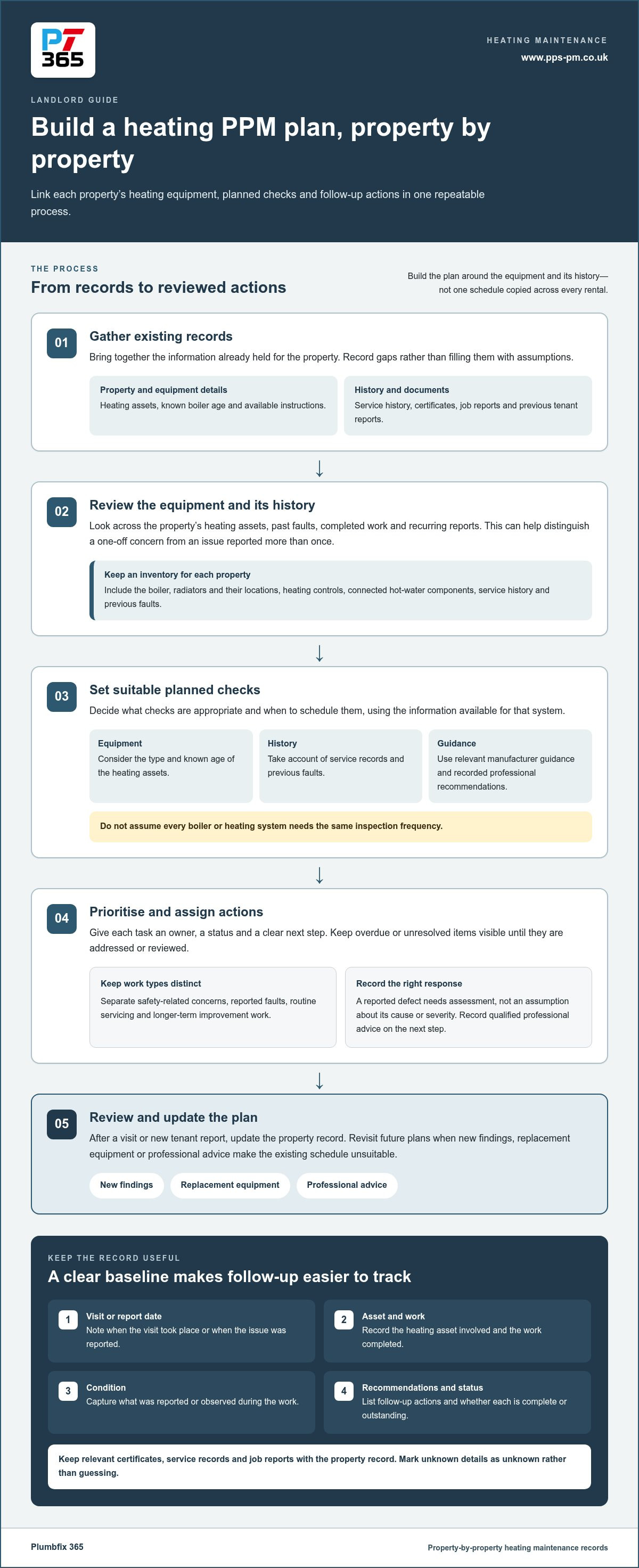
A maintenance plan is only useful if its records show what happened and what still needs attention. Keep one heating history for each property, whether you use a property management system or a well-organised digital file. Give each entry a clear date and link it to the relevant heating asset. This makes it easier to trace a concern from the tenant’s first report through to the appointment and any next steps.
Use this checklist for each visit, recommendation or reported issue:
Property: identify the rental home using its address or property reference.
Asset: name the boiler, radiator, control or hot-water component involved.
Date: record when the issue was reported and when work took place.
Work: note what was carried out, including whether the appointment went ahead.
Findings: capture the condition reported or recorded in the job report.
Recommendations: add any further work or review advised.
Action status: mark each item as open, arranged or completed, and identify who is responsible for the next step.
What should a landlord record after heating work?
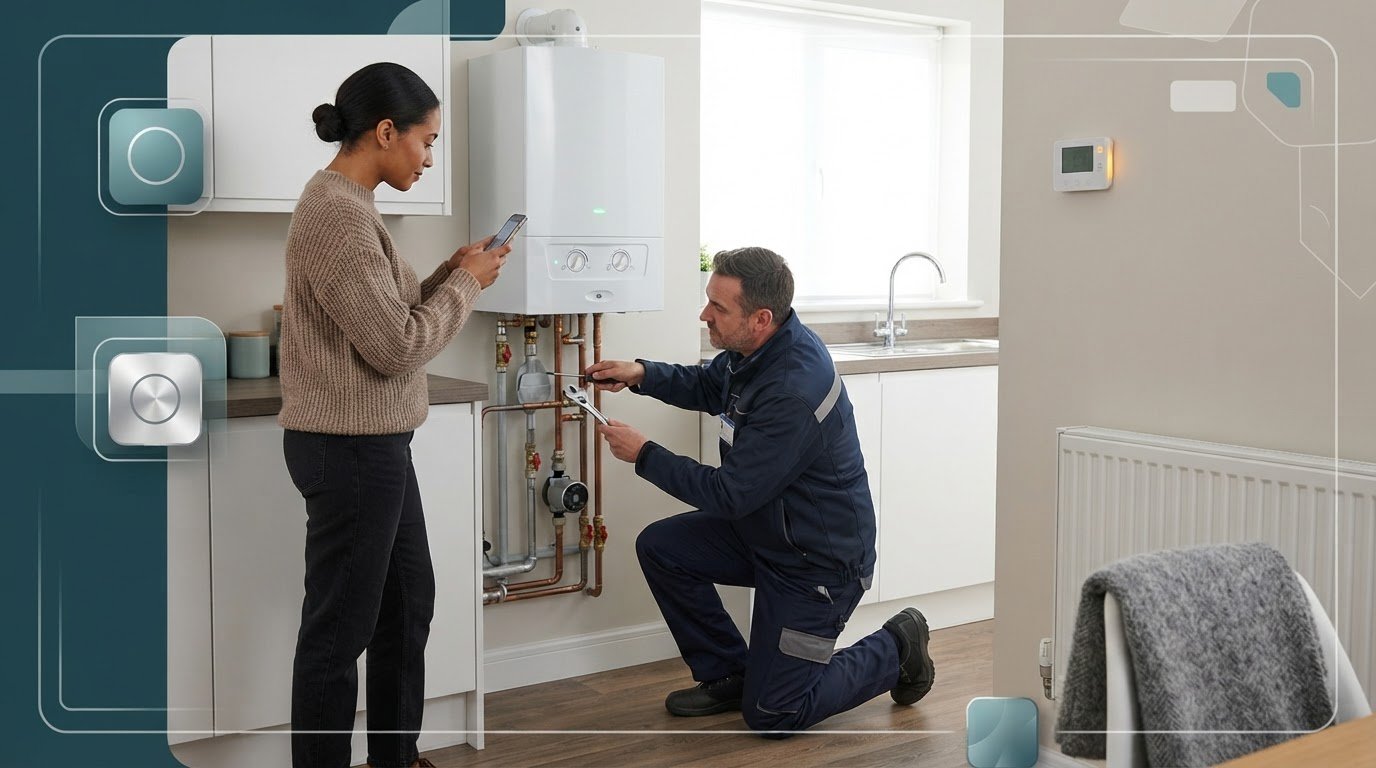
File the engineer’s report, work carried out and recommendations with the property’s heating history. Keep relevant certificates and service documentation alongside these records, so the paperwork can be understood in context rather than treated as isolated files. Where a job report includes photographs, retain them with the dated entry. Images can help clarify what was recorded at the visit, while the written findings explain any recommended action.
Close the loop after work. Update the action status, note whether a recommendation remains outstanding and record the outcome when it’s completed. During each review of the property plan, check open actions as well as recently completed work. This prevents an unresolved item from disappearing simply because a later appointment has been logged.
How can landlords keep tenant communication clear?
Give tenants a clear route for reporting heating problems and ask for a useful description, such as which room or radiator is affected and what they have noticed. Record the report in the property’s heating history, including when it arrived and any access arrangements made for an appointment.
After the appointment, add the outcome and any agreed next steps. If access couldn’t be arranged or the issue remains unresolved, keep that visible and update the record when plans change. Clear, factual updates help landlords, letting agents and maintenance teams share the same picture without suggesting a repair deadline that hasn’t been established.
Consistent records can also inform forward planning by showing completed work, recurring recommendations and actions still to arrange. The property heating maintenance budget guide explains how maintenance information can support planning. For support coordinating documented heating work, get help with property heating maintenance.
When heating support can help put a landlord PPM plan into action
A plan needs reliable heating work and clear records behind it. We are a trusted property Maintenance company providing reliable, high-quality services across London and Kent. Support for landlords includes boiler servicing, boiler installation, radiator fitting and landlord gas certificates. These services can form part of a property’s wider heating maintenance approach, while your records connect each visit, finding and follow-up action to the right home.
What can a heating service partner contribute to PPM?
Professional heating support can help you arrange work for your properties and keep the resulting information organised. Heating and gas work is carried out by Gas Safe Registered engineers. The company is 100% Gas Safe Registered and holds £5 million public liability insurance.
For landlords and letting agents, dedicated account management provides a single point of contact. Detailed job reports with photographs give you a record of work and findings to add to the property file. Use each report to update the relevant asset history, note recommendations and track follow-up actions. Landlord gas certificates can be kept with the property’s heating documentation, separate from service reports and other job records.
Clear paperwork keeps the maintenance plan grounded in what has happened at each property. If a report identifies further work, record the action and its status rather than treating the visit as the end of the process. Update the plan as new information comes in, so it reflects completed work and outstanding items.
How can landlords start a heating maintenance conversation?
Before discussing support, gather the details that will help explain the job: the property, the heating equipment involved, the concern or planned work, and any available maintenance history. Include previous reports or recommendations if you have them. If records are incomplete, describe what you know and what’s missing. A clear starting point keeps the discussion focused without relying on guesses about the system.
Call 01322 252015 or 01322 251520 to discuss the work. Sharing the property details, concern and available records gives the team useful context. A well-kept plan helps turn new findings into manageable actions across your rentals.
Discuss landlord heating support and take the next step towards coordinating your property’s heating work.
Make your next heating decision easier
A heating plan should remain useful as properties, equipment and tenant needs change. Treat it as a working record, not a document to file away after its first update. Each clear entry gives you a better starting point for future decisions, helps preserve useful knowledge when management changes, and makes it easier to see where attention is needed.
Choose a practical next step: identify a property where heating information could be better organised, then decide what would help you manage that home with greater confidence. You don't need to have every detail to begin. A clear record can grow as you receive new reports and professional findings. That steady approach is the lasting value of a landlord guide to planned preventative maintenance (PPM) for heating.
For support with your rental property's heating work, discuss landlord heating support with We are a trusted property Maintenance company providing reliable, high-quality services across London and Kent. Put a clearer plan in motion and make your next maintenance decision with confidence.
Frequently Asked Questions
What is planned preventative maintenance for heating?
Planned preventative maintenance (PPM) is an organised way to manage the heating equipment in a rental property. It helps you decide what maintenance to plan, keep a record of work and track any follow-up. In this landlord guide to planned preventative maintenance (PPM) for heating, the key is to tailor the plan to each home’s equipment and history. A plan can support preparation, but it can’t guarantee the heating will never break down.
Does a landlord need a heating PPM plan?
A written heating PPM plan can help landlords coordinate planned work and keep property records usable, particularly when several homes or people are involved. The plan itself should not be confused with a legal requirement. Any separate duties relating to safety checks or certificates need to be considered on their own terms. For compliance details, use current authoritative government guidance for the relevant part of the UK and the type of property.
Is boiler servicing the same as planned preventative maintenance?
No. Boiler servicing is a specific activity focused on the boiler, while PPM provides a wider way to organise heating assets, planned work, records and follow-up. A service report can help you update the property plan. For example, if it notes a recommendation for later attention, record that separately and track its outcome. Servicing doesn’t automatically cover other heating components or replace separate safety and certificate activities.
How often should a landlord plan heating maintenance?
There isn’t one interval that suits every heating system, so avoid applying a blanket schedule across your portfolio. Base planned work on the equipment in each property, its recorded history and relevant manufacturer guidance. Where you need help interpreting a finding or recommendation, seek qualified professional input. Keep any separate certificate or safety-check timing distinct from your wider PPM schedule, and verify current requirements through authoritative UK guidance.
What should a landlord include in a heating maintenance record?
For each entry, identify the property and heating asset, date the work, describe what was completed and record findings, recommendations and the status of each action. Add relevant certificates, service documents and tenant reports to the property’s heating history. This makes it easier to check whether a follow-up is still open, particularly when a property changes hands or its maintenance is managed by different people. Good records support oversight but can’t rule out faults.
Can planned heating maintenance prevent boiler breakdowns?
Planned checks and recorded follow-up can help you act on issues that are identified, but they can’t guarantee a boiler won’t break down. If a tenant reports a change, such as heating that no longer responds as expected, log what they’ve noticed and arrange an appropriate professional assessment. Add the outcome to the property record, including any further recommendation. This gives the next person managing the home useful context without assuming the cause.
Who can carry out heating work for a landlord?
Gas work should be carried out by appropriately qualified professionals. We are a trusted property Maintenance company providing reliable, high-quality services across London and Kent. The company is 100% Gas Safe Registered and holds £5 million public liability insurance. A landlord or agent can organise records, appointments and follow-up, but technical work should be handled by an engineer. Keep the visit report with the property’s heating history so findings can inform future planning.

Comments