


Choosing Property Maintenance Companies in Kent
Professional property maintenance companies can handle a range of building and repair needs, from carpentry, plastering and decorating to plumbing and heating. We are a trusted property Maintenance company providing reliable, high-quality services across London and Kent. The work may be arranged as separate jobs or coordinated across a property, depending on what needs attention. Electrical work is another consideration when planning maintenance.
A repair can affect more than one part of a property, so it helps to understand which services are available and how they fit together. This guide explains the options for organisations, property managers, landlords and insurers, including routine repairs, plumbing and heating work, and property upkeep.
You’ll also learn how to describe a fault, arrange maintenance and decide when specialist trade skills are needed. The aim is to identify the work required and take a practical next step.
Table of Contents
Looking for a property maintenance company in Kent?
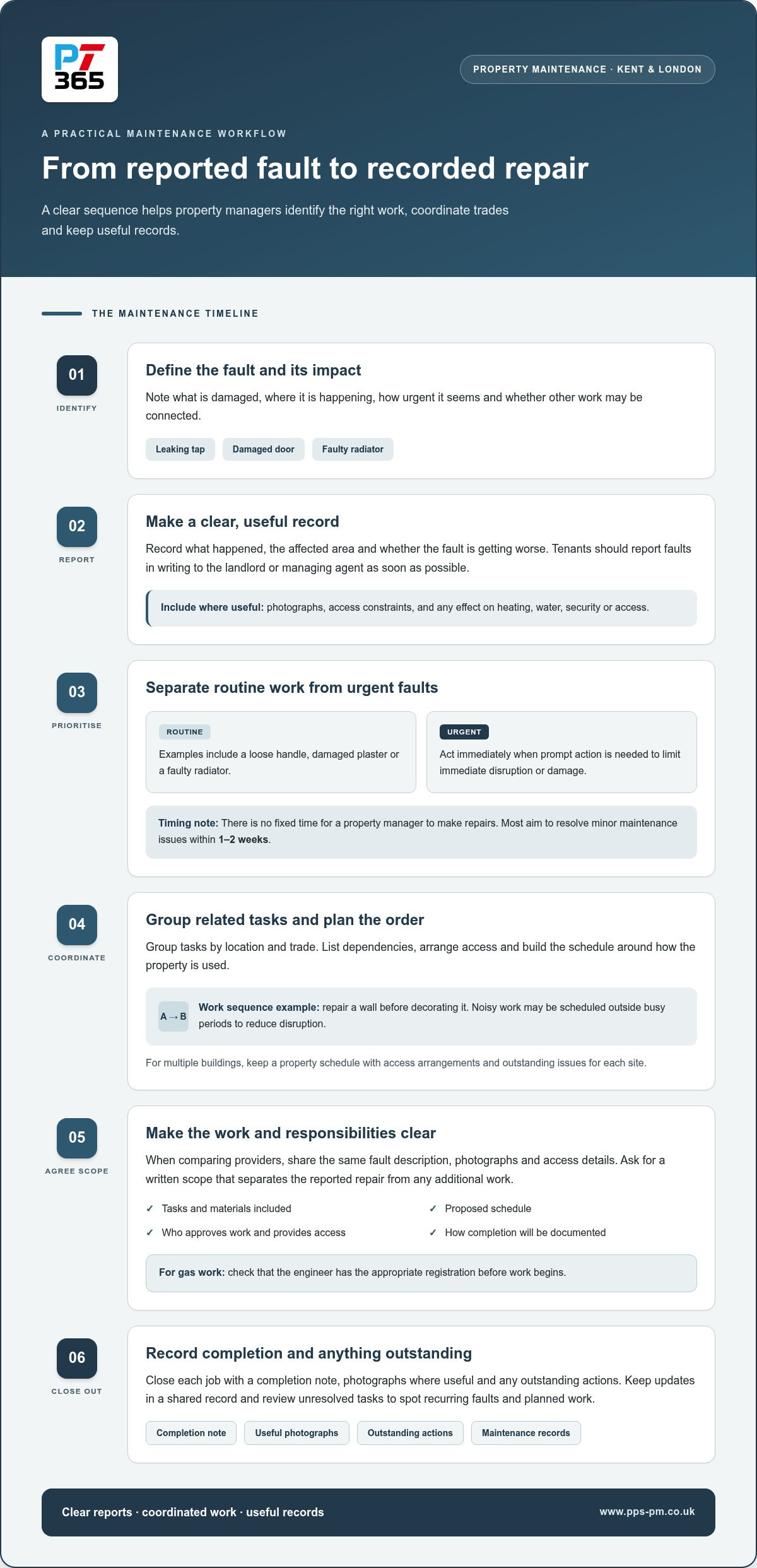
Start by defining the repair, its urgency and any connected work. A leaking tap, damaged door and failing commercial air-conditioning unit need different assessments and trade skills.
For landlords, a clear repair record helps separate routine upkeep from urgent faults. Most aim to resolve minor maintenance issues within 1-2 weeks.
For practical context, watch this overview of common rental property repairs:
Ongoing property maintenance
Ongoing maintenance can include planned work and repairs reported as they arise. For example, a manager might record a sticking door, worn sealant and a loose cupboard fitting during one visit. Group tasks by location and trade, then set priorities. A written record helps track recurring faults and outstanding work.
For building upkeep, define which areas are included, such as shared entrances, internal fixtures or heating equipment. When planning decorating, distinguish surface repairs and preparation from the final finish.
Routine and emergency repairs
Routine repairs include issues such as a loose handle, damaged plaster or a faulty radiator. Emergency repairs involve a fault that needs prompt action to limit immediate disruption or damage. There is no fixed time for a property manager to make repairs, but urgent issues should be acted on immediately. Record what happened, where it occurred and whether it is worsening.
Commercial air-conditioning repairs may require a separate system assessment and specialist skills. Describe symptoms such as unusual noise, weak airflow or water around the unit. Before a visit, agree access arrangements, the work area and how completion will be recorded.
Reviews, reputation and quotes
To compare quotes, give each company the same fault description, photographs and access details. Ask for a written scope that separates the reported repair from any additional work. Compare the tasks and materials included, the proposed schedule and how completion will be documented. This makes differences easier to identify than comparing headline prices alone.
Look for patterns in reviews, not just star ratings. Specific examples of similar repairs, clear communication and follow-up are more useful than general praise. Check that comments relate to property maintenance, and keep a dated record of discussions and agreed work in case responsibilities or priorities change.
Checks before hiring
Before hiring, landlords should check the company’s experience with the relevant property type and repair. Confirm its insurance arrangements, who will attend, how access will be managed and what written records will follow. For gas work, check that the engineer has the appropriate registration before work begins. Keep the scope, appointment details and completion notes together with the property’s maintenance records.
Tenants should report faults in writing to the landlord or managing agent as soon as possible, adding photographs where useful. State whether the issue affects heating, water, security or access. Clear information helps the property manager prioritise the repair, arrange the right trade and update the tenant on next steps.
Services for organisations and property managers
Organisations managing several buildings need a clear process to log repairs, assign work and track completion. Keep a property schedule with each site’s access arrangements and outstanding issues. A loose door closer in a shared entrance, for example, should be recorded separately from a heating fault in an occupied office. This helps teams prioritise work and limit disruption.
Project coordination is useful when repairs involve several rooms, trades or access windows. Group related tasks, agree the order of work and identify who approves each stage. For a refurbishment affecting a reception area and adjoining offices, scheduling noisy work outside busy periods may reduce disruption. Record decisions, changes and completed tasks.
Project management and work scheduling
Build a schedule around how the property is used, the urgency of each repair and the trades required. List reported faults and dependencies first: a wall may need repairing before it can be decorated. Then arrange access and communicate the planned work to occupants. Close each job with a completion note, photographs where useful and any outstanding actions.
Fully managed property services
A managed maintenance arrangement can bring repair reporting, coordination and progress updates into one process. Define its scope clearly: for example, whether it covers communal areas, individual units, planned visits or reported faults. Set out who approves work, provides access and escalates urgent issues, so everyone understands their responsibilities.
Soft facilities management
Soft facilities management generally concerns the day-to-day services that support a building’s use, rather than its fabric or mechanical systems. Cleaning shared areas and managing reception are examples. These needs differ from a leaking pipe or damaged plaster, so separate them in the maintenance plan. Clear categories help property managers route each request to the appropriate team and avoid delays caused by unclear ownership.
Give the maintenance contact a concise brief for each site: the property, affected area, fault, access constraints and any impact on occupants. Note, for example, whether a heating issue affects one room or an entire floor. Keep updates in a shared record and review unresolved tasks regularly to identify recurring problems and planned work.
Property maintenance companies in Kent may cover different combinations of repairs and facilities support. Match the brief to the actual requirement, rather than assuming one arrangement includes every building service. For support with property maintenance and repairs, consider discussing the requirements with a suitable maintenance team.
Carpentry, decorating, plumbing and electrical work
A property repair can involve several trades, so identify the fault and related work before arranging access. A leaking pipe may damage plaster and paintwork, while a sticking door may need carpentry rather than decorating. A clear description separates the immediate repair from follow-on work and helps identify the skills required.
For rental homes, landlords are generally responsible for repairs to the property’s structure, heating, water and electrics. Tenants should give the landlord or letting agent a written description of issues such as a loose stair rail, faulty radiator or damaged socket. Photographs can show the affected area and whether the problem has worsened.
Carpentry and decorating
Carpentry may be needed for a door that no longer closes, a damaged cupboard hinge or loose skirting. Decorating can follow repairs to plaster or timber, but preparation matters: surfaces may need cleaning, filling or sanding before painting. Record the room and finish, then specify whether the task includes making good and repainting or only the repair.
Plan connected tasks in a sensible order. Repair a damaged window frame before filling and painting nearby surfaces, for example. If work spans several rooms, list each location separately and note which areas need clearing. A practical scope helps avoid overlooking small finishing tasks after the main repair.
Plumbing, heating and gas
Plumbing work can include a leaking tap, a faulty toilet mechanism or a damaged pipe connection. Heating issues may involve a radiator that stays cold or a boiler fault affecting hot water. Describe the symptoms, when they occur and which fixtures are affected. For gas investigations or repairs, the Scottish Government says the work must be carried out by a Gas Safe registered engineer.
Keep repair records with the property’s maintenance documents. Note the reported fault, affected appliance or fitting, work completed and any follow-up. For example, record whether a radiator was repaired or replaced instead of simply marking the heating issue as resolved. This gives landlords and managing agents a useful history if faults recur.
Electrical work and coordination
Describe electrical issues clearly, such as a flickering light or a socket that stops working. Do not assume the cause from the symptom alone. Record the location and effect on the property, then arrange appropriate electrical attention. Keep electrical work separate from unrelated decorating in the job description, as each needs its own scope.
An organised repair plan can coordinate carpentry, plumbing, decorating and electrical work while keeping responsibilities clear. List each fault, room, required trade and access detail. For letting agents and landlords, this makes repairs easier to assign, track and close with a clear completion record.
What services do property maintenance companies in Kent provide?
Service coverage varies, but a maintenance plan can bring several property needs into one clear schedule. For a rental home, that may mean a boiler service, a damaged door repair and repainting scuffed walls.
Common work includes practical repairs and planned upkeep. A general property check-up is advised once a year, including checks such as boiler servicing, roof checks and electrics. The resulting notes help owners and managers identify faults, record completed work and plan follow-up tasks.
Building repairs: fixing damaged plaster, loose fittings, doors and other internal fixtures.
Carpentry: repairing timber features, cupboard fittings, doors and skirting boards.
Painting and decorating: preparing and repainting walls, ceilings or woodwork after wear or repairs.
Plumbing and heating: attending to leaking taps, faulty radiators, boilers and hot-water equipment.
Electrical work: assessing faults such as a failed light fitting or a socket that stops working.
Different repair categories can overlap. A leak beneath a sink, for example, may damage the cupboard base and nearby wall finish. Record the source of the problem separately from visible damage to distinguish the plumbing repair from any carpentry or decorating needed afterwards.
Heating work can include boiler servicing, boiler repairs, radiator fitting and hot-water system maintenance. A property manager can record the affected appliance, the symptoms and which rooms are affected. For example, note whether a radiator remains cold while others heat normally. Clear details help the attending trade understand the reported issue.
Landlords and letting agents can arrange repairs based on a tenant’s report. A written record should identify the room, fixture and effect on daily use. If a tenant reports a loose door handle and peeling paint in the same room, list both rather than grouping them as one vague repair. This makes work easier to assign and track.
For organisations, shared areas may need different attention from individual flats or offices. Separate communal doors, stairwell finishes and building equipment from repairs inside occupied units. Add access instructions and the relevant site contact to each job record to reduce confusion when work involves several areas or occupants.
Before arranging a visit, group related tasks by room and trade, then set priorities. Record reported faults, completed repairs and outstanding follow-up. This gives owners, landlords and property managers a practical overview, from a single repair to recurring upkeep across a portfolio.
How do Kent property maintenance companies compare by reviews and reputation?
Reviews can help you assess communication, workmanship and how a company handles follow-up. Checkatrade reports an average rating of 10 out of 10 for Kent property maintenance and repair services, based on a sample of 99 customer reviews. Treat that figure as a snapshot of the sampled reviews, not a guarantee about every job or provider.
Read the written comments behind a score. Look for examples relevant to your needs, such as a damaged door repair, boiler fault or access to a rental property. Specific details are more useful than a rating alone. Notice whether customers mention clear updates, tidy work areas and completion records.
Read reviews for patterns
Compare recurring themes across reviews rather than relying on one striking comment. Repeated reports of missed appointments or unclear updates may matter to a landlord coordinating tenant access. Comments about explaining repair options can also indicate how a company communicates. Check review dates and service descriptions to see whether feedback relates to relevant work.
Consider how a company responds to criticism. A measured reply that addresses the issue and explains a practical next step can show accountability. Do not draw a firm conclusion from an isolated complaint without context. Compare the response with other feedback and the type of work involved, such as a repair requiring follow-up.
Compare evidence with your requirements
Reputation matters most when reviews relate to your property and required service. A landlord arranging internal repairs may prioritise tenant communication and access coordination. An organisation responsible for shared areas may need clear records and planned scheduling. Match review examples to those needs and assess how clearly the company describes its work.
Use a consistent brief when requesting quotes. Include the property location, fault description, photographs where useful, access requirements and any impact on occupants. Compare the written scope, proposed tasks, schedule and completion information. If a response includes extra work, separate it from the original repair before comparing proposals.
Keep your own records alongside public feedback. Save the quote, agreed scope, appointment updates and completion note for each job. For a letting agent, these documents help track tenant reports and outstanding repairs. For a property manager, they support consistent decisions across buildings without relying only on a headline rating.
Use reviews as one part of your decision, alongside the written response to your brief and the relevance of past work. Contact a property maintenance team to discuss the requirements for your building.
We are a trusted property Maintenance company providing reliable, high-quality services across London and Kent: Boiler Installation
We are a trusted property Maintenance company providing reliable, high-quality services across London and Kent. For property owners and managers arranging heating work, the company offers boiler installation and servicing.
Its property maintenance work also includes carpenters, which can help address timber repairs as part of wider property upkeep. Describe the boiler or repair issue, the property type and any access details when making an enquiry. This helps set out the work required.
Contact the company to discuss boiler installation, servicing or property maintenance requirements.
Set a clear next step for your Kent property
Before arranging work, turn the reported issue into a short, practical brief. Note the property location, fault, access arrangements and what needs attention first. For landlords and property managers, keeping these details together helps move from a tenant’s report to an agreed repair plan.
Use the same brief when comparing property maintenance companies in Kent. It gives each company a clear picture of the job and helps you assess whether the proposed work suits your requirements. PlumbTech365 Property Services can discuss boiler installation and local plumbing support alongside property maintenance needs.
Start with the fault affecting the property now, then note any related work for later planning. Contact PlumbTech365 Property Services to discuss your property maintenance requirements and take a practical next step.
Frequently Asked Questions
What happens if there’s a problem with the property after hours?
If a fault occurs after hours, report it promptly to the landlord, letting agent or property manager responsible for the building. Include the affected room, what has happened and whether the issue is worsening. For example, note whether a leak is continuing or heating has stopped. Keep a copy of the message and follow the property’s established process for urgent reports.
Which property maintenance companies operate in Kent, UK?
PlumbTech365 Property Services, trading as Premier Property Solutions (SE) Ltd, provides property maintenance and plumbing and heating services nationally. Its work includes boiler installation, property repairs and planned maintenance. For general enquiries, call 01322 252015 or email admin@pps-pm.co.uk. Terms-of-service enquiries can be made on 01322 251520.
Which Kent property maintenance firms cover my town or postcode?
Coverage differs between companies, so compare their stated service areas against the property’s full postcode and the work required. PlumbTech365 Property Services states national coverage. For a useful comparison, distinguish the property’s location from the type of work, such as a boiler fault, carpentry repair or planned maintenance. A company’s coverage statement should address both the relevant location and service category.
Do Kent property maintenance companies offer emergency repairs and 24/7 service?
Some companies handle emergency repairs, but that doesn’t automatically mean they provide a 24/7 service. PlumbTech365 Property Services offers rapid emergency plumbing repairs for urgent leaks and pipework issues. For a fault outside normal hours, follow the property’s reporting procedure and give a concise description of the problem. Keep a record of when it began and any steps taken to limit further disruption.



Comments