


Heating and hot water complaints: steps tenants can take
There’s no fixed legal deadline for how long a landlord can leave tenants without hot water, but repairs must be completed within a reasonable time. For urgent hot-water problems, landlords should aim to complete repairs within 24 to 48 hours. Reporting the fault clearly and keeping a record can help with reducing tenant complaints about heating and hot water.
Losing heating or hot water can disrupt daily life, especially in colder weather. Tenants should be able to expect their landlord to take the problem seriously, explain what happens next and provide updates while repairs are arranged.
This guide explains landlords’ responsibilities, how repair times are assessed and what to include when reporting a fault. It also covers how to document the problem, when to contact the council and what temporary arrangements may help while the system is out of action.
Key Takeaways
Understand what landlords must maintain and how the duty to keep a home fit for habitation applies in England.
Learn how urgency, the impact on your household and the circumstances affect what counts as a reasonable repair time.
Report faults in writing, describe how they affect you and keep a clear record of updates and evidence.
Find out what temporary heating or bathing arrangements may help while repairs are pending.
See how regular inspections and maintenance can help identify heating problems before they become disruptive.
Table of Contents
What are landlord’s heating responsibilities?
Landlords are responsible for keeping essential heating and hot-water systems in repair. The exact duty depends on the tenancy and the property’s location within the UK.
Repairing heating and hot-water installations
A landlord’s repair duty covers faults in heating and hot-water systems they are responsible for maintaining. This includes a boiler that stops working, radiators that fail to heat or taps that run cold. Report the fault promptly, explaining which services have failed and how this affects the home. Keep the report in writing to record when the landlord learned about the problem.
Tenants generally aren’t responsible for system repairs unless their misuse caused the fault. An ordinary boiler breakdown, for example, shouldn’t be treated as the tenant’s responsibility. The landlord’s duty can also cover communal heating systems serving the property. If a shared boiler fails, tell the landlord or managing agent how it affects your home rather than assuming it falls outside their responsibility.
Repair duties under the Landlord and Tenant Act 1985
Section 11 of the Landlord and Tenant Act 1985 requires landlords to keep rental properties in good repair, including essential services such as hot water. This gives tenants a basis for reporting faults affecting these services. Explain what has stopped working, when it began and whether the failure affects heating, hot water or both. A written notice helps clarify the landlord’s responsibilities and the repair history.
A notice should identify the property and the affected installation, such as a boiler or radiator. Keep copies of messages and any replies. If the problem continues, these records can help show the period involved and what action followed. For social landlords in England, an emergency hazard must be investigated and resolved within 24 hours. Local authorities can assess health and safety hazards using the Housing Health and Safety Rating System.
Maintaining systems and keeping homes fit
Maintaining a system means keeping it in good repair, not simply responding after a complete failure. In England, a landlord must ensure a dwelling is fit for human habitation when granting a tenancy and throughout the tenancy under section 9A of the Landlord and Tenant Act 1985, according to UK Parliament. A home without adequate warmth or hot water may raise concerns about its condition and the effect on residents.
Explain how the failure affects daily life, including whether rooms cannot be heated or hot water is unavailable. The landlord should consider the reported fault and the property’s circumstances when arranging action. If the matter remains unresolved, contact your local council’s environmental health team about potential hazards. Keep clear records of what happened and when you gave notice.
Heating and hot-water standards across the UK
Social housing standards are not identical across England, Scotland, Wales and Northern Ireland; the relevant duties depend on the nation and housing framework. In England, the fitness requirement under section 9A applies when a tenancy is granted and throughout it. Tenants should identify the property’s nation before relying on a specific legal standard, because England’s statutory wording should not be presented as a rule for all four nations.
Start by reporting the fault to your social landlord and describing its effect on your home. If heating or hot water remains unavailable, record each update and explain any health or household impact. In England, the local authority uses the Housing Health and Safety Rating System to assess hazards affecting residents’ health and safety. This route can help tenants raise concerns about conditions that persist after notice.
Reasonable repair times and urgent winter repairs
There’s no fixed UK legal deadline for restoring hot water, so repairs must be completed within a reasonable time. Landlords can help reduce delays by recording reports, assessing urgency promptly and keeping tenants updated.
Reasonable repair times
A reasonable repair time is the period needed to address a fault, judged by its urgency and effect on residents. For urgent hot-water issues, landlords should aim to complete repairs within 24 to 48 hours. The law does not set a fixed deadline for hot-water repairs, so the fault’s impact matters. A complete loss of hot water affects bathing and cleaning, while a partial fault may have a different effect.
Ask the landlord for a clear timetable and explain how the problem affects your household. The response should take account of whether any heating or hot water remains available and whether residents face particular risks.
Urgent winter repairs
A winter repair becomes urgent when loss of heat or hot water seriously affects comfort, health or daily life. Report the fault immediately, explain which rooms are cold and whether the boiler has stopped completely. In England, government guidance says temperatures below 16 degrees Celsius pose serious health risks for vulnerable people. Include relevant circumstances, such as a resident’s vulnerability, in your report.
Landlords should act promptly, explain what happens next and clarify any temporary arrangements. If an engineer needs to diagnose the fault before completing the repair, ask when to expect the next update and what will happen in the meantime.
Permanent repairs and response times
A permanent repair addresses the cause of the fault, rather than simply restoring service temporarily. Ask the landlord to distinguish any interim fix from the planned lasting repair and give a timetable for each. For example, if a temporary measure restores some heat, confirm when the underlying boiler or system fault will be addressed. Clear milestones make progress easier to follow.
Landlords can reduce delays by logging each report, prioritising cases according to their impact, and coordinating access and repair appointments. Tenants can help by responding promptly about access and sharing useful details, such as error messages or which radiators remain cold.
If the landlord misses an agreed appointment or the fault continues, keep a dated record of reports, replies and repair visits. Save receipts for extra expenses caused by the outage, but don’t assume repayment or compensation is automatic. The circumstances and evidence matter.
Write again if the repair timetable slips. Explain what remains unresolved and how it affects your household. You may be entitled to a rent reduction for the period without hot water, but agree any change with the landlord rather than withholding rent.
A documented repair process helps landlords track outstanding work and keep tenants informed until the fault is resolved.
Reporting and documenting heating and hot-water problems
Report a heating or hot-water problem to your landlord as soon as you notice it. Send the initial report in writing, even if you also phone, to record the date and details. A precise report helps the landlord understand the fault, arrange an inspection and explain the next steps.
Describe the fault in practical terms instead of saying only that the system is “broken”. For example, say whether the boiler shows an error message, every radiator is cold, or hot water stops after a short time. Include when the problem began and whether it affects the whole home or specific rooms. These details can help distinguish an intermittent fault from a complete loss of service.
Photograph the boiler display, including any visible error message.
Record thermostat settings and note whether the heating responds.
Take clear photos of radiators that remain cold or show visible leaks.
Write down the date and time the fault started and each report you sent.
Note how the problem affects household routines, such as washing or keeping a room warm.
Keep a timeline of the problem, adding each landlord reply, inspection, missed appointment and change in the system’s behaviour. If an engineer visits, note the date and any explanation or proposed repair timetable. This record helps clarify what action followed your notice and how long the fault continued. Keep emails, texts and letters together so you can refer to them easily.
If you use an electric heater because the central heating has failed, keep evidence of the extra electricity use. Record meter readings where available, save relevant energy statements, and note the dates and rooms where you used the heater. Keep receipts for any heater you bought. These records help show what additional electricity use followed the heating problem, without assuming a particular cost or reimbursement.
Explain the practical impact in writing when updating the landlord. For example, say that a child’s bedroom remains cold or there is no hot water for washing. If a vulnerable resident lives in the property, state this clearly so the landlord understands the household’s circumstances. Update your record if the fault worsens, returns after a temporary repair or affects another part of the home.
If the landlord doesn’t respond or the problem remains unresolved, send a dated follow-up summarising the fault, earlier reports and outstanding action. Tenants can contact their local council’s environmental health team if the issue isn’t resolved promptly. Keep recording how the lack of adequate heating or hot water affects your household. Put any rent-reduction proposal and the landlord’s response in writing, and don’t stop or reduce rent without agreement.
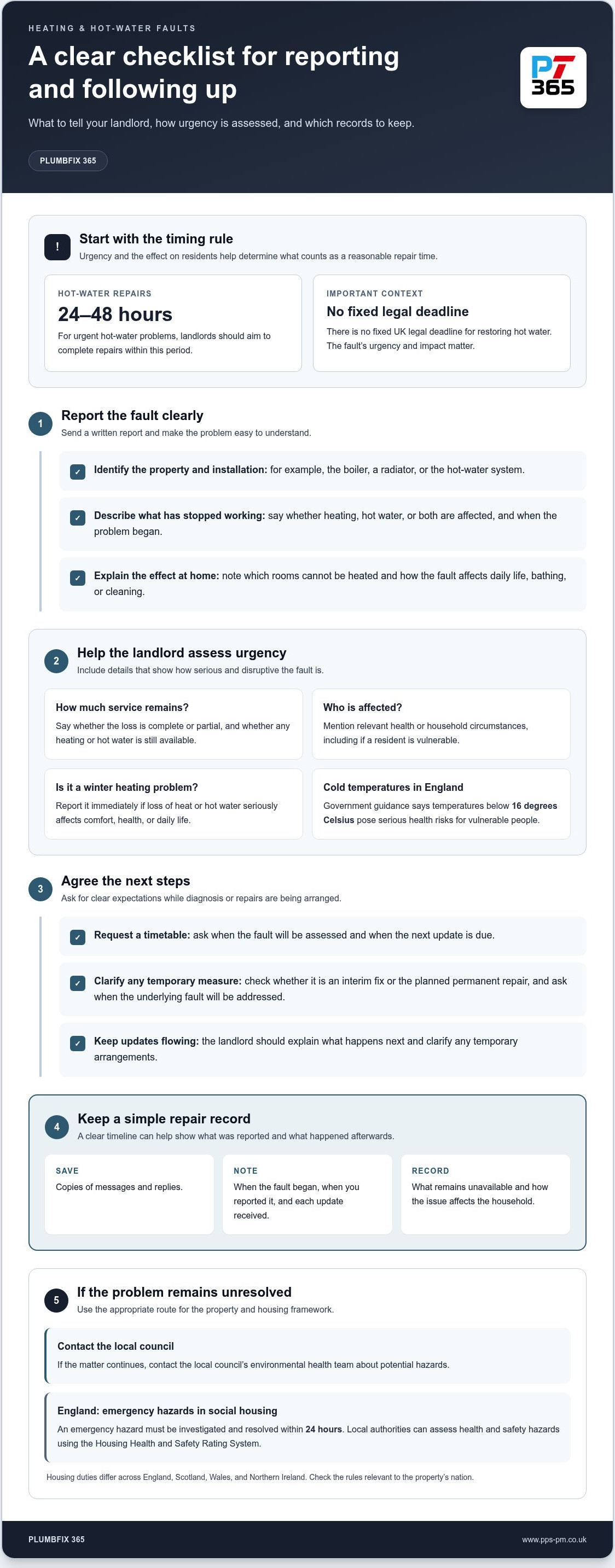
Temporary heating and bathing arrangements
A failed boiler can leave a home without warmth, hot water or both. Agree interim arrangements with the landlord while a lasting repair is organised.
Temporary heaters and electric showers
A temporary heater provides warmth in a room while the main heating system is out of action. The Housing Ombudsman says landlords should provide alternative heating when a boiler isn’t working, so residents aren’t left without heating for extended periods. Ask what equipment will be provided, which rooms it can serve and how the landlord will maintain it during repairs.
Use a portable electric heater according to the manufacturer’s instructions and keep it clear of fabrics and furniture. Don’t try to install or alter electrical equipment yourself. An existing electric shower may provide hot water for washing if it still works, but it won’t heat the rest of the home. Tell the landlord if the shower also fails.
Alternative temporary hot water
Temporary hot-water arrangements can help residents wash and manage daily tasks during a boiler outage. Ask the landlord what can be arranged while the repair is pending, and clarify whether it suits everyone in the household. A working shower elsewhere in the property may help, but it won’t resolve the problem for residents who cannot use it.
If there’s no usable shower, discuss access to washing facilities with the landlord. Explain specific needs, such as mobility limitations or caring responsibilities, so arrangements address the household’s circumstances as well as the equipment failure. Don’t use kettles or pans to fill a bath, as hot water can spill and cause scalds.
Keep communication focused on what remains unavailable. For example, state whether the home has no heating, no hot water, or both, and whether any temporary option works. Ask the landlord to confirm the arrangement in writing, including who will provide equipment and how to report a fault with it. This gives both sides a clear record while repairs continue.
A temporary heater or washing option isn’t a substitute for repairing the boiler. Ask for an update on the permanent repair and the next planned step. If an interim measure stops working, report it promptly and explain how this changes the household’s situation. Note the dates, equipment provided and any rooms that remain cold.
Tenants and landlords can avoid confusion by agreeing practical details early, such as where the heater will be used, who can access it and how residents can wash. If a vulnerable person lives in the home, tell the landlord what support is needed. This helps the landlord consider suitable action while arranging the lasting repair.
Preventive inspections and maintenance
Routine checks can identify faults before a boiler stops or radiators lose heat. In England, gas heating must be checked every 12 months by a Gas Safe registered engineer, according to the Health and Safety Executive. A planned inspection helps identify developing problems and gives landlords a chance to arrange repairs before tenants lose essential services.
Maintenance should assess how the system performs, not just whether it switches on. A boiler may run while some radiators stay cold, or a thermostat may fail to hold the selected temperature. Leaking pipes can reduce system pressure, while a failing pump or heat exchanger can disrupt heating across the property. Recording these symptoms helps an engineer identify the cause and resolve it properly.
Useful observations include visible leaks, radiators that don’t heat evenly and unusual boiler behaviour. Air trapped in a radiator can stop it heating properly. Report this symptom rather than opening or adjusting equipment you’re unsure how to operate. The landlord can then decide what inspection or repair is needed.
Record recurring boiler error messages and when they appear.
Tell the landlord if radiators remain cold or heat unevenly.
Report dripping pipes, pressure changes or unusual system noises.
Keep records of maintenance visits and any follow-up work.
Prevention also means acting on inspection findings. If an engineer identifies a worn component, small leak or faulty thermostat, the landlord should arrange appropriate work instead of waiting for a complete failure. An inspection record can show what was found, what action followed and whether the system performed better afterwards.
Tenants can support maintenance by reporting changes early and allowing agreed access for inspections. For example, say if the boiler starts but hot water cuts out, or one radiator stays cold after the others warm up. These details can help distinguish an isolated radiator issue from a wider system fault. They don’t replace the landlord’s responsibility to maintain the equipment.
Prevention cannot remove every urgent breakdown, but a clear maintenance record makes recurring faults easier to identify. If a repair is needed, note the inspection finding and ask what work will address it. Under the Landlord and Tenant Act 1985, landlords have repair responsibilities for essential services; maintenance helps them identify defects before they cause a prolonged loss of heating or hot water.
Keep inspection findings and follow-up work together in the property’s maintenance record. This helps landlords track recurring faults, plan repairs and give tenants clear updates on the system’s condition.
We are a trusted property Maintenance company providing reliable, high-quality services across London and Kent: Boiler Installation
We are a trusted property Maintenance company providing reliable, high-quality services across London and Kent offers Boiler Installation for landlords replacing a faulty or unsuitable boiler. A new system may be the right next step when repeated faults make repairs impractical. The installation should address the property’s heating and hot-water needs.
Where the existing boiler remains serviceable, boiler servicing can support routine upkeep. The right option depends on the boiler’s condition and the repair findings. Clear communication about the work helps landlords plan and keep tenants informed.
Contact We are a trusted property Maintenance company providing reliable, high-quality services across London and Kent to discuss boiler installation or servicing for your rental property.
Make your next maintenance decision count
For landlords and managing agents, a clear plan for reporting and tracking property issues can make future decisions easier. Set out how tenants should raise concerns and how you’ll share progress. Reviewing recurring issues together can help identify what needs attention across a property.
If a boiler fault or wider maintenance issue needs professional attention, contact We are a trusted property Maintenance company providing reliable, high-quality services across London and Kent to discuss the next step. A clear account of the problem will help frame that conversation.
Take the next step towards a more organised approach to reducing tenant complaints about heating and hot water. Get in touch to discuss your property maintenance needs.
Frequently Asked Questions
How long can a landlord leave tenants without hot water?
There’s no fixed legal time limit for a landlord to leave tenants without hot water, but repairs must be completed within a reasonable time. For urgent hot-water faults, the repair aim is 24 to 48 hours. Consider the household’s circumstances and whether any hot water remains available. If the landlord gives no clear update or the problem continues, keep a written record and contact the local council’s environmental health team.
Is no heating classed as an emergency?
No heating can be urgent, especially if cold conditions affect a vulnerable resident or leave the home without adequate warmth. Government guidance in England identifies temperatures below 16 degrees Celsius as a serious health risk for vulnerable people. Tell the landlord about any such circumstances when reporting the fault. For social housing in England, an emergency hazard must be investigated and resolved within 24 hours.
What causes heating issues in homes?
Heating faults can stem from several parts of a system. Air trapped in a radiator may leave it cold, while a faulty thermostat can stop the boiler starting or holding its setting. A leak may lower system pressure. A failed pump, heat exchanger or circuit board can affect the whole system. For example, if every radiator is cold, report that pattern rather than describing just one radiator as faulty.
What are the consequences of not fixing hot water?
Unresolved hot-water loss can disrupt washing, cleaning and other household routines. A prolonged fault may also raise concerns about whether the home remains fit to live in. In England, the Homes (Fitness for Human Habitation) Act 2018 may allow a tenant to take legal action if the property is unfit; a court could order repairs or award compensation. Keep records of the outage and its effects.
What are the legal heating and hot water requirements for UK landlords?
Requirements depend on where the rental property is located. In England, section 11 of the Landlord and Tenant Act 1985 covers keeping the property in repair, including essential services such as hot water. Section 9A requires a dwelling to be fit for human habitation when a tenancy is granted and throughout it, according to UK Parliament. Scotland, Wales and Northern Ireland have separate housing frameworks, so don’t assume England’s provisions apply unchanged.
How quickly must a landlord respond to loss of heating or hot water in the UK?
There’s no single UK response deadline for every heating or hot-water fault. For urgent hot-water problems, landlords should aim to complete repairs within 24 to 48 hours. In England, a social landlord must investigate and resolve an emergency hazard within 24 hours. Response and completion are different: ask when the fault will be assessed, what action is planned and when you’ll receive the next update.
What are common causes of tenant complaints about heating and hot water?
Common complaints include no central heating, cold radiators, inconsistent hot water and a boiler that stops working. A fault affecting the whole system differs from one cold radiator or an intermittent hot-water supply. For instance, if taps run hot briefly before turning cold, report that pattern and whether it happens at every outlet. Clear descriptions help distinguish system-wide failures from local symptoms.
How can landlords prevent boiler and heating system breakdowns?
Landlords can reduce breakdown risk through planned checks and prompt attention to warning signs. In England, gas heating must be checked every 12 months by a Gas Safe registered engineer, according to the Health and Safety Executive. They should also follow up on recurring error messages, leaks, pressure changes or radiators that heat unevenly. Recording inspection findings makes repeat faults easier to spot and address.

Comments