


Landlord Plumbing Maintenance Checklist: Tenant Communication Templates for Planned Work
A clear landlord plumbing maintenance checklist helps you explain planned work, agree access and keep tenants updated without a confusing trail of messages. The checklist records what needs attention; a communication plan tells tenants what to expect and what they need to do.
Before sending a notice, decide what information is confirmed, when access is needed and how the tenant should reply. Clear details help reduce uncertainty and give everyone a record of what was agreed.
This guide includes adaptable messages for announcing work, confirming access and sharing updates if plans change. It also offers practical prompts for describing the visit, explaining any preparation and recording replies and completed work. PlumbTech365 Property Services supports landlords and letting agents with plumbing and heating maintenance across the UK. The company is 100% Gas Safe Registered and holds £5 million public liability insurance.
Table of Contents
Why a landlord plumbing maintenance checklist needs a tenant communication plan
Build a clear tenant communication sequence for planned maintenance
Choose the right message template for each type of planned plumbing work
Personalise, send and record each planned maintenance message
Arrange planned plumbing maintenance with a clear point of contact
Why a landlord plumbing maintenance checklist needs a tenant communication plan
Planned plumbing work needs two connected records: a clear note of what needs attention and a useful message for the tenant. A landlord plumbing maintenance checklist identifies the task, such as servicing a boiler or replacing a tap. The tenant message explains what will happen during the visit and how access will be arranged.
Keep the records linked, but don’t treat them as interchangeable. A maintenance note might say that a shower needs replacing; the tenant’s message should explain which shower is affected and whether it will be unavailable during the work, if that has been confirmed. Clear details help avoid uncertainty about the fixture, access and whether the tenant needs to reply. This checklist focuses on scheduled plumbing and heating work, rather than emergency repairs or a full property audit.
What tenants need to know before planned plumbing work
Use plain English and name the relevant fixture or system. “The kitchen tap is being replaced” is clearer than “plumbing maintenance”. Give a visit window only once it has been agreed. Explain which rooms or facilities may be affected when that information is known, and state how access will be arranged. Tell the tenant how to respond, for example by confirming the arrangement or raising a timing issue.
Where the checklist fits into a landlord’s workflow
Start with the checklist. Use it to identify and prioritise the task, then draft the tenant message from the confirmed work details. Keep observations, such as a note that a tap is difficult to turn, separate from decisions about the work. This avoids presenting an early observation as a confirmed job. Save the message, the tenant’s reply and any agreed follow-up together.
For each job, record the property and fixture, the work agreed, the access arrangement, the message sent and any response. Add a follow-up if the timing or scope changes, and identify which details have been updated. For general context on tenancy arrangements, Landlord-tenant law offers a broad overview; this checklist is about organising communication, not interpreting legal requirements.
PlumbTech365 Property Services supports landlords and letting agents with plumbing work including tap replacement and leaking pipe repairs. It is 100% Gas Safe Registered and holds £5 million public liability insurance. Dedicated account management and a single point of contact help keep job information coordinated. For planned plumbing work, call 01322 252015 or 01322 251520.
Build a clear tenant communication sequence for planned maintenance
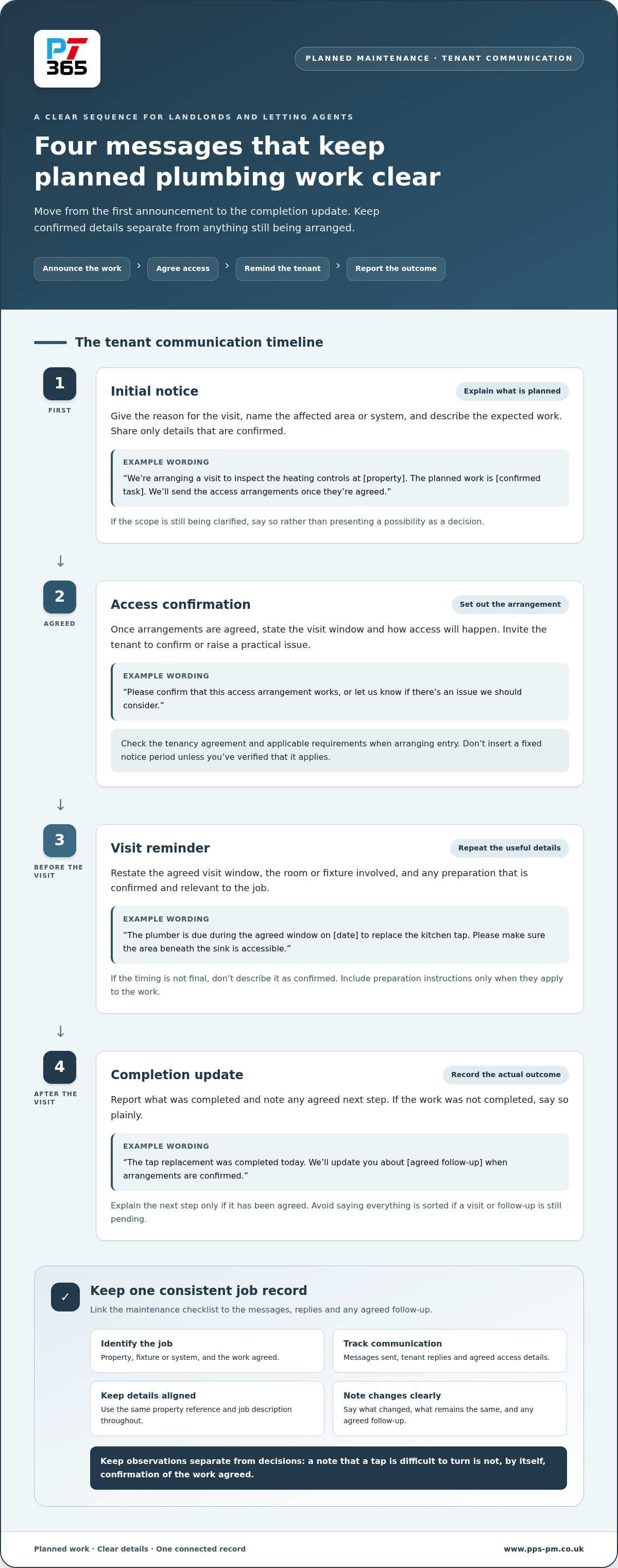
Use four messages to guide tenants from the first announcement to the completion update. In each one, separate confirmed details from anything still being arranged. Keep the wording factual and calm. Don’t promise an exact arrival time or a particular outcome unless it has been agreed.
Initial notice: Explain why the visit is planned, which area or system is affected and what work is expected. For example: “We’re arranging a visit to inspect the heating controls at [property]. The planned work is [confirmed task]. We’ll send the access arrangements once they’re agreed.” If the scope is still being clarified, say so rather than presenting a possibility as a decision.
Access confirmation: Once arrangements are agreed, state the visit window and how access will happen. Invite a practical reply: “Please confirm that this access arrangement works, or let us know if there’s an issue we should consider.” Check the tenancy agreement and applicable requirements when arranging entry. Don’t insert a fixed notice period unless you’ve verified that it applies.
Visit reminder: Restate the agreed window, the relevant room or fixture and any confirmed preparation request. For example: “The plumber is due during the agreed window on [date] to replace the kitchen tap. Please make sure the area beneath the sink is accessible.” Include preparation instructions only when they’re relevant to the job. If the timing is not final, don’t describe it as confirmed.
Completion update: After the visit, report what was completed and note any agreed next step. For example: “The tap replacement was completed today. We’ll update you about [agreed follow-up] when arrangements are confirmed.” If the work wasn’t completed, say so plainly and explain the next step only if it has been agreed.
Keep each update accurate and easy to follow
Use the same property reference and job description throughout the sequence. If an arrangement changes, send a brief update that identifies what has changed and what remains the same. Avoid vague reassurance such as “everything is sorted” if a visit or follow-up is still pending. A clear correction helps prevent an earlier message from being mistaken for the current plan.
Keep copies of messages and tenant replies with the maintenance record. Note agreed access details and follow-up so a landlord or letting agent can see the current position without piecing together separate conversations. The landlord plumbing maintenance checklist identifies the work; this sequence records how it was communicated and arranged.
For planned plumbing or heating work, PlumbTech365 Property Services supports landlords and letting agents with repairs and maintenance coordination.
Choose the right message template for each type of planned plumbing work
A useful message names the job, explains what the tenant should expect and asks for a practical response. Keep the wording specific to the confirmed work. Use the table to choose what to include for three common planned plumbing and heating jobs.
Template for planned boiler or heating work
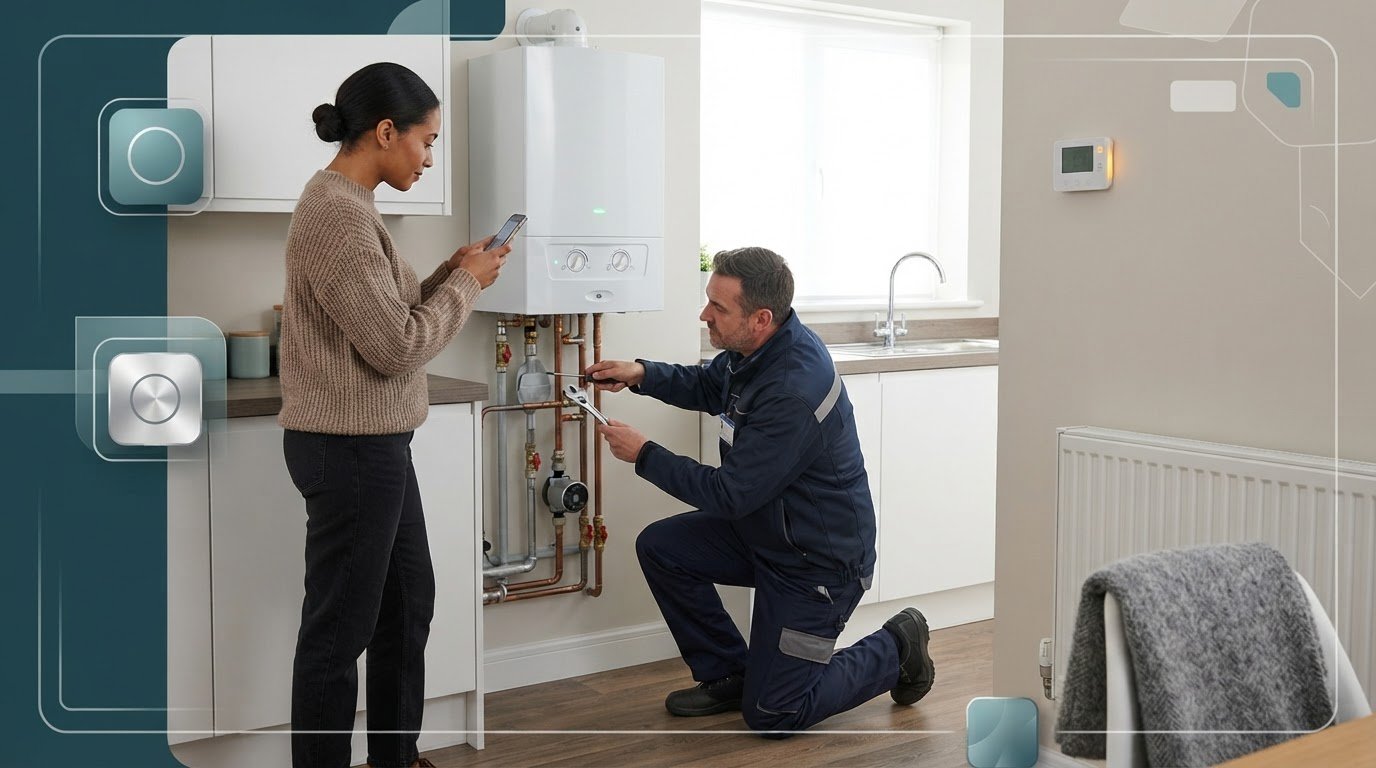
For boiler servicing or a planned repair, state the exact task and the part of the heating system involved. Explain where the boiler is and how access will be arranged. Mention an interruption to heating or hot water only if it’s confirmed. Keep gas safety work distinct from a general service update. Landlords can refer to the landlord gas safety certificate guidance for information about certificates.
Adaptable message: “We’re arranging [boiler service or confirmed repair] at [property] during [agreed visit window]. Access is needed to [boiler location]. [Add any confirmed information about heating or hot water.] Please reply to confirm the access arrangement or let us know if there’s a practical issue.”
Template for planned pipe, tap or shower repairs
Name the fitting or location instead of sending a vague notice about plumbing. For a leaking pipe repair, specify the affected area. For a tap or shower replacement, identify the relevant room and explain any confirmed effect on use. Ask the tenant to keep the work area accessible only when that preparation is needed. PlumbTech365 Property Services provides plumbing repair support for planned work.
Adaptable message: “A plumber is due to [repair the pipe at location / replace the tap or shower in room] during [agreed visit window]. Please [confirmed preparation, if needed]. Let us know if the access arrangement presents a problem.”
After the visit, send a short update that records what was completed and any agreed next step. PlumbTech365 Property Services is 100% Gas Safe Registered and holds £5 million public liability insurance. Keep the tenant’s reply with the maintenance record so the agreed arrangements are easy to trace.
Personalise, send and record each planned maintenance message
A template saves time only if it reflects the actual job. Before sending, check every placeholder and remove anything that isn’t relevant. Keep the wording consistent with what the landlord, agent and PlumbTech365 Property Services have agreed. A precise message gives the tenant useful information without creating expectations the work plan can’t support.
Personalise templates without making unsupported promises
Replace placeholders with confirmed details, not assumptions. Check the tenant’s name, property reference, affected fixture or system, agreed visit window and access arrangement. Explain trade terms in everyday language. For example, pair “boiler service” with a brief note that a heating engineer will check the boiler, rather than assuming every tenant knows what the appointment involves.
Before sending, check that:
The tenant and property details are correct.
The message describes the agreed work and affected area.
The access arrangement and visit window are confirmed.
Any preparation request is relevant and agreed.
The wording does not guarantee a fixed visit duration, arrival time or repair result.
If a detail is still being arranged, say so plainly and update the tenant when it’s settled. Don’t fill gaps with an estimated arrival time or promise that a repair will resolve an issue before the work has been assessed. A calm, accurate message is more useful than confident wording that may need to be corrected.
Keep communication records useful and accessible
Use one agreed communication channel for each tenancy, in line with the property management workflow. This might be the channel already used for property updates, provided both sides know where to look for notices and replies. Avoid splitting the conversation across several channels unless there’s a clear reason. Otherwise, an access confirmation or change of plan can be missed.
Log each message against the relevant maintenance record. Include the date sent, the channel, the tenant’s response, the access arrangement and any later change. Record whether the visit was completed and note any agreed follow-up. This creates a clear sequence for landlords, letting agents and management companies, without relying on someone to remember the details of a conversation.
Where it helps explain the outcome, attach the job report and photographs to the same record. PlumbTech365 Property Services provides detailed job reports with photographs and integration with property management systems. Its plumbing guidance covers repair support such as tap replacement and leaking pipe repairs.
For planned plumbing work, arrange plumbing support with PlumbTech365 Property Services. A consistent message, a clear access record and a documented outcome connect the landlord plumbing maintenance checklist to the work carried out.
Arrange planned plumbing maintenance with a clear point of contact
Clear tenant messages work best within an organised maintenance workflow. Landlords and letting agents need to know what has been arranged, who is coordinating it and where the completion information will be stored. A consistent point of contact can keep those details together, from the first work instruction through to the job report.
What landlords and letting agents can expect from the workflow
We are a trusted property Maintenance company providing reliable, high-quality services across London and Kent provides dedicated account management and a single point of contact for landlords and letting agents. This gives property teams a clear route for discussing planned plumbing and heating work, coordinating information and keeping updates connected to the relevant job. It also helps ensure that changes and agreed next steps are recorded alongside the work.
After the visit, a detailed job report can document the work carried out and include photographs. Reports can also integrate with property management systems. Used alongside tenant messages and access replies, this information creates a practical record of what was requested, what was completed and whether follow-up was agreed. Attach the report to the correct property and maintenance entry so the relevant people can find it.
Tell tenants what the next update will cover, but don’t describe pending work as complete. The report and message should match. If the visit identifies work beyond the original job, agree any additional work with the client before it proceeds, except in a genuine emergency to prevent further damage.
We are a trusted property Maintenance company providing reliable, high-quality services across London and Kent is 100% Gas Safe Registered and holds £5 million public liability insurance. Workmanship guarantee: 12 months from completion, covering defects in workmanship only. It does not cover damage caused by misuse, neglect, or third-party interference.
Take the next step for planned plumbing work
Use your landlord plumbing maintenance checklist to identify the job, then bring the work details and access arrangements together before organising the visit. If you’re a landlord or letting agent arranging plumbing or heating maintenance, discuss planned maintenance support with We are a trusted property Maintenance company providing reliable, high-quality services across London and Kent.
Contact: 01322 252015 or 01322 251520
Email: admin@plumbtech365.co.uk
Make your next planned visit easier to manage
Use the next maintenance task to put a simple communication routine into practice. Before arranging access, decide who will send the tenant update, where replies will be saved and how changes to the plan will be recorded. This helps everyone work from the same information and gives you a repeatable process for future visits.
Keep the landlord plumbing maintenance checklist as a working record, not a message to send unchanged. Match each tenant update to the confirmed job, then close the loop when the visit is complete or a further step has been agreed. Over time, this gives landlords and letting agents a clearer view of planned work across their properties.
If you’re arranging plumbing or heating maintenance, discuss planned plumbing maintenance with PlumbTech365 Property Services. Start with the job details and access arrangements, then keep tenants informed as the work progresses.
Frequently Asked Questions
What should a landlord tell a tenant before planned plumbing work?
Tell the tenant what work is planned, why the visit is taking place and which part of the property may be affected. Include the engineer’s details when available, plus any confirmed impact on water, heating or use of a fixture. For example, a tenant should know if a planned repair concerns the bathroom shower, rather than receiving a general notice about maintenance. Mark tentative details clearly as provisional.
How should landlords arrange access for planned maintenance?
Agree an access arrangement with the tenant and follow the tenancy agreement and applicable legal requirements. Explain whether the tenant needs to be present or whether another agreed arrangement will be used. In England, landlords generally need to give at least 24 hours’ written notice before entering to carry out repairs. Keep a copy of the notice and the tenant’s reply with the relevant property record.
Can a tenant ask to rearrange a planned plumbing visit?
Yes, a tenant can ask whether the visit can be rearranged. Ask them to suggest a suitable alternative and pass the request to the person coordinating the work. Don’t treat a request as a confirmed change until the new arrangement has been agreed with everyone involved. Record the revised plan and update anyone who needs to know, including the property manager and PlumbTech365 Property Services.
What should a landlord do if a tenant does not reply to a maintenance message?
Follow up through the agreed communication channel and check that the message reached the right tenant. Restate the proposed access arrangement and ask for a response by a clear, reasonable point in the planning process. Don’t assume silence means the tenant has agreed or that access is arranged. Keep a record of contact attempts and review the tenancy arrangements and applicable requirements before deciding what to do next.
How should landlords update tenants if planned work needs to change?
Send an update as soon as the change is known. State what has changed, such as the planned date or work scope, and distinguish confirmed information from anything still being arranged. If the tenant needs to take a different action, explain it plainly. Don’t say the work is cancelled, complete or rescheduled until that status is confirmed, and keep the updated message with the original arrangement.
What details should landlords record after planned plumbing work?
Record the work carried out, the date of the visit, the relevant fixture or system and the reported outcome. Note any agreed follow-up, who is responsible for arranging it and whether the tenant has been informed. For example, if a tap was replaced but another visit is planned to finish related work, keep both stages linked to the same property record.
Is a landlord responsible for arranging plumbing repairs in a rented property?
In England, landlords are generally responsible under Section 11 of the Landlord and Tenant Act 1985 for keeping installations for water, heating and sanitation in repair. This can include water pipes, boilers and hot water systems supplied with the property. The details depend on the circumstances and applicable law, so landlords should review their obligations and tenancy arrangements when deciding how a repair should be handled.

Comments