

Signs of a Blocked Soil Pipe: What to Look For and Do
One slow-flushing toilet doesn’t automatically mean your soil pipe is blocked. The pattern across your home matters more. If you’re trying to make sense of the signs of a blocked soil pipe, check whether the problem affects one toilet or several connected fixtures, and whether it is getting worse.
Slow draining, gurgling sounds, unpleasant smells or wastewater backing up can point to a wider flow problem, but none proves the cause on its own. A faulty toilet, trap or local pipe can produce similar symptoms. Note which fixtures are affected and what happens when they are used. This guide explains how to compare the signs, what to do safely and when to treat the situation as urgent.
If wastewater is backing up, stop using affected fixtures to reduce the risk of further mess or damage. Keep people away from any overflow and avoid trying to force water through the system. The aim is to help you respond calmly and give a clear account of the problem when arranging an assessment.
Table of Contents
What are the signs of a blocked soil pipe?
Slow or incomplete flushing, water rising higher than usual in the bowl, gurgling and foul odours can all be signs of a blocked soil pipe. A soil pipe carries toilet wastewater towards the foul drainage system. If something restricts the flow, wastewater may take longer to move through the pipe, while changes in water or air movement can create noises or affect connected fixtures.
One symptom alone doesn’t confirm a blockage. A toilet can flush slowly because of a local fault, and unpleasant smells may have another source. Look for a pattern: whether more than one fixture is affected, whether symptoms happen together and whether they keep returning after a flush.
This video shows a domestic soil pipe blockage being cleared by specialists:
Which toilet and pipe symptoms should you notice?
Watch what happens during and after a flush. Does the water drain more slowly than usual, or rise close to the rim before gradually falling? A brief change may have a local cause, but a repeated slow drain deserves attention. Don’t flush again just to test it if the water is already high, as the bowl could overflow.
Listen for gurgling from the toilet or a nearby waste pipe. Bubbling or glugging can happen when water and air struggle to pass a restricted section. Note where the noise comes from and whether it starts when another fixture is used. This detail can help you describe the problem clearly when arranging an assessment.
A persistent foul smell near a toilet or pipe is another warning sign. However, odours can also come from a dry trap, a leak or another source, so smell alone can’t identify a soil pipe blockage.
When do symptoms suggest the problem may be worsening?
Pay close attention if wastewater rises back into a toilet, bath or shower. This is more urgent than a single sluggish flush because wastewater is no longer draining as expected. Stop using affected fixtures and keep people away from any overflow. Avoid contact with wastewater, and don’t try to force it through the system.
Repeated symptoms also deserve attention, even if the toilet eventually clears. For example, a flush might drain slowly, then seem normal, only for the water level to rise again after another flush or when a nearby fixture is used. A temporary improvement doesn’t necessarily mean the problem has resolved.
The strongest warning pattern is repeated slow or incomplete flushing alongside gurgling, foul odours or wastewater backing up, particularly across more than one fixture. This points to a possible wider flow problem, not a confirmed diagnosis. Record which fixtures are affected and when the symptoms occur so you can give a useful account during a professional assessment.
How a soil pipe blockage affects toilets and wastewater flow
A soil pipe carries wastewater from a toilet towards the foul drainage system. It connects the WC pan to the route that takes toilet waste away from the property. If flow through this route is restricted, a flush may not clear as it normally would. The signs of a blocked soil pipe can vary because pipework layouts and connected fixtures differ between homes.
The basic pattern is that wastewater meets resistance and moves away more slowly. This may affect water or air movement elsewhere in connected pipework, changing how a toilet or another sanitary appliance drains. It’s one possible explanation, not proof that the soil pipe is blocked.
What does a soil pipe do?
After a toilet is flushed, its contents pass from the WC pan into the soil pipe and onwards to the foul drainage system, whether that leads to the main sewer or a private tank. For properties using off-mains systems, septic maintenance specialists such as lilstinkyseptic.com highlight how downstream tank problems can cause similar backup symptoms. Sinks and basins usually connect through smaller waste pipes, which carry water from those individual fixtures. These pipes form part of the wider plumbing and drainage network, but they have different roles.
That distinction can help put symptoms in context. A change at one basin may relate to its own waste pipe, while trouble affecting a toilet may involve another part of the system. The symptoms alone can’t establish the cause.
Why can one restriction affect more than one fixture?
Some appliances connect into pipework that eventually carries wastewater through a shared route. If flow is restricted along that route, water may drain poorly or make noises at more than one connected point. For example, a toilet flush might coincide with a change in how a nearby bath or shower drains. This connection is worth noting, but it doesn’t identify the exact fault.
Property layouts vary. The number and position of connected fixtures, and the route their wastewater follows, differ between homes. A restriction might affect several appliances in one property but cause a more local symptom in another. Several affected fixtures raise the possibility of a wider issue; they don’t confirm a soil pipe blockage.
Record which appliances are affected and whether symptoms happen together or separately. This gives a clearer account of what’s changed without requiring you to inspect or interfere with hidden pipework. For a separate plumbing issue, such as a leak, see information about general plumbing repairs.
Is it a blocked soil pipe or a separate toilet problem?
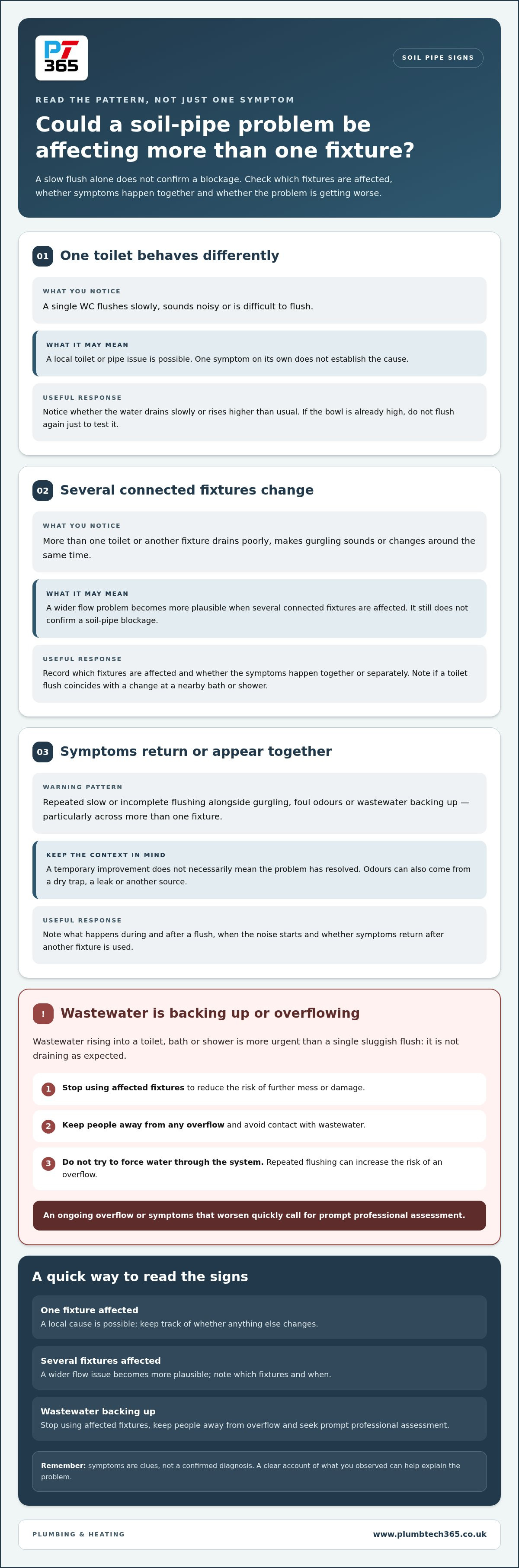
A slow, noisy or poorly flushing toilet can be worrying, but the number of affected fixtures helps put the symptom in context. If only one WC is behaving differently, the cause may be local to that toilet or its pipework. If several connected fixtures change around the same time, a wider flow problem becomes more plausible. Neither pattern confirms the fault.
Use this comparison to decide what to observe and how promptly to seek an assessment:
What if only one toilet is slow or noisy?
A symptom confined to one WC is less conclusive than changes across several fixtures. The toilet’s flushing mechanism or a problem in nearby pipework can affect how it performs, and similar symptoms can have different causes. Don’t assume that one slow flush proves a soil pipe blockage, and don’t try to diagnose the fault by dismantling parts. Note whether the issue recurs and whether other toilets, sinks, baths or showers behave normally.
What if several toilets or waste outlets are affected?
If more than one toilet or waste outlet shows a change, consider whether the symptoms started together or appear after the same activity, such as a toilet being flushed. This pattern can point towards a shared section of the system rather than one fixture alone. It still doesn’t confirm a blocked soil pipe: the route and connections vary between properties, and other faults may produce overlapping symptoms.
Make a brief record for an assessment. List the affected fixtures, what each one does, when you first noticed the change and whether symptoms happen at the same time. For example, note if a toilet flush coincides with a nearby outlet draining differently. These observations are more useful than a guess about where the fault lies. If wastewater returns indoors or threatens to overflow, stop using the affected fixtures and treat the situation as urgent.
Several affected fixtures raise more concern about a wider flow problem than one isolated slow toilet, but comparison can guide urgency only; it can’t confirm the cause. If symptoms remain limited to one WC, monitor them and arrange an assessment if they persist or worsen.
What should you do if you suspect a blocked soil pipe?
Act calmly, but don’t keep testing a toilet that isn’t draining properly. Repeated flushing can raise the water level and increase the risk of an overflow. These steps can help limit exposure and give the person assessing the problem a clear account of what’s happening.
Stop repeated flushing. If wastewater is backing up, stop using the affected toilet and any other fixtures that appear to be contributing to the problem.
Keep people away from overflow. Keep children and pets clear of contaminated water. Avoid touching it or trying to clean it up without suitable guidance.
Record what you see. Note which fixtures are affected, when the symptoms began, whether they happen together and whether wastewater has overflowed. A brief description is useful; don’t approach an unsafe area to gather details.
Arrange prompt assessment if it worsens. An overflow, wastewater returning indoors or symptoms that are rapidly getting worse need prompt attention. Don’t wait for repeated flushing to make the problem clear.
What can you safely do straight away?
Keep the affected area clear and avoid contact with wastewater. If there’s visible overflow, note where it is from a safe distance and whether it’s spreading. Don’t use nearby fixtures to see if the symptoms change. If you rent or manage the property, report the issue promptly to the responsible person and pass on your observations.
Water escaping from pipework can also cause damage beyond the immediate area. If you’re dealing with a separate leak, guidance on slow water leak damage signs can help you recognise what to look for.
Which quick fixes should you avoid?
Don’t try to force water through a suspected blockage. Repeated flushing may send more water into a system that isn’t draining freely. Avoid pouring chemical drain products into the toilet or drain, and never mix products. They may create a hazard and won’t establish what is causing the restricted flow.
Leave pipework intact. Dismantling fittings or pushing improvised tools into a pipe when the cause is uncertain can cause harm or worsen damage. A symptom pattern can guide urgency, but it can’t confirm where the fault is or how it should be dealt with.
If wastewater is returning indoors, an overflow is present or symptoms are worsening quickly, treat the situation as urgent and arrange a prompt professional assessment. Keep your notes ready, including which fixtures are affected and when the problem occurs. For a separate plumbing repair, such as a leak, get help with a plumbing repair.
When does a suspected soil pipe blockage need professional attention?
Some symptoms call for prompt action. Wastewater entering living areas, an overflow that continues or symptoms that worsen quickly should not be left to see if they settle. Stop using affected toilets and other fixtures while wastewater is backing up, and keep people away from the affected area. Arrange a professional assessment promptly, especially if the overflow is spreading into rooms or shared areas.
Less severe but recurring symptoms also deserve attention. A toilet that repeatedly drains slowly, or connected fixtures that keep behaving differently, may indicate an ongoing problem even if the water eventually clears. A symptom pattern can help establish how soon to act, but it cannot show exactly where the fault is or what has caused it.
Which symptoms should prompt urgent action?
Prioritise signs that wastewater is no longer staying within the drainage system. These include sewage or wastewater returning indoors, water continuing to overflow, or a rapid change affecting several fixtures. Don't use the affected fixtures to test whether the problem has passed. Keep clear of any overflow and report what is happening promptly, particularly if it is spreading into rooms or shared areas.
If symptoms are persistent but there is no active overflow, arrange a professional assessment rather than relying on repeated flushing or temporary improvement. A clear description helps the person responding understand what needs attention and whether the situation has changed since you first noticed it.
What information helps with a professional assessment?
Before reporting the issue, make a short note of the affected toilets and waste outlets, when the symptoms began, and whether they appear together or after a particular fixture is used. Include details such as slow drainage, gurgling, odours or visible wastewater, but don't put yourself at risk to inspect hidden pipework. If you manage the property, record which areas or occupants are affected so the report is clear.
A professional can assess the drainage route and decide what investigation is appropriate. A CCTV drain survey, which uses a camera to inspect pipework internally, may be considered where further investigation is needed. Drainage specialists such as tmdrainage.co.uk carry out CCTV surveys alongside professional unblocking to pinpoint and clear stubborn obstructions. It isn't automatically required in every case, and the right assessment depends on the symptoms and property.
Keep drainage concerns separate from unrelated plumbing faults. If you can see a leak from a pipe, follow suitable guidance for that separate issue, such as this guide to handling a leaking pipe safely. Plumbtech 365 carries out plumbing repairs for separate faults such as leaks. Find out more about Plumbtech 365's plumbing services.
Take the next step with confidence
Uncertainty can make a plumbing problem feel harder to manage. Treat the signs of a blocked soil pipe as a reason to arrange the right assessment, not as a diagnosis. Keep any separate leak or plumbing fault clearly distinct when explaining what’s happening, so it can be directed appropriately.
Plumbfix 365 carries out plumbing repairs for residential and commercial customers. For a separate plumbing issue such as a leak, get help with a plumbing repair.
A clear, measured next step can help you feel more in control. You don’t have to work out the cause alone.
Frequently Asked Questions
What are the most common signs of a blocked soil pipe?
Common signs include a toilet that drains unusually slowly, water rising higher than expected, gurgling sounds or wastewater returning into a fixture. A persistent unpleasant smell can also be a clue, though it may have another source. Notice whether symptoms happen during the same flush or affect nearby outlets too. A cluster of changes is more concerning than one isolated sign, but only an assessment can identify the cause.
Can a blocked soil pipe affect more than one toilet?
Yes. If toilets connect to a route where wastewater flow is restricted, more than one may show changes. For example, one toilet may flush poorly while another makes a bubbling sound. The effect depends on the pipework layout, so not every home will show the same pattern. Note which toilets are affected and whether their symptoms happen together. This information can help a professional understand the issue without confirming its location.
Can a blocked soil pipe cause a bad smell?
It can be associated with unpleasant odours, particularly if wastewater isn’t moving through the system as expected. However, a smell on its own doesn’t establish that the soil pipe is blocked. Odours may come from another plumbing issue or a nearby source. Note where the smell is strongest and whether it occurs alongside changes in flushing or drainage. Avoid opening pipework to investigate, as that won’t confirm the cause safely.
Is a slow-flushing toilet always a sign of a blocked soil pipe?
No. A slow flush can have a local cause, such as an issue with the toilet’s flushing mechanism or nearby pipework. If other fixtures are working normally, that’s useful context, but it doesn’t rule out a wider problem. Don’t keep flushing to test the toilet if the water level is rising. Note whether the problem repeats and whether the flush itself seems weak or the water drains away slowly.
What should I do if wastewater comes back up into the toilet?
Stop using that toilet and any other fixtures that seem connected to the problem. Don’t flush again to see whether the water clears. Keep children and pets away from any wastewater, avoid touching it, and report the situation promptly to the responsible person. If you’re in a managed or rented property, notify the property manager or landlord and describe where the wastewater is appearing.
Can I use drain cleaner on a suspected soil pipe blockage?
It’s best not to pour chemical drain cleaner into a toilet or drain when the cause is uncertain. It may not address the problem, and using or mixing products can create additional hazards. Don’t try to push an improvised tool into the pipe either. Instead, stop using affected fixtures if water is backing up and arrange a professional assessment.

Comments