

Painting and decorating contractors for homes and businesses
Are your plumbing and heating systems working as they should, and is your property well maintained? From plumbing repairs and boiler servicing to gas safety inspections, choosing the right services can help you look after your home or business. Experienced property maintenance professionals can help you identify the work needed and arrange suitable plumbing, gas and heating services.
It’s reasonable to expect professional support with more than an immediate repair: regular boiler servicing and property maintenance can also help keep essential systems in good order. This guide explains the plumbing, gas, heating and boiler services available, including boiler installation, gas hob and cooker work, and landlord gas safety inspections. You’ll also learn what to consider when arranging work, so you can make an informed decision before it begins.
Table of Contents
How can painting and decorating contractors help you choose between paint, wallpaper or decorative finishes?
Start with the room’s purpose, the condition of its surfaces and the look you want. In a residential hallway, washable paint may suit frequent contact, while wallpaper can add pattern to a feature wall. In a reception area, a decorative finish can create a focal point. Painting and decorating contractors can assess these factors and explain how each option may affect the finished room.
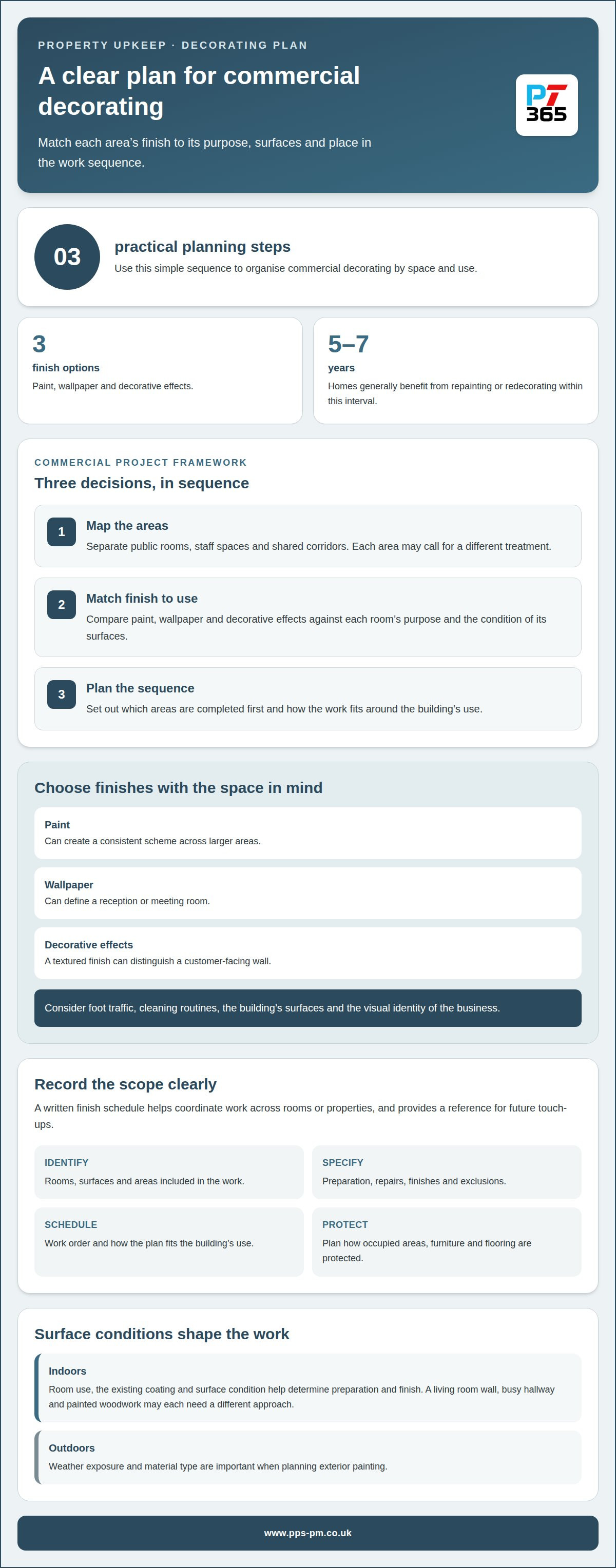
Commercial painting needs to reflect how people use each space. Offices, shops and workshops have different demands, so consider foot traffic, cleaning routines and the business’s visual identity when selecting finishes. Paint can create a consistent scheme across larger areas; wallpaper can define a reception or meeting room, while a textured finish can distinguish a customer-facing wall. The plan should also account for the building’s surfaces.
For commercial projects, make the finish decision in three practical steps:
Map the areas. Separate public rooms, staff spaces and shared corridors, as each may need a different treatment.
Match finish to use. Compare paint, wallpaper and decorative effects against each room’s purpose and existing surfaces.
Plan the sequence. Set out which areas are completed first and how work fits around the building’s use.
These steps can help organisations with multiple sites maintain a recognisable look. A written finish schedule records colour choices, wallpaper placement and decorative details for each property. For example, offices in London and Kent can share reception colours while adapting meeting rooms to their layouts. Painting and decorating contractors can use these records to coordinate consistent finishes and future touch-ups across separate properties.
The scale of a project affects coordination. For a commercial building with apartments, the schedule can distinguish shared corridors from individual flats and record the surfaces and finishes for each. For offices, it can identify every floor, meeting room and reception area. This lets painting and decorating contractors organise the work by space instead of treating every area alike.
Commercial and industrial projects can include offices, retail units, workshops and warehouse spaces. A clear scope identifies which areas will be painted, wallpapered or given decorative finishes. It also records the work sequence and surface requirements for each space. For a managed property, this structure helps align the decorating plan with how residents, staff or customers use the building.
What is included in your painting and decorating services?
A decorating scope can cover painting, wallpaper hanging, decorative finishes and restoration. The work depends on the property, surface condition and rooms involved. A rental flat, for example, may need refreshed walls and woodwork, while a London office may require several rooms to be treated in sequence. A written scope should distinguish included surfaces from areas outside the project.
Team size depends on the amount of work, access and the sequence required. Rather than assuming a standard crew, the project plan should explain how work will be organised and coordinated. For a block of flats, a schedule can identify communal areas and individual homes separately, helping residents and property managers understand where work will take place.
In London and Kent, access arrangements can affect how decorating is organised. A flat with shared entrances may need a clear plan for moving materials through communal spaces. If a property manager oversees several local sites, separate scopes and progress records for each address make it easier to track completed areas and outstanding work.
When comparing painting and decorating contractors near you, review written scopes, relevant project examples, schedules and insurance information. Compare the specific surfaces, preparation and finishes included, rather than relying on broad descriptions. A specialist should explain how the proposed work suits your property and its condition.
For construction-site work, a painter and decorator needs a CSCS card or equivalent to train and work on site, according to the UK Government. For other projects, qualifications and memberships can vary. Check that the details relate to the project and property being considered.
Include safety and waste arrangements in the project plan. It can explain how the team will protect occupied areas, control dust and spills, and handle leftover materials and packaging. The approach depends on the work and site. A furnished flat, for example, may need a different protection plan from an empty commercial unit.
Reviews and references are most useful when they describe similar work. Look for specific examples of preparation, communication, tidiness and completion against the agreed scope. A reference for occupied offices may be more relevant to a managed workplace than one about a single bedroom. Recent, detailed comments can also give you a clearer sense of the working process.
A written contract should set out the rooms and surfaces, preparation, repairs, finishes, exclusions and schedule. It should also explain payment terms, how changes are agreed and whether a guarantee applies. These details give both parties a clear record if the scope changes or further surface repairs are identified once work has begun.
Interior and exterior painting
Interior and exterior surfaces face different conditions, so each needs a suitable plan. Indoors, a living room wall, busy hallway and painted woodwork may need different preparation and finishes. Homes generally benefit from repainting or redecorating every five to seven years. The room’s use, existing coating and surface condition all help determine the work required.
Outdoors, weather exposure and material type affect when repainting is needed. Exterior surfaces usually require repainting every seven to ten years, depending on weather conditions and material. A south-facing rendered wall, exposed timber and sheltered masonry may weather differently. Assessing the condition helps identify flaking paint, cracks, loose coatings or other defects before applying a new finish.
Large exterior projects need a clear scope before work begins. Professional painting and decorating contractors can divide a block of flats, commercial frontage or long boundary wall into sections. The plan should identify each surface, access requirements, repairs and finish. Sequencing work by elevation, for example, helps organise progress and track which areas have been prepared and painted.
Consider repairs alongside painting wherever masonry needs attention. A coating cannot fix loose or damaged material beneath it. The contractor can identify affected areas, agree the repairs and prepare the surface before applying paint. For a renovation, the scope may also include previously painted doors, window frames, render and exterior timber.
A practical exterior sequence is:
Assess: identify the material, existing coating and visible damage across each elevation.
Prepare: clean and prepare the agreed surfaces, with repairs addressed before painting.
Apply: use the selected finish consistently across the specified areas.
Review: inspect completed sections against the agreed scope and note any remaining work.
Listed buildings need particular care in planning. Existing materials and the building’s character should inform the proposed finish and repair approach. A renovation brief should clearly separate routine repainting from masonry repairs, so the work preserves the intended appearance rather than covering defects. We are a trusted Property Maintenance company providing reliable, high-quality services across London and Kent.
For interior or exterior painting, clear records help coordinate larger projects. A schedule can list rooms or elevations, surfaces, agreed finishes and repairs. This gives homeowners, landlords and commercial property managers a straightforward way to follow progress and review completed work.
Residential decorating
Residential decorating can combine interior and exterior painting, wallpaper hanging, decorative finishes and restoration. Depending on the rooms and agreed scope, work may cover walls, ceilings and woodwork. A bedroom refresh, for example, could include painted walls and ceiling, while a hallway might also need its doors and skirting boards finished.
Surface preparation shapes the final appearance. Before applying paint or wallpaper, the process may include cleaning, sanding, filling and priming. A wall with small imperfections needs different preparation from smooth, sound plaster. Door frames and skirting boards also need suitable preparation, with primer used before painting where required.
Wallpapering involves more than covering an existing wall with a new design. If old wallpaper needs to be removed, a professional can use a steamer, then fill and sand the wall before hanging the replacement. This sequence prepares the surface for its new covering. A patterned wallpaper in one bedroom, for example, can be planned separately from painted walls elsewhere.
Your preferences guide the finish, but the condition and purpose of each surface matter too. Matt emulsion can show patches if repairs are not blended carefully. On a treated wall, sanding and applying two coats across the whole wall can help conceal patches. Agree an approach for the entire wall rather than treating a small repair as an isolated paint spot.
A clear room-by-room plan helps organise residential painting and decorating. It can record which surfaces need repairs, which will be painted, and where wallpaper or decorative finishes will go. For example, the plan might specify painted ceilings throughout, a feature wall in the living room and restored woodwork in the entrance hall.
Walls: cleaning, filling, sanding and priming, followed by the selected finish.
Ceilings: preparation and painting as part of the room’s agreed scope.
Woodwork: preparation and suitable priming before the finish coat.
Wallpaper: removal of old covering, wall preparation and hanging the new paper.
Workmanship is easier to assess when each room and finish is recorded. Painting and decorating a small room may take one to two days, depending on the work involved. Preparation, wallpaper removal, repairs and drying between stages all affect the sequence. A written scope keeps these tasks visible and gives homeowners a clear basis for reviewing completed rooms.
Plumbing, heating and property maintenance
A planned maintenance process starts with a clear overview of the property’s needs. Before work begins, identify the plumbing, heating and gas services required, along with access arrangements. For a home or managed property, this could include a boiler service, a plumbing repair or a landlord gas safety inspection. Clear planning helps organise the work.
Before carrying out repairs or servicing, the team can confirm the areas and systems involved. Work can be grouped into assessment, repair or servicing, and inspection stages. A boiler appointment, for example, may include a service followed by a review of its operation. This keeps each part of the work clear.
Assess the requirements: identify the plumbing, heating or gas work and arrange access.
Carry out the work: complete the agreed repair, service or installation.
Check the system: inspect the completed work and its operation.
Record the outcome: note completed work and any outstanding items.
Property maintenance needs to suit the building and the people using it. In a managed property, arrange access to the relevant rooms and systems. For a home, agree which areas are needed for the work. Keeping the work area clear helps the team carry out plumbing, heating and gas services.
Accurate assessment is an important part of quality work. A plumbing issue may need checking before a repair is selected; a boiler may need servicing or repair. Gas appliances, including hobs and cookers, also require appropriate attention. Each job has its own requirements.
For an occupied home or workplace, the work sequence can help limit disruption. Complete one defined task before moving to the next. A boiler service, for instance, can be arranged separately from other maintenance work. The agreed scope should show which systems and areas are included.
A final check gives the team a practical record of the work. It can review the completed repair, service or installation against the agreed requirements. Note any outstanding items by location or system. This supports a clear handover and records completed tasks.
For plumbing, heating, gas or property maintenance support, get help planning the work and maintaining your property.
We are a trusted Property Maintenance company providing reliable, high-quality services across London and Kent
As a trusted Property Maintenance company providing reliable, high-quality services across London and Kent, we offer property maintenance services, including painting and decorating, for residential and commercial properties. Turn to the team when you need help planning a refresh, preparing surfaces or coordinating decorating with other property repairs.
At home, you could arrange painting alongside practical maintenance. For a managed property or business, this can connect decorating work to wider building needs. The right scope depends on the surfaces, finish preferences and areas requiring attention. Clear details help shape a practical plan for your property.
If you’re planning decorating or related property maintenance, contact us to discuss the work.
Plan the next step for your property
Treat decorating as part of your property’s wider upkeep, not an isolated change. A finish affects how a room looks and how its surfaces are maintained over time. Before work begins, define the areas you want improved and how the space needs to serve you. This gives painting and decorating contractors a clear starting point for discussing the project and its place in your maintenance plans.
Plumbfix 365 supports property owners, letting agents and management companies with Property Maintenance Services, Home Repairs and Handyman work, as well as painters and decorators. This broader support can be useful when decorating sits alongside other property tasks, whether you’re planning a home refresh or maintaining a managed building across London and Kent.
For a practical next step, contact Plumbfix 365 to discuss your property maintenance needs. A clear conversation can help you move from an idea to a well-defined project. Take the next step when you’re ready.
Frequently Asked Questions
Do you help with colour selection and design ideas?
Yes, you can discuss colour and finish choices during project planning. Consider the room’s light, furnishings and purpose before settling on a scheme. A quieter shade in a bedroom, for example, may work alongside a stronger colour in a living room. Sharing your preferences and examples helps painting and decorating contractors plan around the look you want.
How often should I repaint or redecorate my home?
Homes generally benefit from repainting or redecorating every five to seven years, though timing varies by room and surface condition. A busy hallway may show scuffs sooner than a spare bedroom, while peeling paint or damaged wallpaper may need earlier attention. Review each room separately, considering wear, sunlight and how heavily its surfaces are used.
What should I expect during the painting and decorating process?
Expect the agreed work to be organised around access, rooms and finishes. The team can confirm the sequence with you, including which areas need to remain usable and when furniture must be moved or covered. During the project, review progress against the written scope. At handover, note any visible areas needing attention so they can be assessed clearly.
Why should I hire professional painters and decorators instead of doing it myself?
Professional decorators bring experience in assessing surfaces and applying finishes consistently. Their input can be useful for detailed woodwork, damaged walls or rooms requiring several treatments. They can also coordinate preparation and application within an agreed scope. For landlords and property managers, professional support can help organise decorating alongside other maintenance at a managed property.
What work does a decorating contractor carry out?
Painting and decorating contractors can undertake interior or exterior painting, wallpaper hanging, decorative finishes and restoration of walls, ceilings and woodwork. The agreed scope defines which tasks apply to your property. A project might focus on a single room or combine several finishes across a home or commercial space. Surface condition and the intended result shape the work plan.
What should a painting and decorating quote include?
A useful written quote identifies the rooms and surfaces included, proposed finishes, preparation and repair work, and any exclusions. It should also describe the sequence and explain how changes to the agreed scope will be handled. Clarify whether doors, skirting boards and ceilings are included, rather than assuming the quote covers every surface in a room.
How long do common painting and decorating jobs take?
Painting and decorating a small room may take one to two days. The schedule depends on the work involved, including repairs, wallpaper removal and time between stages. A straightforward repaint differs from a room needing extensive preparation. For several rooms, access and work order also affect the programme, so the schedule should reflect the property’s specific requirements.
What preparation should homeowners expect before a decorator starts work?
Before work begins, expect furniture and flooring to be protected and surfaces to be prepared. Depending on the material and its condition, preparation can include cleaning, sanding, filling and priming. Agree access arrangements and identify fragile belongings in advance. Clearing a route to a bedroom, for example, helps the team bring in materials while keeping other parts of the home orderly.


Comments