

Troubleshooting a Boiler That Is Noisy on Startup: Causes and Safe Next Steps
What if the sound your boiler makes at startup is a clue, not a diagnosis? A brief hum may be part of normal operation, but a new or worsening bang, rattle or gurgle can leave you wondering whether a fault is developing. If you're troubleshooting a boiler that is noisy on startup, the sound, when it happens and any other changes can help you decide what to do next.
It’s understandable to worry that an unusual noise could lead to a breakdown or signal a safety issue. Guessing at the cause or opening the boiler isn’t the answer. This guide explains what common startup noises may indicate, which observations and checks are safe, and what warning signs call for professional attention. You’ll also learn when a recurring or worsening noise needs assessment by a Gas Safe Registered engineer, and how servicing can help identify issues that need attention.
Table of Contents
Why does a boiler make noise when it starts? Understand the symptom first
A boiler startup noise is a sound heard during ignition or the appliance’s initial operation. It might be a click, hum, bang, whistle or vibration. The sound alone can’t confirm a fault. When it happens, whether it repeats and what else changes all help build a clearer picture.
A boiler heats water as part of a wider heating system. The Boiler overview explains the basic equipment, but it can’t diagnose a particular sound from your appliance. The cause depends on the boiler’s operation and symptoms, so treat a noise as a clue rather than proof of a specific problem.
When can a boiler startup sound be ordinary operation?
A brief sound that’s familiar and unchanged may be part of how your boiler normally operates. Compare it with what you’ve heard during previous starts. Don’t assume a sound is harmless just because it stops. If it’s new, happens repeatedly, grows louder or comes with a change in heating or hot water, make a note and pay attention to whether it returns.
Which details help describe the noise accurately?
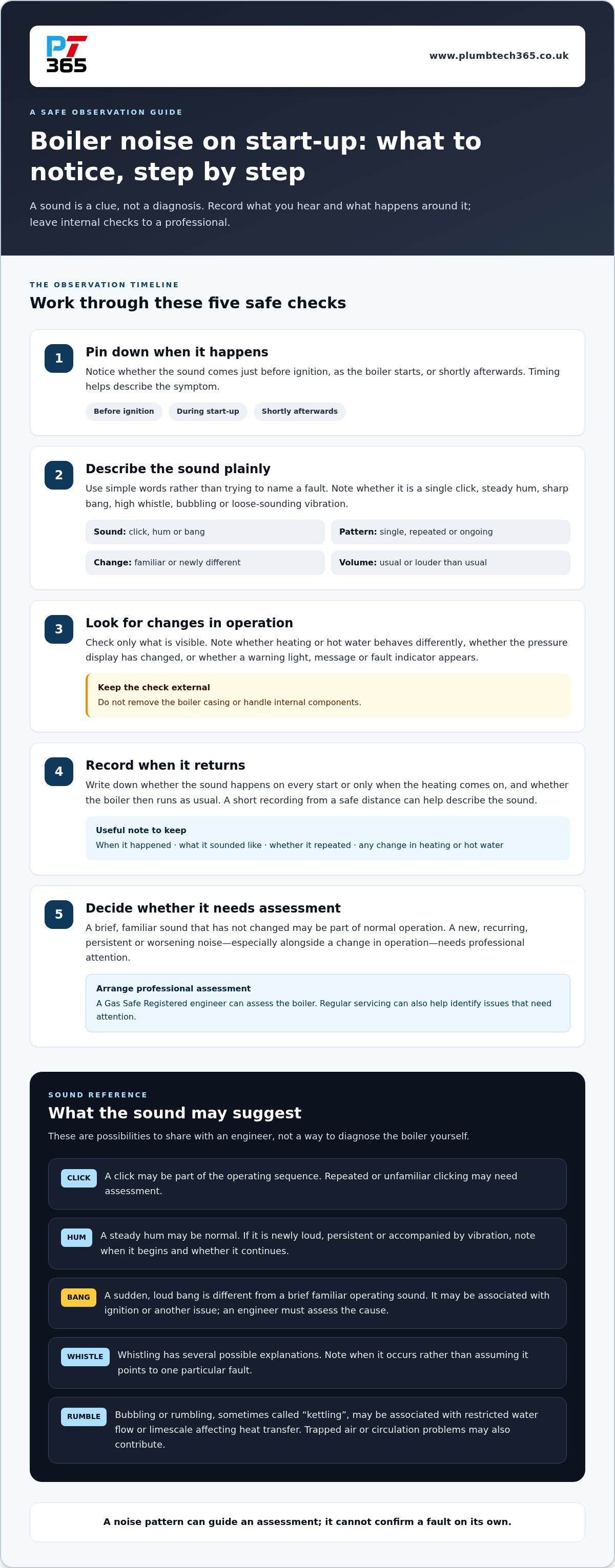
Start with the timing. Does the sound happen just before ignition, as the boiler starts or shortly afterwards? Then describe it in plain terms: a single click, steady hum, sharp bang, high whistle or loose-sounding vibration. These details help an engineer understand the symptom without you needing to identify a fault.
Also note whether the heating or hot water behaves differently, whether the pressure display has changed, and whether a warning light, message or fault indicator appears. Don’t remove the casing to investigate. If the pressure reading looks different from usual, this boiler pressure troubleshooting guide may help you understand what to observe.
Keep a short record of what happened and when. For example, note whether the sound occurs on every start or only when the heating comes on, and whether the boiler then runs as usual. This practical information is useful when troubleshooting a boiler that is noisy on startup. A new or worsening sound, particularly alongside another change in operation, needs professional attention rather than guesswork.
Common causes of a boiler making noise on startup
A startup sound can come from different parts of the boiler or heating system. A noise pattern can suggest what needs investigating, but it cannot identify a fault on its own. Treat the possibilities below as information to share with an engineer, not a diagnosis to attempt yourself.
Boiler systems heat water and circulate it around the home, as described in this guide to how boiler systems work. Changes in ignition, circulation or vibration may all affect the sounds you hear. The pattern, duration and any change in performance help an engineer assess the cause.
What might clicking, humming, or vibration at startup mean?
A click as the boiler starts may be part of its operating sequence. Repeated or unfamiliar clicking could also relate to a component that needs assessment. A steady hum may be normal; if it’s newly loud, persistent or accompanied by vibration, note when it begins and whether it continues after startup.
Vibration can sometimes be heard through nearby pipes or surfaces, but don’t remove the boiler casing or try to adjust internal parts. If it helps, record the sound from a safe distance. A brief recording, along with a note of when it occurs, can give an engineer a clearer description.
Could banging, whistling, or kettling point to a heating issue?
A sudden, loud bang is different from a brief, familiar operating sound. It may be associated with ignition or another issue, but only a professional assessment can establish the cause. Whistling also has several possible explanations, so don’t assume it points to one particular fault.
A bubbling or rumbling noise often described as “kettling” may be associated with restricted water flow or limescale affecting heat transfer. Trapped air or circulation problems may also contribute to unusual noises. These possibilities overlap, so avoid trying to confirm the cause yourself. If a fan-like sound carries on beyond startup, read this guide to a boiler fan that is constantly running.
When troubleshooting a boiler that is noisy on startup, note whether the sound is new, repeated or worsening, and whether the heating or hot water has changed. If the noise persists or comes with another operating problem, arrange assessment by a Gas Safe Registered engineer. Plumbtech 365 provides boiler repairs and servicing carried out by Gas Safe Registered engineers. Find boiler repair and servicing support.
Compare boiler startup sounds with the symptoms around them
The sound matters, but so does what the boiler does next. Use this table to organise what you’ve noticed, not to diagnose the appliance. The same noise may have different explanations. A pressure change or loss of heating adds context, but doesn’t prove the cause.
What does a startup bang or repeated ignition noise suggest?
A loud bang or repeated attempts to ignite shouldn’t be treated as a routine sound to troubleshoot by trial and error. These symptoms may be associated with different issues, so an engineer needs to assess the appliance and how it operates. Don’t remove the casing or adjust gas components. Note when the sound occurs, whether the boiler starts and any warning displayed.
What if the noise comes with low pressure or a boiler lockout?
A pressure change or lockout is useful information, but neither confirms why the boiler is noisy. Note the reading or code shown on the display, and avoid repeatedly resetting the appliance. If you’ve also noticed a pressure issue, follow these boiler pressure troubleshooting steps. For repeated shutdowns, see the guidance on a boiler that keeps locking out.
This comparison makes troubleshooting a boiler that is noisy on startup more useful: describe the sound alongside changes in pressure, heating, hot water or operation. If the noise persists or occurs with a leak or repeated shutdown, arrange professional assessment. Boiler repair and servicing support is available from Gas Safe Registered engineers.
Safe checks to make before arranging boiler repair
Keep your checks outside the boiler. You can gather useful information without opening the casing, touching internal parts or attempting a repair. This gives an engineer details to assess without putting yourself at risk.
Which checks can a homeowner make without opening the boiler?
Use this simple sequence:
Note the sound. Record whether it’s a click, hum, bang, whistle or vibration, when it happens, and whether it’s becoming louder or more frequent. A recording from a safe distance may help.
Check visible indicators. Read any status message or fault code and consult the boiler’s instructions for what it means. Don’t repeatedly reset the appliance.
Record other symptoms. Note visible leaks, changes in the pressure display, repeated shutdowns, or any loss of heating or hot water. Don’t remove panels to investigate.
Gas appliance repairs and internal checks must be left to a Gas Safe Registered engineer. When troubleshooting a boiler that is noisy on startup, clear observations are useful; attempting to adjust components is not.
When should a noisy boiler be switched off and assessed?
A new, loud bang, repeated ignition trouble or a noise that is worsening calls for prompt professional assessment. If there’s no suspected gas or carbon monoxide danger, stop using the boiler if you can do so safely and arrange an engineer’s assessment. Don’t open the casing or try to correct the fault yourself. See these boiler fault indicators not to ignore for other warning signs.
If you suspect a gas leak or carbon monoxide, treat it as an urgent safety concern. Leave the property and follow current instructions from the relevant official emergency service. Don’t use the boiler or attempt checks that could expose you to danger. If anyone feels unwell, seek emergency medical help.
When there’s no immediate danger, tell the engineer when the noise occurs, what the display shows and whether the boiler’s performance has changed. Plumbfix 365 provides boiler repairs and servicing carried out by Gas Safe Registered engineers. Arrange a boiler assessment if the noise persists, returns or worsens.
When professional boiler servicing or repair is the right next step
Arrange an assessment if a startup noise persists, returns, changes in character or grows louder. Don’t wait for a complete breakdown if it comes with repeated shutdowns, a fault message, a leak or changes to heating or hot water. These clues don’t identify the fault, but they help an engineer decide what to assess.
Professional diagnosis is the sensible next step when the noise is recurring or getting worse. Plumbfix 365 provides boiler repairs and servicing carried out by Gas Safe Registered engineers, who can assess the appliance and its operation. The diagnosis depends on inspection, not guesswork.
What information should you share with a Gas Safe Registered engineer?
A clear description helps the engineer assess the problem. Before arranging an appointment, note:
What the noise sounds like, and whether it happens before, during or after startup.
How long it lasts, how often it occurs, and whether it’s becoming louder or changing.
Any displayed fault code or indicator, alongside changes in heating, hot water or the pressure reading.
Any visible leak, repeated shutdown or other change in how the boiler operates.
When the boiler was last serviced, and any recent work or changes around the heating system, if known.
Share what you can observe safely. Don’t remove the casing or inspect internal parts. A short recording made from a safe distance may help explain an intermittent sound, but it doesn’t replace an engineer’s assessment.
Can servicing help prevent recurring boiler noise?
Servicing gives an engineer the opportunity to inspect the boiler’s operation and identify issues that may need attention. It can be a useful step if a noise has returned or become more noticeable, but it can’t guarantee that every fault or sound will be prevented. If the boiler is already making a persistent or worsening noise, arrange a repair assessment rather than assuming routine servicing alone will resolve it.
When troubleshooting a boiler that is noisy on startup, your notes can help explain the pattern, but professional assessment is needed to establish the cause. Arrange boiler repair or servicing help.
Take the next step towards quieter, reliable heating
A startup noise is a clue, not a diagnosis. Its timing, character and any changes to your heating or hot water can help an engineer assess what may be happening. Keep checks external and observational. Don’t open the casing or attempt internal repairs.
If the sound is new, persistent, worsening or accompanied by another operating problem, arrange a professional assessment. A Gas Safe Registered engineer can inspect the boiler and advise on suitable repair or servicing. That’s a safer way to move from troubleshooting a boiler that is noisy on startup to understanding the issue without guesswork.
Plumbfix 365 provides boiler repairs and servicing carried out by Gas Safe Registered engineers. If your boiler noise is causing concern, get help with a noisy boiler. Share what you’ve noticed and arrange professional support.
Frequently Asked Questions
Why is my boiler making a loud noise when it starts?
A loud startup noise can have several possible causes, including ignition, circulation or vibration issues, and the sound alone can’t confirm which applies. When troubleshooting a boiler that is noisy on startup, note whether the noise is new, when it happens and whether it’s getting louder. Record any changes to heating or hot water, plus fault codes or indicators. Ask a Gas Safe Registered engineer to assess noise that persists or causes concern.
Is it normal for a boiler to make a noise when it fires up?
Some boilers make brief sounds during normal operation, but a new, loud, repeated or worsening noise shouldn’t be dismissed as normal. Compare it with the boiler’s usual behaviour and note how long it lasts. If the sound comes with a fault indicator, loss of heating or another change in operation, arrange a professional assessment. The pattern can help an engineer, but it can’t confirm the cause by itself.
Can I keep using a boiler that bangs on startup?
Don’t assume a loud bang is harmless, particularly if it happens repeatedly or the boiler struggles to start. Avoid opening the casing, adjusting components or repeatedly resetting the appliance. Note when the bang happens and any other symptoms, then seek advice from a Gas Safe Registered engineer. If you suspect immediate danger, stop troubleshooting and follow current official safety guidance.
What does a boiler clicking when it starts mean?
Clicking may be part of the boiler’s operating sequence, but repeated or unusual clicks can also occur alongside a fault. Notice whether the boiler starts and runs normally, whether the sound continues, and whether a warning or fault indicator appears. Don’t try to identify the cause by sound alone. If the clicking persists, changes or comes with another operating problem, arrange an engineer’s assessment.
Could low boiler pressure cause noise on startup?
A pressure issue may occur alongside startup noise, but that doesn’t prove the symptoms share one cause. Check the visible pressure display against your appliance instructions and note any change. Don’t adjust the system unless the manufacturer’s guidance clearly allows it. For further guidance, read these boiler pressure troubleshooting steps. Seek professional help if the pressure concern or noise continues.
When should I call an engineer about a noisy boiler?
Contact a Gas Safe Registered engineer if the noise is new, loud, persistent or worsening, or comes with a fault code, repeated shutdowns or changes to heating and hot water. Tell them when the sound occurs and what else you’ve observed. If you suspect a gas leak or carbon monoxide danger, don’t troubleshoot the boiler. Follow current official emergency guidance instead.