


Durable Paint for Rental Properties: Choosing Finishes That Last
How do you choose paint that stands up to everyday rental wear without treating every scuff as a reason to redecorate? For home owners, letting agents and management companies looking for professional property maintenance, the answer starts with more than colour. The surface, preparation and level of daily use all affect how paint looks and lasts. A considered approach can help you choose suitable finishes and plan the work.
Marks on a hallway wall or chipped woodwork can be frustrating between tenancies. Wear isn’t always just cosmetic: peeling or discoloured paint may point to damp or another issue that needs attention before decorating begins. A washable wall finish or hard-wearing woodwork paint may help, but the right product depends on the material and conditions.
This article explains how finish, surface and everyday use work together, then looks at practical choices for rooms and woodwork in a rental home. You’ll also learn how to tell ordinary wear from signs that preparation, maintenance or professional decorating support may be needed. Painting and decorating can form part of wider property maintenance and refurbishment, helping you plan the work clearly.
Table of Contents
Why durable paint matters in rental properties
In a rental home, paintwork needs to suit both the surface and the way people use the space. A finish that looks smart on a quiet bedroom wall may show marks more readily in a busy hallway, where coats, bags and regular cleaning make frequent contact. Durable paintwork isn’t simply the hardest-looking finish. It’s a suitable coating applied to a properly prepared surface and matched to everyday use.
Durability depends on the finish, the surface and the preparation beneath it. Consider all three before deciding whether a wall needs a quick touch-up or more thorough attention. Paint types and finishes vary in appearance and properties. This overview of types of paint and finishes provides general background, but the product’s own guidance is more useful when selecting paint for a particular surface.
Repeated contact, routine cleaning and moving furniture can gradually leave scuffs, rubbed patches or small chips. These may be ordinary cosmetic wear, particularly in areas that see regular use. Recording where damage appears and whether it changes over time can help home owners, letting agents and management companies distinguish surface wear from a problem that needs investigating first.
Which parts of a rental home show wear first?
Walls near entrances, along hallways and around frequently used doors are places where marks may become noticeable. They aren’t trouble spots in every property: layout, household routines and furniture placement all matter. Chairs pushed against a wall, bags brushed past a corner or frequent handling around switches can affect the paint. Check the pattern and location before choosing a repair or repaint.
Woodwork and other painted surfaces can also show knocks where items are carried through a room or furniture is moved. A small mark may need only local attention, while several scuffed areas can make a surface look uneven. There’s no fixed repainting interval that suits every room. Assess the actual condition and the finish required for the next tenancy.
When is worn paint more than a cosmetic issue?
Look more closely if paint is peeling, staining keeps returning or the surface appears to be deteriorating. These signs don’t identify a cause on their own, but they can indicate that paintwork alone won’t resolve the issue. Moisture or a problem with the underlying surface may need attention before decorating begins. Painting over damaged or damp areas can conceal symptoms temporarily without addressing what is happening underneath.
Before arranging a repaint, note the affected area, how the surface feels and whether the mark reappears after cleaning. Don’t treat recurring staining as a simple colour-matching task. Investigate and address any underlying concern before redecorating. Once the surface is ready, PlumbTech365 Property Services can include painting and decorating in a wider property maintenance plan.
Paint finishes explained: choosing a practical option for each surface
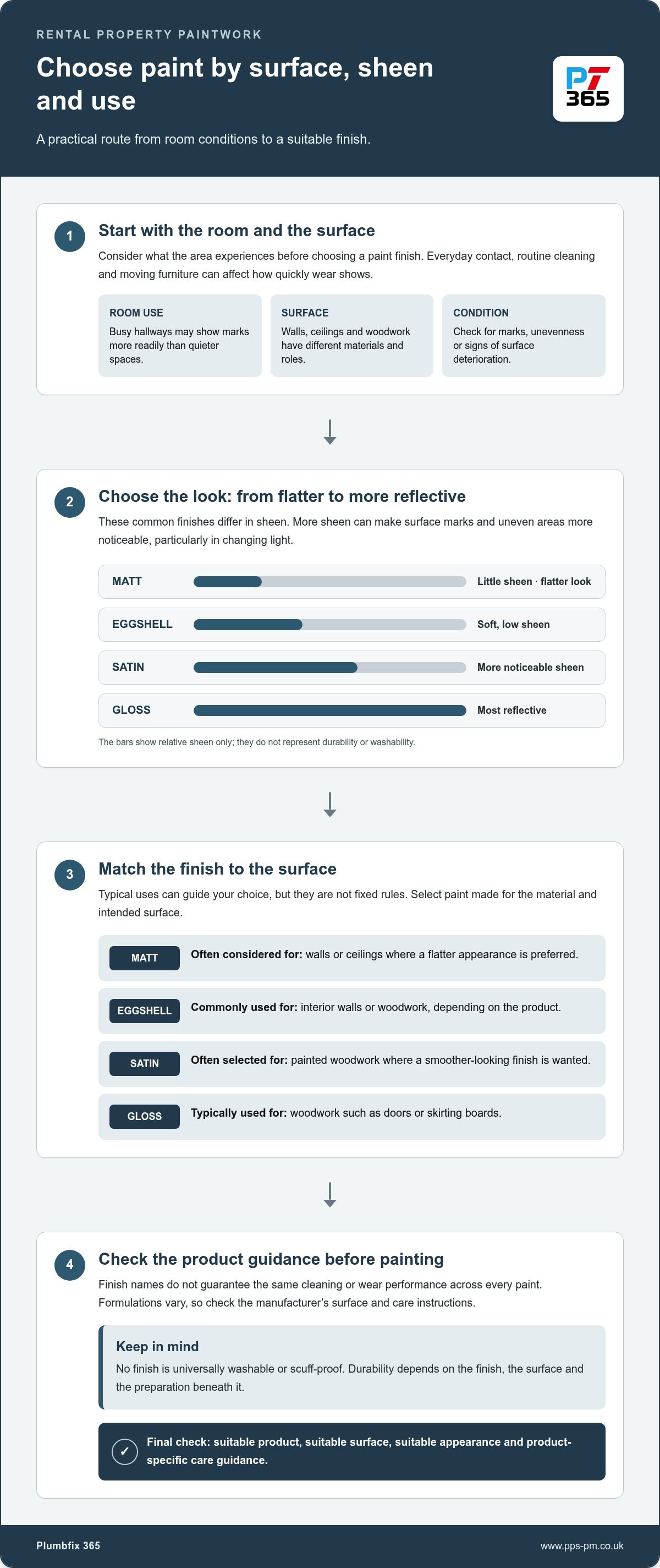
Paint finish affects the way a room looks, not just how its surfaces reflect light. Matt, eggshell, satin and gloss describe different levels of sheen, but the names don’t guarantee the same cleaning or wear performance across every paint. Formulations vary, so read the product guidance and match it to the surface and room.
Choose a finish for both practical use and the appearance you want. In a rental home, balance the look of a wall, ceiling or woodwork with how it will be used and maintained. No finish is universally washable or scuff-proof.
How do matt, eggshell and satin finishes differ?
Matt has little sheen and gives a flatter appearance. Eggshell has a soft, low sheen, whilst satin reflects more light and appears smoother. Gloss has the most reflective appearance of these common options. The added sheen can make surface marks and uneven areas more noticeable, particularly in changing light, so inspect the wall before settling on a finish.
Use this comparison as a guide, then check the paint manufacturer’s surface and care instructions.
Matt: A low-sheen look, often considered for walls or ceilings where a flatter appearance is preferred.
Eggshell: A gentle sheen, commonly used on interior walls or woodwork depending on the product.
Satin: A more noticeable sheen, often selected for painted woodwork where a smoother-looking finish is wanted.
Gloss: A highly reflective appearance, typically used on woodwork such as doors or skirting boards.
These are typical applications, not fixed rules. Two paints with the same finish label may differ in their intended use and care instructions. Check whether the product is made for the material, and consider how its sheen will look alongside adjacent surfaces.
Should walls, ceilings and woodwork use the same finish?
Not necessarily. Walls, ceilings and painted woodwork have different shapes, materials and roles in a room. A wall coating may be designed for broad interior surfaces, while a product for woodwork may suit doors, frames or skirting. Ceilings are often treated as a separate surface because light can reveal unevenness across a large area. Select paint for the actual substrate rather than choosing one tin for every part of the room.
Existing coatings matter too. A surface previously painted with a different type of product may need specific preparation or a compatible coating. Peeling, repairs or uneven patches can also affect the final appearance. Read the label and technical guidance before application, and don’t assume that matching the sheen makes two products interchangeable.
If decorating is part of a wider property refresh, plan finish choices alongside the work needed on each surface. PlumbTech365 Property Services provides painting and decorating as part of property maintenance and refurbishment, with the plan shaped around the property and its needs.
How to match durable paint to a rented room and surface
Choose paint by considering three things together: how the room is used, what the surface is made of and what condition it’s in now. This helps avoid choosing a finish on colour alone. A kitchen wall, bedroom ceiling and painted door may sit close together, but each has different demands and may need a different product or finish.
Use this room-by-room framework before selecting paint:
Hallways and entrances: Consider how often people brush past the walls, carry items through or clean marks away. Check corners and areas near doors for knocks or worn patches.
Kitchens: Think about regular use and the cleaning painted surfaces may need. Separate walls from cupboards or other painted surfaces, and use products suitable for their respective materials.
Bathrooms: Consider the room’s conditions and inspect the surface carefully for signs of deterioration. Paint alone won’t resolve damp or mould; investigate the underlying issue rather than relying on a new coating.
Bedrooms and living areas: Look at furniture placement and contact points, such as behind chairs or beside beds. A lower-traffic wall may have different practical needs from a surface that gets handled often.
These are prompts, not fixed rules. The same room can contain surfaces with different uses and conditions, so assess them individually before deciding on a finish.
What should you consider in busy rooms and hallways?
Frequent contact and expected cleaning should guide your choice. Check the paint product’s stated care guidance instead of assuming a finish will withstand repeated wiping. A wall beside an entrance may need a different approach from an adjoining ceiling or door. Plan colours consistently across connected spaces, then allow the sheen or paint type to vary where the surface and use call for it.
Colour planning can still be practical. A shared palette helps rooms feel connected and can make future touch-ups easier to organise, but the same colour in different finishes may look different as light falls across it. Consider sample areas in the room before committing across adjoining walls and woodwork.
What changes when painting woodwork or previously coated surfaces?
Walls and woodwork aren’t interchangeable substrates. A plastered wall, timber door and previously painted skirting can each have different surface conditions and existing coatings. Inspect for loose, cracked or damaged paint first, and consider whether repairs or preparation are needed. Follow the selected product’s guidance for the surface and existing coating rather than assuming a new layer will bond or look right without preparation.
Note what needs attention before choosing paint. If the surface is sound, focus on use, appearance and product suitability. If it’s peeling, stained or deteriorating, address that condition before treating the job as a straightforward repaint. PlumbTech365 Property Services can include decorating in wider property maintenance, with the room and surface assessed before work begins.
Preparation and care that help rental paintwork stay presentable
A durable finish starts before the paint goes on. Rushing straight to a fresh coat can leave peeling edges, stains or uneven patches visible through the new work. Follow a simple sequence: inspect the surface, identify concerns, prepare it appropriately, apply suitable paint and allow it to dry as directed by the product guidance.
Sound preparation supports a more consistent painted finish. It also helps you spot when decorating should wait until a separate surface or moisture concern has been addressed.
What should be checked before repainting?
Look over each area in good light. Note loose or damaged coatings, cracks, other visible deterioration and stains that may be recurring. Check for signs of moisture that need attention. Their appearance alone may not reveal the cause, so don’t assume a new coat of paint will fix the problem.
Preparation depends on what you find. A sound, clean surface may need a different approach from one with loose paint or visible damage. Follow the paint manufacturer’s guidance for the surface and existing coating. Don’t paint over unresolved damp or cover mould without addressing the underlying concern first.
For a clear workflow, work through these stages:
Inspect: Check walls, ceilings and woodwork, noting the location and condition of any marks or damage.
Identify: Separate ordinary surface wear from peeling, recurring stains or signs that moisture may need attention.
Prepare: Deal with loose or damaged areas appropriately and make sure the surface is ready for the chosen paint, following product guidance.
Paint: Apply paint suited to the material and intended use, taking care to keep the finish consistent across each surface.
Allow it to dry: Follow the product instructions before cleaning the surface or putting furniture and belongings back against it.
Don’t treat a stain as a preparation shortcut. If it returns, painting over it may hide the mark briefly without resolving what caused it. The same applies to damp-related deterioration: decorating should follow attention to the underlying issue, not replace it.
How can landlords and agents reduce avoidable paint damage?
Keep a simple record of visible paint condition during routine property checks. A note or photograph can help show whether a scuff is isolated, growing or recurring, and support a more informed maintenance plan. This is a practical record-keeping suggestion, not a fixed inspection schedule.
Responding to marks and damage promptly can help you plan appropriate cleaning, touch-ups or wider decorating before the condition worsens. Clean gently, using an approach suitable for the surface and paint. Test an inconspicuous area first and follow the manufacturer’s care instructions; an unsuitable cloth or cleaning method may affect the finish.
When preparation or repainting needs a coordinated approach, PlumbTech365 Property Services can provide painting and decorating as part of property maintenance. Consider professional support when the work extends beyond small touch-ups or needs to fit into a broader upkeep plan.
When professional painting and decorating support can help
Professional decorating support can help when a property needs more than a small touch-up. A landlord or property manager may be preparing a home between tenancies, coordinating several maintenance tasks or addressing tired paintwork across rooms and woodwork. Bringing painting into a wider maintenance or refurbishment plan can help organise the work in a sensible order, particularly if surface repairs need attention before decorating begins.
PlumbTech365 Property Services provides painting and decorating within its property services. This support is available to home owners, landlords, letting agents and management companies. A professional assessment can help establish which surfaces need preparation, where repainting is appropriate and how decorating fits alongside other property work. The scope should reflect the condition of the property, rather than applying a fresh coat without considering what lies beneath.
What can coordinated property painting support involve?
Painting and decorating may include internal and external work, planned around the surfaces and areas included in the project. Inside, this could mean refreshing walls and woodwork as part of a wider room update. External decorating can form part of maintaining a property’s presentation. The right scope depends on what needs attention and whether repairs or preparation should come first.
Coordination matters when several tasks affect the same area. Decorating may be best planned after relevant surface repairs, so the finish follows the work rather than being completed prematurely. For landlords and letting agents, a defined scope can help organise property upkeep between tenancies. Home owners and management companies can use the same approach when planning refurbishment across one room or several areas.
What should readers know about workmanship and estimates?
Before work proceeds, agree the intended scope and how any significant changes will be handled. This helps keep decisions clear if the surface condition or work required differs from what was first anticipated.
The workmanship guarantee is 12 months from completion, covering defects in workmanship only. PlumbTech365 Property Services is 100% Gas Safe Registered and holds £5 million public liability insurance. These details provide useful context when arranging property maintenance and decorating support.
If you’re planning a rental-property refresh, speak with the team about painting and decorating as part of your maintenance or refurbishment work. Call 01322 252015 for general enquiries or 01322 251520 for terms-of-service enquiries, or email admin@pps-pm.co.uk. You can also discuss painting and decorating support through the website.
Plan your next property refresh with confidence
Use the next decorating project to set a clear standard for the property. Note which areas need attention, what should be resolved before painting and the finish you want tenants to see. A short, agreed scope can help everyone involved understand the priorities and keep the work focused.
For landlords and property managers, this is also a chance to plan decorating around the wider upkeep of the home rather than treating each mark as a separate job. PlumbTech365 Property Services can support this practical approach, helping you move from a list of concerns to a considered painting plan.
To discuss your next step, Discuss your property painting requirements with PlumbTech365 Property Services. Get in touch to plan a refresh around the property’s surfaces and condition.
Frequently Asked Questions
What is the most durable paint finish for rental property walls?
There isn’t one finish that’s the most durable for every rental wall. Choose a paint intended for the wall’s material and level of use, then check its care guidance if you expect to clean marks regularly. A busy entrance wall and a less-used bedroom wall may need different considerations. Test the chosen colour and sheen in the room first, as lighting can change how the finish appears.
Can durable paint be used on every surface in a rental property?
No. Paint needs to suit the surface, so a product intended for walls may not be appropriate for a timber door, metal fitting or ceiling. Check the label for the surfaces it’s designed for, and take the existing coating into account. A previously painted skirting board, for example, may need a different approach from newly plastered walls. Don’t assume one tin will work across the whole property.
How often should rental property walls be repainted?
Base repainting on the walls’ condition, not a fixed timetable. A room with clean, sound paint may not need repainting simply because time has passed, whilst extensive marking or worn areas may make a refresh worthwhile. Consider the whole wall rather than judging from one small scuff. If damage or staining keeps returning, investigate the surface before treating the issue as routine redecoration.
What should be done before painting over peeling paint?
Don’t paint straight over peeling areas. First establish whether the coating is loose because of ordinary surface wear or whether another issue may be affecting the wall. Prepare the loose paint and surrounding surface appropriately, guided by their condition and the chosen paint’s instructions. If peeling appears alongside recurring stains or signs of moisture, deal with that concern before decorating so the new coat doesn’t simply conceal it.
Can paint prevent mould or damp from returning?
No paint should be relied on by itself to prevent mould or damp from returning. If mould reappears or a damp patch persists, painting over it may hide the visible evidence without resolving the underlying concern. Look for changes in the affected area and arrange investigation of the cause before redecorating. Once the issue has been addressed and the surface is suitable, choose a coating intended for that surface and follow its product guidance.
How can landlords keep painted walls looking presentable between tenancies?
Keep a simple record of wall condition at each tenancy change, noting where marks, chips or stains appear. This makes it easier to distinguish new damage from older wear and plan touch-ups consistently. For small marks, use a cleaning method suitable for the existing paint and test it discreetly first. Keep the paint details and colour information with the property records, as a close visual match can still look different under room lighting.
Does PlumbTech365 Property Services provide painting and decorating?
Yes. PlumbTech365 Property Services provides painting and decorating as part of its property maintenance and refurbishment work. The service can support home owners, landlords, letting agents and management companies planning a refresh or coordinating decorating with other property work. Share which areas need attention and whether any repairs should be considered first. The company is 100% Gas Safe Registered and holds £5 million public liability insurance. For general enquiries, call 01322 252015 or email admin@pps-pm.co.uk.


Comments