


How to Handle Emergency Repairs in Multi-Tenant Buildings
A burst pipe, suspected gas leak or electrical fault that could cause a fire needs immediate action, not a place in the routine maintenance queue. Knowing how to handle emergency repairs in a multi-tenanted commercial building starts with recognising immediate danger and damage that could worsen if left unattended. Make the area safe, alert the right people and arrange an appropriate response.
In a shared building, a clear handover matters as much as a quick decision. Tenants, managing agents and contractors need accurate information about the affected area, access and actions already taken, especially when an issue arises out of hours.
This guide explains how to distinguish emergencies from repairs that can be scheduled, what to include in an out-of-hours handover, and how approval limits and building procedures shape decisions. It also covers managing a repair yourself, so you can protect occupants, limit further damage and keep a reliable record.
Table of Contents
What Counts As An Emergency Repair In A Rental?
For commercial buildings in England and Wales, the lease sets out who must arrange and pay for repairs. Check its clauses on repairs, building services and shared areas, then follow the manager’s delegated authority. Tenants should promptly report urgent faults to the landlord or managing agent rather than assume responsibility rests with one party.
Contact emergency services when there’s immediate danger to life or safety. In England, call 999 if there’s a fire; if a gas leak or carbon monoxide is suspected, leave and call the National Gas Emergency Service on 0800 111 999. Contact the local authority about dangerous housing conditions where its out-of-hours service is relevant.
Commercial tenants’ shares of emergency repair costs and service charges depend on the lease’s cost-allocation terms. Check which areas and services are shared and how the agreement apportions their expenses. There is no universal split for every building.
Delaying action can put occupants at risk, allow damage to spread and disrupt neighbouring businesses. It may also lead to disputes over lease obligations or claims related to resulting damage. Consequences depend on the circumstances and applicable duties, so don’t assume every delay triggers the same penalty.
Use the urgency and likely impact to distinguish an emergency from routine maintenance. An emergency presents immediate danger or could cause additional property damage if left untreated. For example, a severe leak that cannot be stopped may threaten several units and shared areas. A minor defect without an immediate safety risk or likelihood of further damage can usually be reported for scheduled repair.
A burst pipe flooding a corridor can affect occupants, stock and building equipment.
A broken boiler in winter may need prompt attention; Shelter gives repair within 24 hours as an example of what could be reasonable in England’s private rented sector, depending on circumstances.
A fault affecting only one tenant still needs urgent attention if it creates a safety risk or threatens damage beyond that unit.
If the landlord doesn’t answer and the danger cannot wait, log each call or message and follow the building’s emergency procedure. Arrange a suitable contractor within the authority granted by the lease or management agreement. If that authority is unclear, prioritise immediate safety and preventing further damage. Record why action was necessary, the contractor’s findings and the decisions made.
Send the landlord and affected tenants a concise update. Identify the location, describe the fault, say whether it’s ongoing and explain access arrangements. Notify the building factor or managing agent if shared areas are involved. For a leak, include its suspected source, when it began and which units are affected.
If a landlord refuses a repair, send the evidence in writing and explain the immediate safety risk or likelihood of further damage. Ask for a clear decision and record the response. If danger remains, use the building’s emergency process rather than leaving tenants without information or a documented next step.
Emergency and non-emergency repair examples
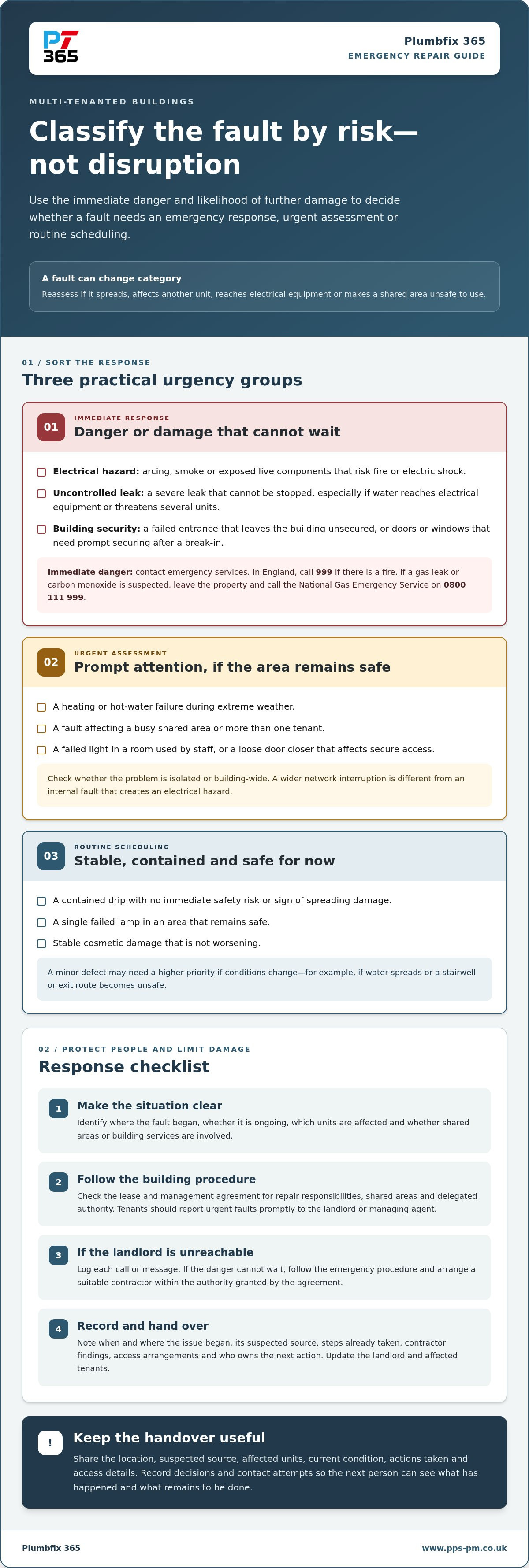
Classify each fault by its immediate risk, not just by how disruptive it feels. The same defect can shift from routine to emergency if conditions worsen.
Examples of Emergency Repairs
An emergency repair addresses a fault that threatens people or could cause further damage without immediate action. In an English rental property, a blocked or overflowing only toilet is an emergency because no working toilet remains. Electrical faults that risk fire or electric shock also need emergency attention. After a break-in, doors or windows may need prompt securing to protect occupants and the premises.
Examples of Urgent Repairs
An urgent repair needs prompt assessment and scheduling, but may not require an immediate emergency response if the area remains safe. For example, a failed light in one room may be urgent if staff use it, but less critical if the room can be safely closed off. A loose door closer may also need attention, particularly if it affects secure access, even if the door still closes.
Assess the impact across the building, not just inside the unit where the fault began. A loss of electricity, gas or water serving the premises can affect several tenants and shared facilities. First establish whether the issue is building-wide or isolated. A power outage caused by a wider network interruption differs from an internal fault that creates an electrical hazard.
Immediate response: electrical arcing, smoke, exposed live components or a failed entrance that leaves the building unsecured.
Urgent assessment: a heating or hot-water failure during extreme weather, or a fault affecting a busy shared area.
Routine scheduling: a contained drip, a single failed lamp in a safe area, or cosmetic damage that is stable.
These examples are starting points, not fixed labels. A small leak contained in a service cupboard may be manageable, but water reaching electrical equipment changes the risk. Similarly, a lighting fault becomes more serious if it leaves a stairwell or exit route unsafe. Record the location, affected tenants and any change in conditions. These details help the manager set a reasonable priority.
Review the situation if the fault spreads, affects another unit or makes shared areas unsafe to use. A stable ceiling mark, for instance, may be scheduled for inspection, while a visibly worsening ceiling needs urgent reassessment. Set clear triggers for reviewing the original classification, such as spreading water or a newly affected area, so the repair priority reflects current conditions.
What belongs in an out-of-hours handover?
An effective handover gives the next person a clear incident record, current status and named responsibility. For a leak affecting several units, the incoming manager needs the location, suspected source, affected tenants and actions already taken.
After an emergency repair, keep the contractor’s findings, completed work, communications, photographs and follow-up notices together in the incident file. Record updates as the situation develops, including who was notified, when they responded and who is responsible for the next action.
Use a consistent handover record that captures:
Incident details: when the fault was noticed, its exact location, suspected source and whether it’s ongoing.
Impact: affected units, shared areas, access restrictions and any damage reported.
Actions: isolation or containment steps, contractor attendance, findings and work still outstanding.
Communications: messages to tenants, the landlord, managing agent, building factor and insurer.
Ownership: the person responsible for the next update, access arrangement or follow-up inspection.
Name one case owner for each shift. If a night manager hands a burst-pipe incident to the day team, record the incoming owner and transfer time. That person should check whether the leak has stopped, affected tenants have been updated and further work remains. A handover is incomplete if it says only “contractor called” without recording the result or next step.
Keep the repair file current rather than relying on later recollection. Add emails, call summaries, contractor notes and changes to the affected area as they happen. If a building factor receives a phone update, make a written note or send a brief email summary. This creates a clear record of what was reported and agreed.
Photograph or film visible damage when it’s safe. Capture the affected area and surrounding context, such as water reaching a corridor from a ceiling leak. Keep the original files with the incident record and note when and by whom they were taken. Never enter an unsafe area to obtain evidence.
Keep professional indemnity policy documents and insurer notification instructions accessible to those managing incidents. Follow the policy’s stated process if the event may lead to a claim, and preserve relevant emails, decisions and contractor reports. A complete file helps distinguish observed facts from later assumptions.
Property manager approval limits and contracts
A written management agreement should define who can authorise emergency work, contact third parties and approve follow-up repairs. Check delegated authority and escalation procedures before an incident, then record any decisions made during an emergency.
For commercial premises, the lease sets out the landlord’s and tenant’s repair obligations and access arrangements. Review the clauses relevant to the affected equipment, shared area or unit, and follow the agreed process for entry and urgent work.
During repairs in occupied premises, control access to the affected area and tell tenants about hazards, restricted routes and expected work. For example, keep staff out of a leaking service cupboard while the contractor assesses it, and update the handover record.
A rental property emergency involves immediate danger to safety or a fault that could cause further property damage if left untreated. A leak spreading into another unit or a serious electrical hazard needs urgent escalation, unlike a stable cosmetic defect.
In England, the working target for an emergency repair in a rental property is to make it safe within 24 hours; completing the full repair may take longer. Treat this as a rental-property target, not a universal deadline for every commercial lease or building.
Set approval limits in writing, with separate instructions for containment, urgent attendance and permanent repairs. Specify who can appoint a contractor, authorise access and contact the insurer or building factor. The agreement should also explain what to do when the named manager cannot be reached.
Authority: identify the manager who can approve immediate safety work.
Escalation: name the landlord or senior contact for decisions beyond delegated limits.
Scope: distinguish temporary measures from work that needs further approval.
Records: require the decision, reason, contractor findings and next action to be logged.
A property management answering service can take calls, record the caller’s details and pass incident information to the designated contact. Give operators an up-to-date escalation list, building access instructions and clear triggers for contacting emergency services. The service should relay facts, not approve work beyond its authority.
Keep written policies aligned with the agreement and actual practice. If a manager may contact a building factor or insurer, record that delegated authority. Review the process after a missed handover or delayed response, then update contact routes and responsibility for unresolved work.
Make the approval process usable under pressure. A caller reporting water through a ceiling should reach someone who can assess immediate risk, notify the responsible manager and arrange authorised containment. Keep the incident open until the property is safe, outstanding repairs have an owner and tenants know when they’ll receive an update.
Self-managing emergency repairs
When a report arrives, assess danger before arranging repair logistics. Identify the affected unit, people at risk, services involved and whether the fault is worsening. If anyone faces immediate danger, call 999 first. Keep occupants away from the affected area while deciding what safe action is possible. A clear protocol for how to handle emergency repairs in a multi-tenanted commercial building helps staff act without taking on technical work beyond their competence.
For a suspected gas leak or carbon monoxide emergency, evacuate and call the National Gas Emergency Service on 0800 111 999. Don’t smoke, light matches or operate electrical switches. Don’t re-enter until emergency-services advice says it’s safe. Anyone who may have inhaled carbon monoxide should seek immediate medical help.
For immediate electrical danger, call 105 to reach the electricity network operator. Don’t touch exposed wiring, damaged equipment or standing water near electrical fittings. Keep tenants clear and explain which route or room must remain closed. A broken light fitting without immediate danger still needs assessment, but building staff shouldn’t investigate unsafe equipment themselves.
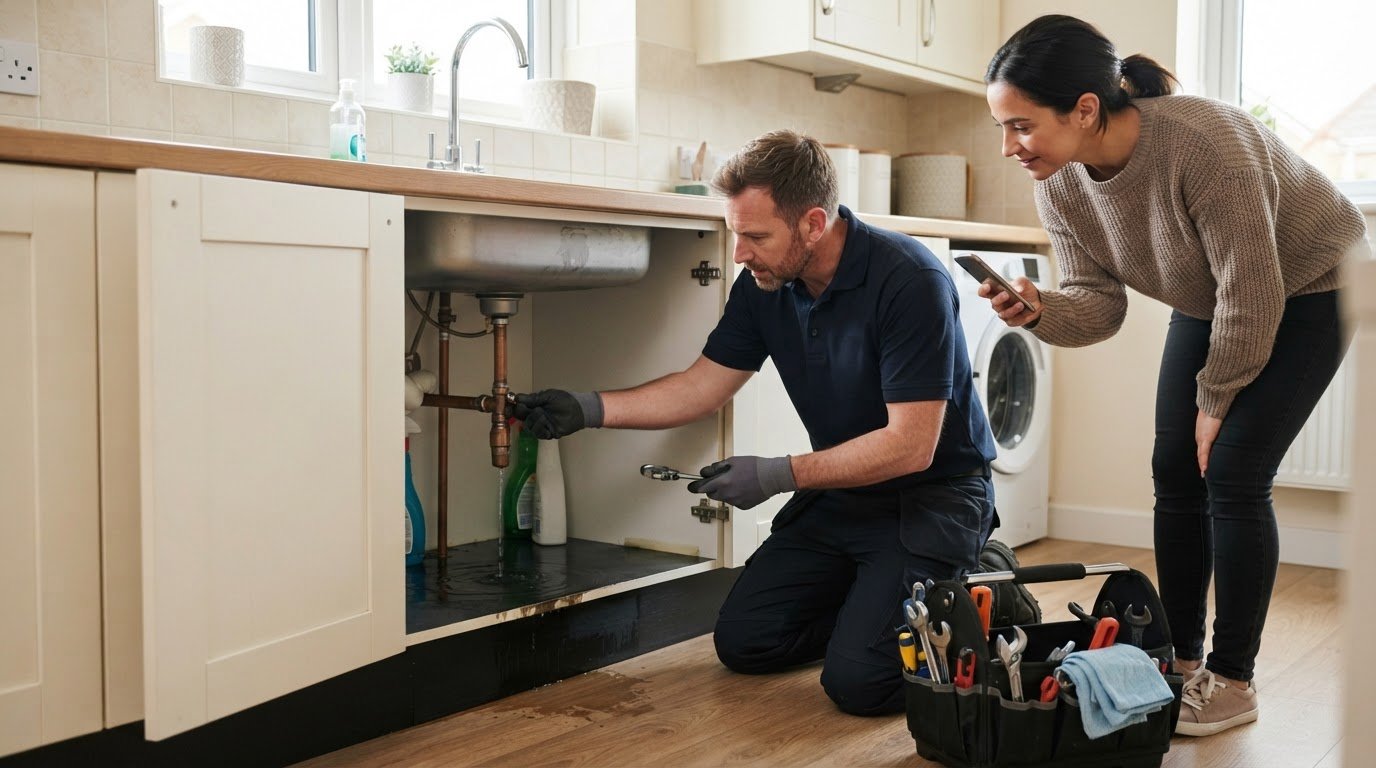
For a water leak, operate a local isolation valve or stop tap only if it’s safe and staff know how. Don’t enter a flooded plant room or move equipment near water. Tell tenants to protect people and movable items only if doing so presents no risk. Record what was isolated and whether water is still escaping.
Next, follow the building’s agreed escalation route. Contact the landlord or managing agent, explain the fault’s location and impact, then arrange an appropriate contractor within delegated authority. For emergency gas repairs in England, use a Gas Safe registered contractor. Tell tenants about access arrangements and temporary restrictions.
Log the report time, caller, location and symptoms.
Record safety actions, service isolations and people notified.
Give the contractor access details and known hazards.
Assign a named person to receive findings and oversee follow-up.
Update the incident record if the risk changes or work progresses.
Tenants shouldn’t assume they can deduct emergency repair costs from rent. In England, recovering repair costs requires following the lawful procedure. Managers should keep the landlord’s instructions and contractor documentation in the incident file.
Self-management means coordinating a safe response, not attempting specialist repairs. When learning how to handle emergency repairs in a multi-tenanted commercial building, separate immediate safety measures from technical work. Confirm who will monitor the affected area, receive the contractor’s findings and communicate the next update. This keeps responsibility clear until the hazard is controlled and outstanding work has an owner.
Managers should assess risks to occupants, keep people away from hazards and contact emergency services if there is immediate danger. They should arrange work through the agreed escalation route, use an appropriate contractor rather than attempt specialist repairs, communicate access restrictions and record safety actions, isolations and notifications.
Property Maintenance and Boiler Installation
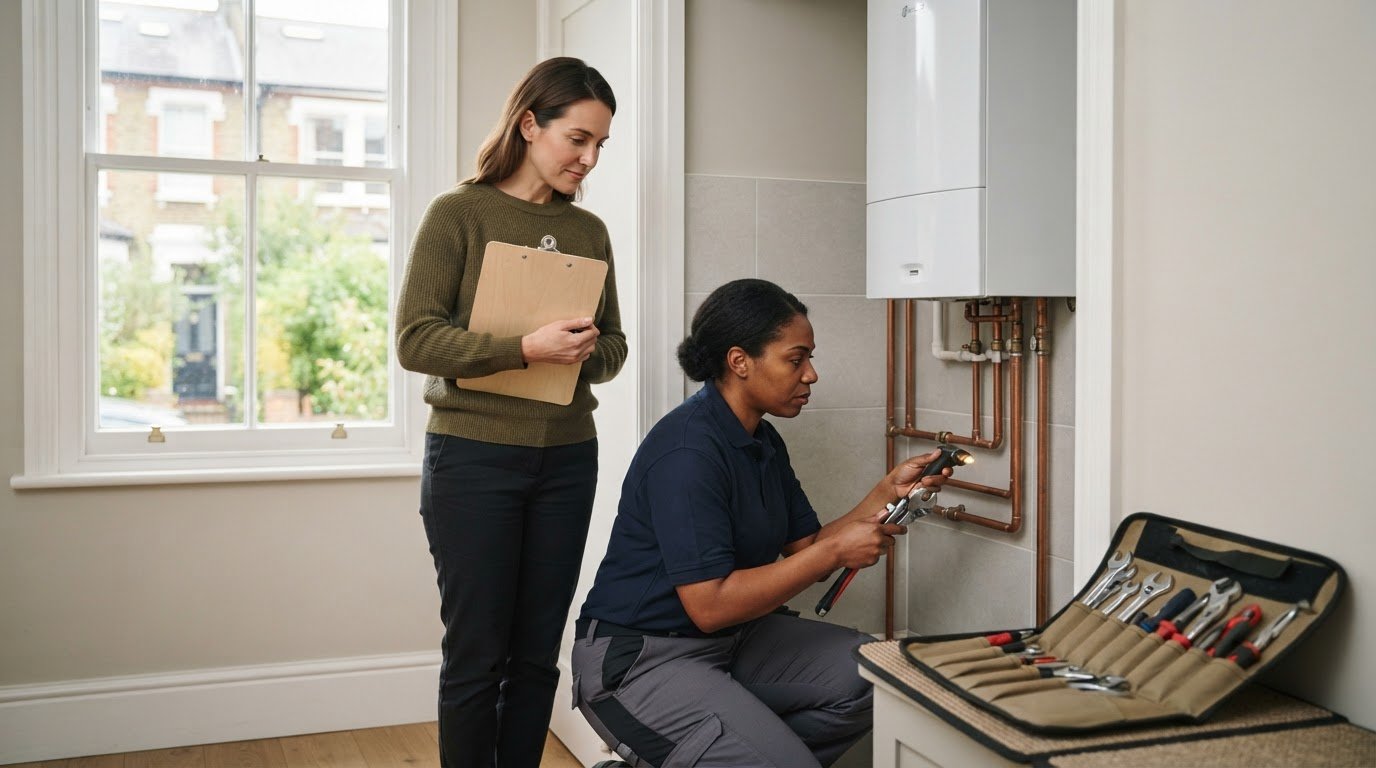
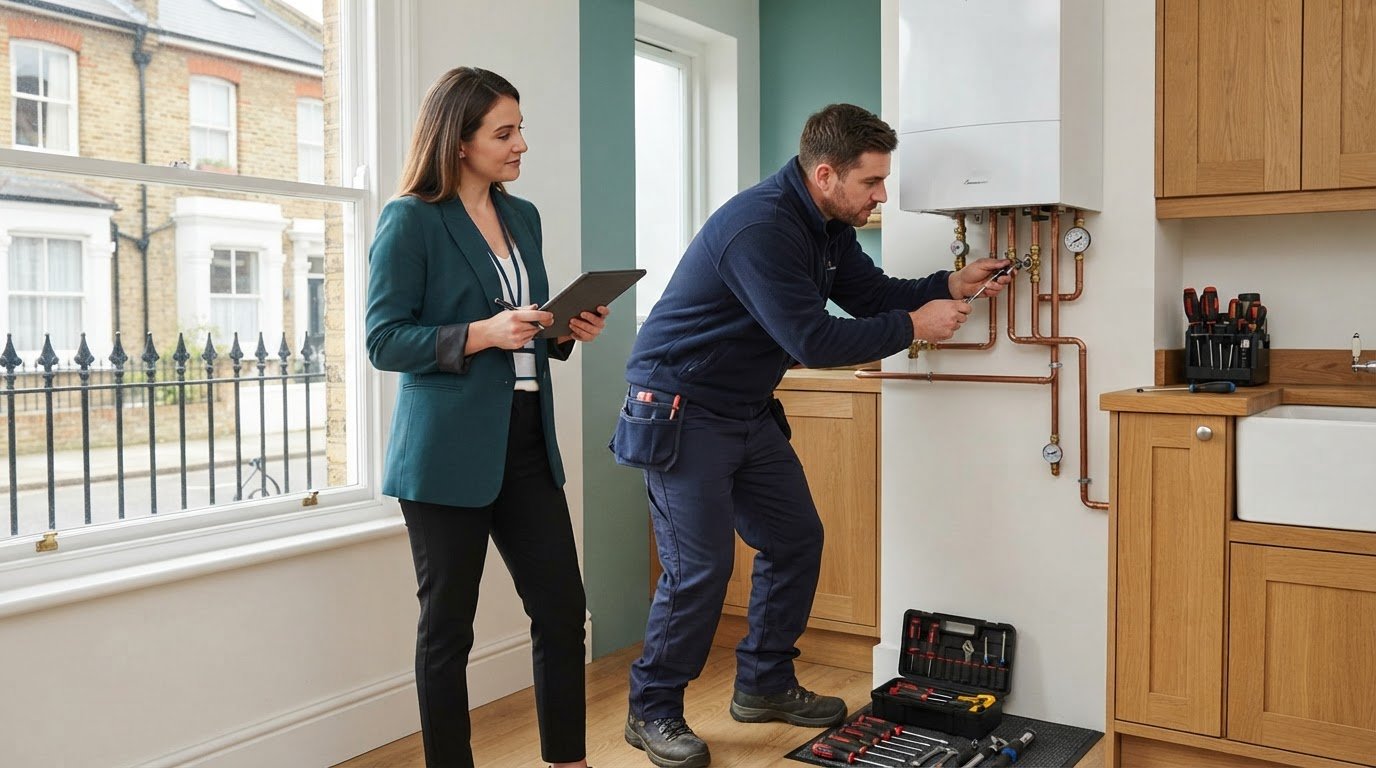
We are a trusted property Maintenance company providing reliable, high-quality services across London and Kent, supporting property managers with building maintenance and heating work. If a boiler fault affects tenants or shared areas, arrange a suitable assessment and keep occupants informed about access and next steps.
For planned heating needs, we provide expert boiler installation and boiler servicing. These services can support heating requirements beyond the immediate incident, while skilled carpenters and property repairs can address other maintenance needs.
Contact our team today to discuss property maintenance for your building and the work required.
Make your building’s response plan ready
Turn your repair process into a practical plan for everyone involved. Set out who receives reports, who can approve urgent action, how tenants are updated and where contractors can find access information. Keep these details accessible and review them when building contacts or responsibilities change.
Knowing how to handle emergency repairs in a multi-tenanted commercial building also means recognising when a fault needs specialist attention. Local plumbers can help with plumbing issues, while boiler installation is relevant when a heating system needs planned replacement rather than emergency containment. Clear records and defined responsibility help your team manage follow-up effectively.
For property repairs and maintenance support, contact the property maintenance team to discuss the work your building requires. A clear plan and the right support can help you manage the next repair with confidence.
Frequently Asked Questions
How long can a rented property be left without hot water?
There’s no single fixed period that applies to every private rental in England. The reasonable response depends on the fault, weather and household circumstances. A complete loss of hot water alongside heating in cold conditions may call for faster action than a localised fault in mild weather. Shelter gives a broken winter boiler repaired within 24 hours as an example of what could be reasonable, depending on circumstances.
How quickly must a landlord fix heating or hot water?
For private renting in England, there’s no universal repair deadline; the reasonable time depends on the problem’s seriousness and the household affected. A landlord should consider whether both heating and hot water have failed, the season, and whether occupants include people particularly affected by cold. The aim is to restore safe, usable services promptly. A temporary measure may help, but it doesn’t necessarily complete the underlying repair.
How should an agency separate emergency, urgent and routine work?
An agency should triage each report by immediate danger, likelihood of further damage and effect on safe use. Treat a live electrical hazard as an emergency, prioritise a deteriorating heating fault for urgent assessment, and schedule stable wear for routine maintenance. Record why the category was chosen and revise it if conditions change. For example, a small leak becomes an emergency if it reaches electrical equipment or spreads into occupied areas.
What is considered non-emergency maintenance?
Non-emergency maintenance covers defects that create no immediate danger or likely further damage and can be managed safely until scheduled. Examples include a sticking cupboard door, worn paint in a dry room or a loose internal handle that still works. Log the location and effect, then arrange access and a suitable repair slot. Reclassify the job if the defect worsens, prevents safe use or affects another tenant.
What constitutes an emergency?
An emergency involves immediate danger to people or a fault likely to cause additional damage if action is delayed. A suspected gas leak, fire or electrical danger needs urgent safety action, not ordinary repair scheduling. In England, call 999 if there’s a fire. For a suspected gas leak, leave the property and call the National Gas Emergency Service on 0800 111 999.
What is classed as an emergency repair for tenants?
For tenants, examples include a severe leak that can’t be contained, an electrical fault creating a fire or shock risk, or a break-in that leaves doors or windows insecure. A blocked or overflowing only toilet in a rental property in England is also an emergency. Report the issue promptly and describe who is affected, what has stopped working and whether the danger or damage is continuing.
What should an out-of-hours letting agent record?
Record the report time, caller’s contact details, affected unit, symptoms and immediate safety steps. Add who was contacted, the contractor’s arrival and findings, access decisions, temporary measures and outstanding work. For example, if a shop reports water coming from above, note whether the source is known and which neighbouring unit is affected. Assign the next action to a named person before handing over.
What counts as an emergency repair in a multi-tenanted commercial building in the UK?
A repair is an emergency when a fault threatens people or could cause further damage without immediate action. In a shared commercial building, assess the consequences for neighbouring occupiers and common areas, not only the tenant who reported it. A leak affecting a shared corridor or a dangerous electrical fault may need escalation. The lease and management procedures guide responsibility, access and authority to arrange work.
Comments