

Timber window repairs for damaged frames, draughts and rot
Rot doesn’t automatically mean a timber window needs replacing. Timber window repairs can address localised rot, draughts and sticking sash or casement parts, while replacement may be worth considering if a frame is badly warped or damaged. Moisture getting into timber is a common cause of deterioration: worn paint, failed joints and damaged seals can leave the wood exposed.
It’s understandable to worry that damage could mean losing the character of an original window, especially in an older home. The right timber window repairs depend on what’s affected and how far the damage has spread. This guide explains why timber windows deteriorate, how professionals tackle rot, draughts and faulty moving parts, and what to consider for listed buildings and properties in conservation areas. You’ll also learn when restoration may be suitable and when extensive damage could make replacement the practical option.
Table of Contents
Draught-proofing
Draughts around a timber window often come from gaps between the opening sash and frame, worn seals or loose joints. A professional assessment identifies where outside air enters before sealing begins. This matters because covering one visible gap won’t stop air moving around the rest of the window. Specialists inspect the meeting rails, staff beads, parting beads, hinges and perimeter seals, then test how the window opens and closes. Draught-proofing can reduce noise and heat loss, helping a room feel more comfortable.
The repair method depends on the window’s design and condition. For a sliding sash, an overhaul may include easing movement, adjusting the sashes and fitting discreet seals to suitable edges. For a casement, the specialist checks hinge alignment, locking points and how the seal compresses when closed. A poorly aligned sash or casement can leave uneven gaps, even after new seals are fitted. The repair should address the cause, not simply cover the gap.
A draught-proofing overhaul can also reveal worn timber, loose joints or failing putty around the glazing. The specialist assesses these alongside the seals, since air can enter at several points. If the glazing needs attention, the options depend on the existing frame, glass and window character. Secondary glazing or a glazing upgrade may improve insulation, but preserving the original appearance can be especially important in a conservation area.
Sealing gaps does not remove the need for ventilation. Condensation forms when moisture meets a cooler surface, so draught-proofing alone may not stop it. Improving ventilation is the most reliable way to prevent condensation. An assessment should distinguish condensation on the room-facing glass from water entering around the frame. These signs point to different issues, so the source needs to be identified before repairs are specified.
Workmanship terms should be clear before work starts. A written scope can record which windows are included, which seals or components will be replaced and what the finish covers. Any workmanship guarantee should explain its duration, covered work and exclusions in writing. For example, a guarantee for fitted seals may not cover later timber movement or unrelated glazing faults. Clear terms help homeowners and letting agents understand what the repair addresses, without assuming it covers every future draught.
Choose an overhaul when seals, movement and minor adjustments can address the draught together. If decay or distorted timber prevents a sound fit, the frame may need repairing first. In a listed building or conservation area, significant alterations may need consent, so the proposed work should respect the original window. A careful inspection connects the symptoms, repair method and finish, giving each sash or casement a practical, clearly defined plan.
Why Do Timber Windows Become Damaged?
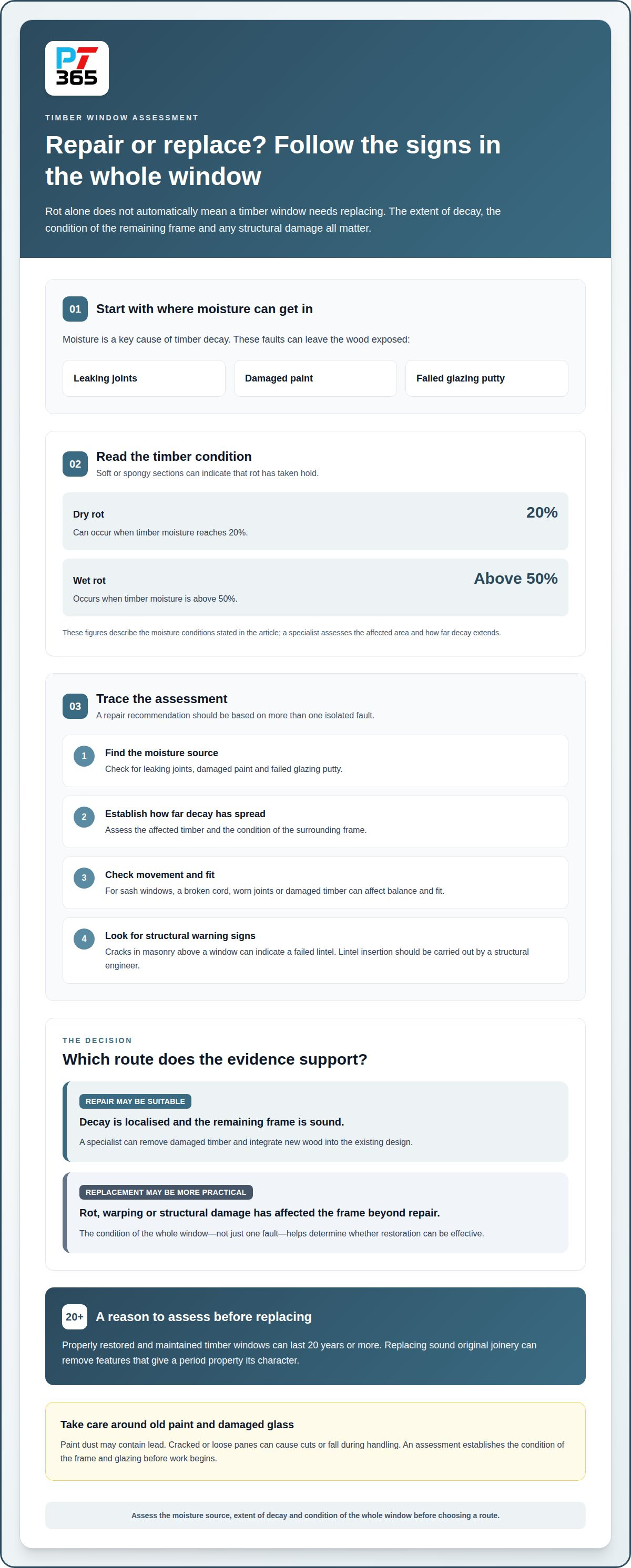
Moisture is a key cause of decay in timber frames. Leaking joints, damaged paint and failed glazing putty can let water reach the wood. Dry rot can occur when timber moisture reaches 20%; wet rot occurs above 50%. Soft or spongy sections can indicate rot has taken hold. A specialist assesses the affected area, checks how far decay extends, and identifies where moisture is entering before recommending restoration or replacement.
DIY repairs can create further risks, particularly if the work disturbs old paint or involves damaged glass. Paint dust may contain lead, while cracked or loose panes can cause cuts or fall during handling. A professional assessment establishes the condition of the frame and glazing before work begins, helping avoid injury or repairs that simply cover damage needing proper attention.
Repair is often suitable when decay is localised and the remaining frame is sound. A specialist can remove damaged timber and integrate new wood into the existing design. Replacement may be more practical when rot, warping or structural damage has affected the frame beyond repair. Cracks in masonry above a window can indicate a failed lintel; lintel insertion should be carried out by a structural engineer.
Traditional sash windows may need more than a frame repair. A broken cord can stop a sash moving correctly, while worn joints or damaged timber can affect its balance and fit. An overhaul can address related faults together, including replacing a cord and repairing affected sections. Properly restored and maintained timber windows can last 20 years or more, so the decision should consider the condition of the whole window, not one isolated fault.
Double glazing or replacement timber windows and doors may suit projects where existing frames cannot be restored effectively. However, replacing sound original joinery can remove features that give a period property its character. For a casement window, the assessment should cover the frame, opening leaf, hinges and closing points. This shows whether timber window repairs can restore reliable operation or the damage extends too far for a lasting repair.
A clear assessment compares the extent of decay, the condition of the surrounding frame and the work needed to restore safe movement. It should also explain which parts will be repaired or replaced, and how the finish will protect exposed timber. We are a trusted Property Maintenance company providing reliable, high-quality services across London and Kent, ensuring a defined scope makes your timber window repairs easier to understand.
Restoration of traditional sash windows
Traditional sash restoration can retain original joinery while addressing damaged timber, failed cords, sticking sashes and worn finishes. Common repairs include work to sash and casement frames, hinges, glazing putty and seals. The scope depends on the damage and whether glazing or painting is required.
Timber Sash and Casement Repairs
Repairs address the timber frame and moving parts that keep a sash window or casement working properly. A specialist assesses the sill, joints, opening sections, hinges and glazing before setting out the work. For example, a localised rotten section may need new timber, while a loose hinge or worn joint calls for a different repair.
Restoration should retain sound original material wherever practical. The workmanship needs to match the existing profile and leave the window opening and closing correctly. In a period home, preserving original mouldings may matter as much as repairing the damaged section.
Sticking and Painted-Shut Sashes
A sash that sticks may have swollen timber, paint layered across its edges, a damaged cord or movement obstructed by a loose bead. The repair starts by identifying what prevents it from moving. For a painted-shut sash, a specialist carefully frees the opening, then checks whether paint has concealed damage or gaps.
Simply forcing the sash can damage the timber or glazing. Once movement is restored, the sash should travel smoothly and sit properly within the frame. If a cord has failed, replacing it can restore the sash’s balance and usable movement.
Sash Window Repairs and Renovations
A renovation can combine several repairs rather than treating each symptom separately. The work may include renewing damaged timber, replacing a sash cord, easing the opening, repairing joints and preparing the surface for a protective finish. This joined-up approach helps the moving parts and frame work together.
For example, new seals won’t correct a sash that sits unevenly because of a damaged frame. A sound refurbishment considers the timber, movement and finish as one project. The final inspection should confirm that the sash opens and closes smoothly and sits securely in its frame.
Planning Sash and Casement Repairs
The work required depends on the type and extent of damage, the timber involved and whether glazing or painting is needed. A sticking sash may need freeing and adjustment, while a window with rotten sections may require timber replacement and a more involved finish.
For a casement, the condition of the hinges, frame and closing edge also shapes the repair plan. A clear written scope should distinguish frame repairs from glazing or decorating work. This helps homeowners and property managers understand what the renovation includes and which parts of the window will be addressed.
Timber windows in listed buildings and Conservation Areas
Repairs to historic windows should protect original details while addressing damage and improving efficiency. The right approach depends on the building’s designation, the window’s condition and the proposed changes.
For a listed building or a home in a conservation area, identify which features should remain before setting the repair scope. Original sash profiles, glazing bars, frame mouldings and ironmongery can all contribute to a window’s appearance. Repairing existing material differs from replacing a frame or changing its glazing. Consent may be needed for significant alterations to a listed building or a property in a conservation area. Secondary glazing can be an option where restrictions make changes to original windows unsuitable.
Existing timber windows can normally be draught-sealed and overhauled without planning permission. A specialist can assess the frame, moving parts, seals and glazing, then set out repairs that preserve the original detail. For example, a window may need an overhaul and discreet draught-proofing rather than replacement. The scope should distinguish maintenance from alterations, making the proposed work clear before it proceeds.
To find a reputable timber window repair specialist, look for relevant experience with traditional frames and a written scope describing the proposed work. A clear assessment should explain how the specialist will protect original features, deal with damaged sections and finish the repair. For example, ask the scope to identify which sections will be retained and which will be replaced.
Each property has its own conservation context, and a building’s designation is separate from the condition of its windows. A specialist should assess each frame, whether sash or casement, and record visible damage. This keeps decisions focused on the property rather than assuming the same repair suits every historic building. For multi-property projects, record each affected window separately.
Improving efficiency does not always require removing original windows. Draught-proofing can address gaps, while secondary glazing adds another layer without replacing the existing frame. If a significant alteration is proposed, account for possible consent requirements before work begins. This careful approach helps protect the building’s character and avoids treating every historic window as a standard replacement project.
Casement window repairs and alignment
A timber casement should sit squarely in its frame and close without force. If the handle feels stiff, the opening leaf catches or a gap remains along one edge, the hinges, frame or locking points may be out of alignment. A repair assessment checks each part together. Adjusting only the handle won’t correct a warped frame or a hinge fixed into rotten timber.
First, the specialist checks how the casement moves and where it meets the frame. They inspect the hinges for looseness or wear, then examine the opening edge, frame corners and closing hardware. A leaf that drops towards the handle may indicate hinge movement; uneven contact around the perimeter can indicate distortion. These observations guide the repair and help distinguish an alignment fault from wider frame damage.
Next, the specialist determines whether the hinges can be adjusted or need repair or replacement. Fixings must hold firmly in sound timber, so damaged areas may need attention before the opening leaf can be aligned. The closing points also need to engage properly. A window that shuts only when pushed hard may have a poor fit, not just a faulty handle.
Assess the fit before adding weather seals or draught-proofing. Seals work best when the casement closes evenly against them. Fitting seals to a dropped or distorted leaf can leave gaps elsewhere or make the handle harder to operate. In period properties, the repair should also respect the original frame profile and avoid unnecessary changes to visible details.
Glazing affects how the opening section sits and operates. For example, double glazing can add weight compared with older single glazing, so the hinges and fixings need to suit the window’s construction. A specialist checks the glass, glazing beads and surrounding timber, then considers whether movement or damage affects the frame’s support. Surveyors may also note cracks above a window, which can indicate a failed lintel or a need for lintel insertion. A structural engineer should carry out that structural work.
After repairs, the casement should open and close smoothly, meet the frame evenly and engage at its locking points. The finish matters too: exposed timber needs suitable protection, while paint must not obstruct moving joints or seals. A clear repair scope records which hinges, fixings, timber sections or glazing components were addressed. This gives homeowners, letting agents and property managers a practical reference if the window develops another fault.
If your casement catches, sits unevenly or won’t close securely, arrange professional help with a window repair.
We are a trusted Property Maintenance company providing reliable, high-quality services nationwide: Home Repairs
We are a trusted Property Maintenance company providing reliable, high-quality services across London and Kent. We provide Home Repairs for timber windows that stick, let in draughts or show signs of damaged wood. An assessment helps identify whether the frame, sash, casement or surrounding finish needs attention, so the repair addresses the cause rather than only the visible symptom.
Homeowners, letting agents and property managers can turn to our home repair service when a window no longer closes properly or deterioration affects its use. The work can also form part of wider property maintenance when other repairs need organising. Details about the affected window and its symptoms help define a practical scope.
Contact We are a trusted Property Maintenance company providing reliable, high-quality services across London and Kent to discuss the timber window repairs your property needs.
Plan the next step for your windows
A useful next step is to decide what outcome matters most for your property. You may want to keep original joinery, improve how a window operates or address a concern raised during a property inspection. For landlords and managing agents, setting priorities for each affected window can help organise future maintenance without treating every issue as the same.
Before arranging work, clarify the intended scope and finish. A focused discussion can establish which windows need attention, what problems affect their use and whether the work should form part of wider property upkeep. This gives everyone a shared understanding of the desired result. Well-planned timber window repairs can then be considered in the context of the property, rather than as an isolated task.
For support with home repairs and ongoing property maintenance, discuss your window repair with Plumbfix 365. A clear conversation is a practical way to move towards a suitable plan for your home or managed property.
Frequently Asked Questions
How can you tell if a timber window needs repair or replacement?
Repair is usually considered when damage is limited and the surrounding frame remains sound; replacement may suit severe structural damage, extensive rot or persistent warping. Assess how the whole window performs, not just one soft patch. For example, a sound frame with a localised damaged sill may be repairable, while decay affecting joints and the opening section can make reliable restoration more difficult.
How do professionals repair rotten timber window frames step by step?
Professionals first identify the decay and its moisture source, then assess how far it extends into the frame. They remove rotten or damp-damaged timber and fit new timber to match the original window design. Next, they prepare and finish the repaired area, addressing the cause of water entry where possible. They also check that the opening parts still move and close correctly.
Can timber windows be repaired with epoxy resin or replacement timber sections?
The repair method depends on the location and extent of the damage. A specialist may use a suitable resin repair for limited timber damage, or remove decayed wood and integrate a replacement timber section. For example, a small damaged area away from a joint differs from rot affecting a sill or frame corner. The repair needs sound surrounding timber as a stable base.
How often should timber windows be painted and maintained?
There isn’t one suitable painting interval for every timber window. Exposure to rain and sunlight, the condition of the existing coating and the window’s location all affect when maintenance is needed. Regular inspections help identify cracked paint, open joints or water entry before damage spreads. A south-facing casement exposed to the weather may need attention sooner than a sheltered window.
Are timber window repairs permitted in listed buildings or conservation areas in the UK?
Routine draught-sealing and overhauls of existing timber windows in listed buildings can normally be undertaken without planning permission. However, consent may be needed for significant alterations to a listed building or a property in a conservation area. The distinction between repairing existing features and changing them matters. Confirm the property’s designation and proposed work before altering original frames or glazing.
How do timber window repairs compare with replacement for lifespan and energy efficiency?
The right option depends on the frame’s condition, the property’s needs and the intended result. Restoration preserves existing joinery where it remains sound, while replacement changes the window and may alter the property’s appearance. Properly restored and maintained timber windows can last 20 years or more. Draught-proofing, double-glazing upgrades or secondary glazing can improve insulation, depending on the window and building.
Comments