

Wallpapering Commercial Properties: How to Choose and Maintain Wallcoverings
Paint isn’t automatically the most practical finish for a busy commercial wall. Wallpapering commercial properties can involve choosing a type-2 wallcovering, which is more durable and scratch-resistant than standard residential wallpaper. Vinyl is a popular option for commercial spaces because it’s durable and straightforward to maintain.
Before choosing a finish for wallpapering commercial properties, weigh appearance against durability, cleaning and installation disruption. This guide compares wallpaper with paint, explains how to choose materials and designs, and outlines professional installation for offices, hotels, restaurants and healthcare spaces. It also covers routine care and how temperature, ventilation and wall preparation affect the result.
Table of Contents
1. Durability and maintenance in high-traffic spaces
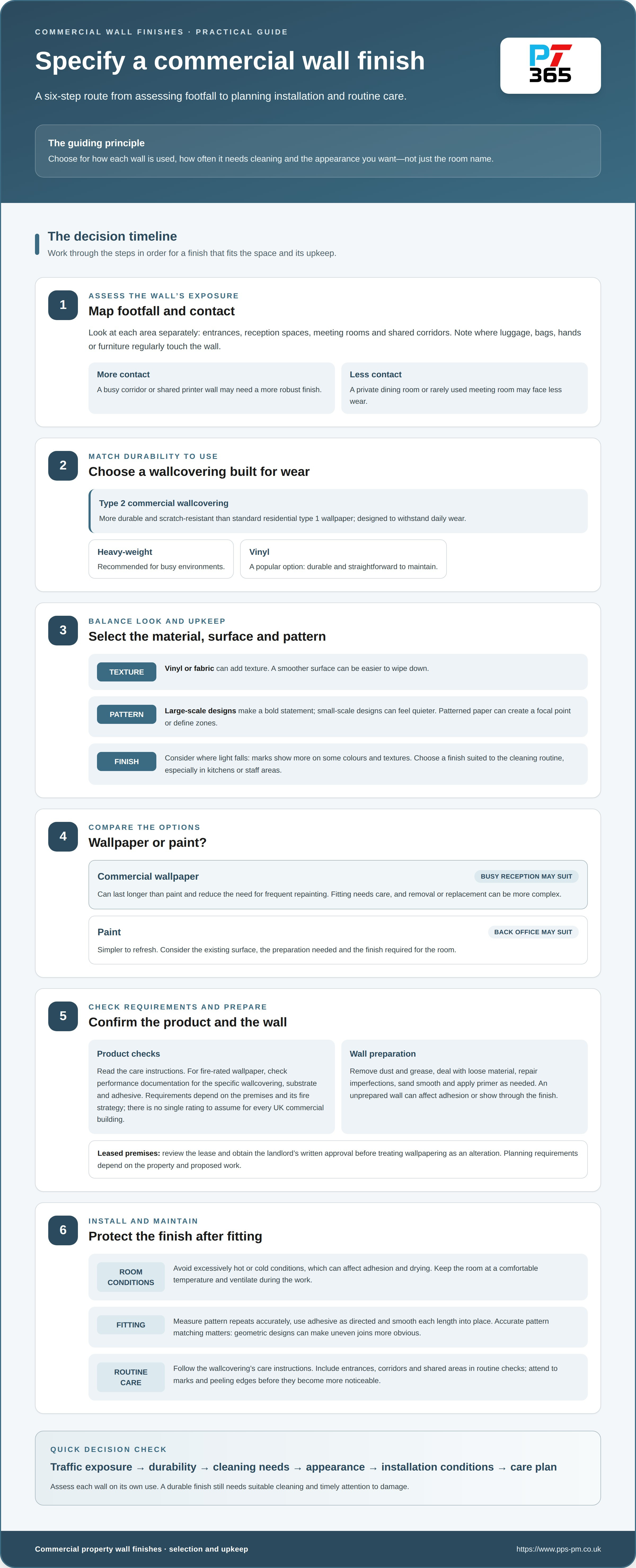
Footfall affects how quickly wall finishes show scuffs, scratches and marks. A busy corridor faces different wear from a quiet office. Assess each area separately, including entrances, reception areas, meeting rooms and shared corridors. Choose finishes for high-contact walls with regular cleaning in mind.
Commercial wallpaper is classified as type-2, while standard residential wallpaper is type-1. Type-2 wallcoverings are more durable and scratch-resistant than regular residential wallpaper. They’re designed to withstand daily wear, making them a practical option for commercial settings where walls are used heavily. Heavy-weight wallpaper is also recommended for busy environments because it can better withstand wear in high-traffic areas.
Material matters. Vinyl wallpaper is a popular choice for commercial spaces because it combines durability with straightforward maintenance. It can suit areas where hands, bags or furniture may brush against the wall, such as a hotel corridor or a busy reception. Check the wallcovering’s care instructions before cleaning, as the appropriate method depends on its surface and finish.
Choose a finish based on exposure, not just the room name. A restaurant waiting area may see frequent contact, while a private dining room may see less traffic. In an office, the wall behind a shared printer may need a more robust finish than one in a rarely used meeting room. Match the material to how each space is actually used.
Maintenance also depends on the pattern and finish. Marks can be more noticeable on some colours and textures than others, so consider where light falls and where people pass. Large-scale patterns make a bold statement, while small-scale designs can create a quieter effect. A carefully selected design can help busy spaces look considered even as they experience regular use.
In a shared corridor, identify whether luggage, bags or furniture regularly touch the walls, then factor that exposure into your finish choice.
For property managers, the practical first step is to map foot traffic, then choose suitable wallcoverings and a care routine. A durable finish can help manage everyday scuffs, but still needs appropriate cleaning and timely attention to damage. Include entrances, corridors and shared areas in routine checks, and address peeling edges or marks before they become more noticeable.
2. Wallpaper vs Painting: Which One Should You Choose For Commercial Property?
Choose according to the wall’s use, the look you want and maintenance needs. Commercial wallpaper can last longer than paint and reduce the need for frequent repainting, while paint is simpler to refresh. A durable wallcovering may suit a busy reception; paint may be practical for a back office.
Material and finish affect both appearance and performance. Vinyl and fabric can add texture, while patterned paper can create a focal point or define zones. Consider expected wear: texture may enhance a feature wall, but a smoother surface can be easier to wipe down. In kitchens or staff areas, choose a finish suited to the cleaning routine.
For durable, washable or fire-rated wallpaper, match the material and finish to the wall’s traffic, cleaning needs and building use. Check care instructions and fire-performance documentation for the specific wallcovering, substrate and adhesive. Required performance depends on the premises and its fire strategy.
There is no single fire rating to assume for every UK commercial building. Fire-performance evidence must relate to the proposed product and installation, and meet the requirements that apply to the building.
For leased premises, review the lease and obtain the landlord’s written approval before treating wallpapering as an alteration. Planning requirements depend on the property and proposed work, so wallpaper alone does not determine whether consent is needed.
Professional installation uses materials and tools suited to the chosen wallcovering. A decorator may use a pasting table, plumb line, smoothing brush, sharp trimming knife and seam roller, alongside adhesive appropriate for the product and wall. They prepare the surface, measure pattern repeats, apply adhesive as directed and smooth each length into place. Accurate matching matters: geometric designs can make uneven joins more obvious than plain finishes.
Recycled content and end-of-life options vary by product. If sustainability matters, compare the manufacturer’s information on recycled material and disposal instead of assuming every paper-based wallcovering is recyclable. Include the backing and adhesive in your assessment, as the complete installation affects removal and waste handling.
For painting, a professional considers the existing surface, preparation and finish needed for the room. Wallpaper may reduce repainting frequency, but requires careful fitting and can be more complex to remove or replace. Match the choice to the property’s upkeep plan and the appearance required in each space.
3. Room temperature and ventilation during installation
Room conditions affect adhesive performance and drying during wallpaper installation. Avoid excessively hot or cold temperatures, which can affect adhesion and drying time. Keep the room at a comfortable temperature and ventilate it during the work. For a commercial office, this means planning the installation around suitable indoor conditions, not just staff availability.
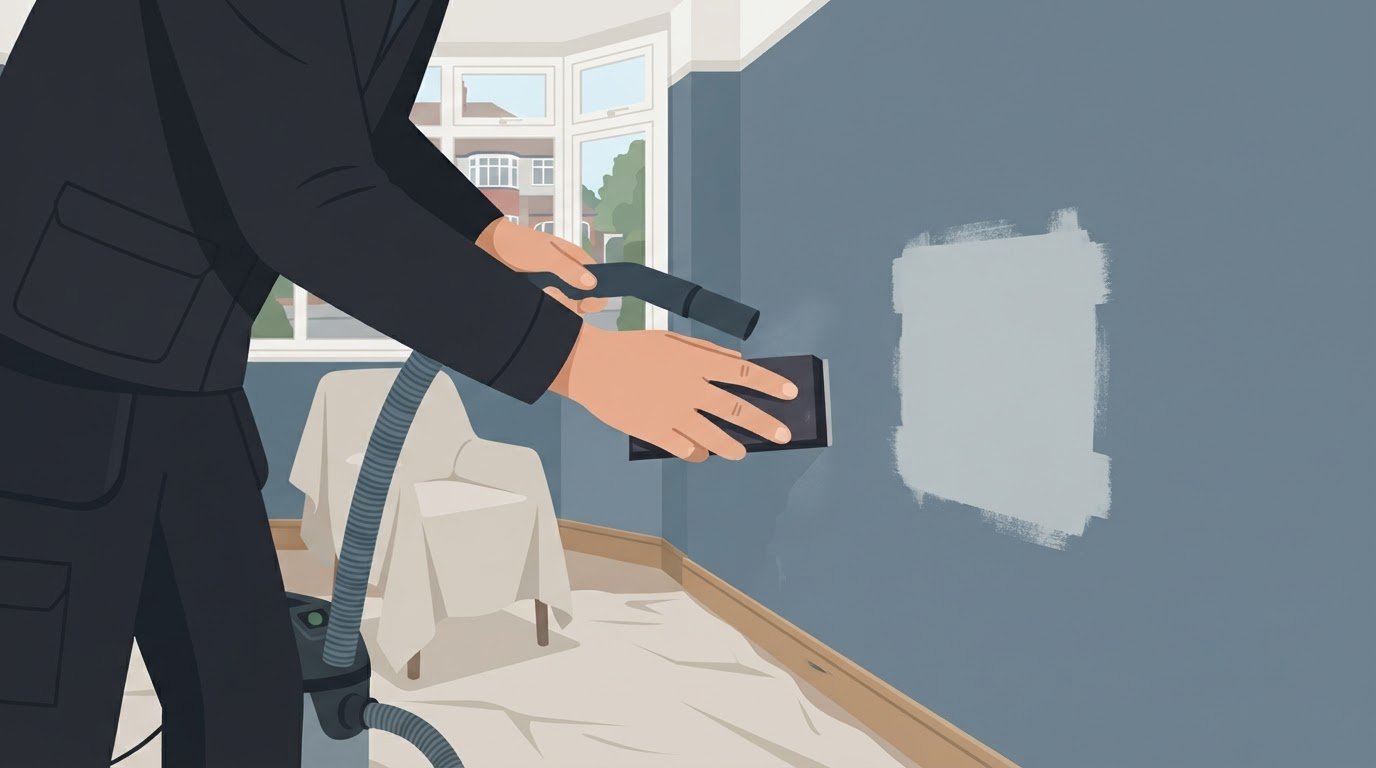
Before hanging begins, a decorator assesses the wall. Dust, grease, loose material and uneven areas can interfere with adhesion or show through the finished covering. Preparation typically involves cleaning with mild detergent and water, repairing imperfections, sanding the surface smooth and applying primer. The wall needs to be ready before adhesive and wallpaper go on.
Preparation depends on the room and existing finish. A previously painted reception wall may need cleaning and repairs before priming. In a bathroom, the decorator considers the surface and room conditions when selecting suitable materials. Address damp or damaged areas before covering them, because wallpaper cannot fix an underlying surface problem.
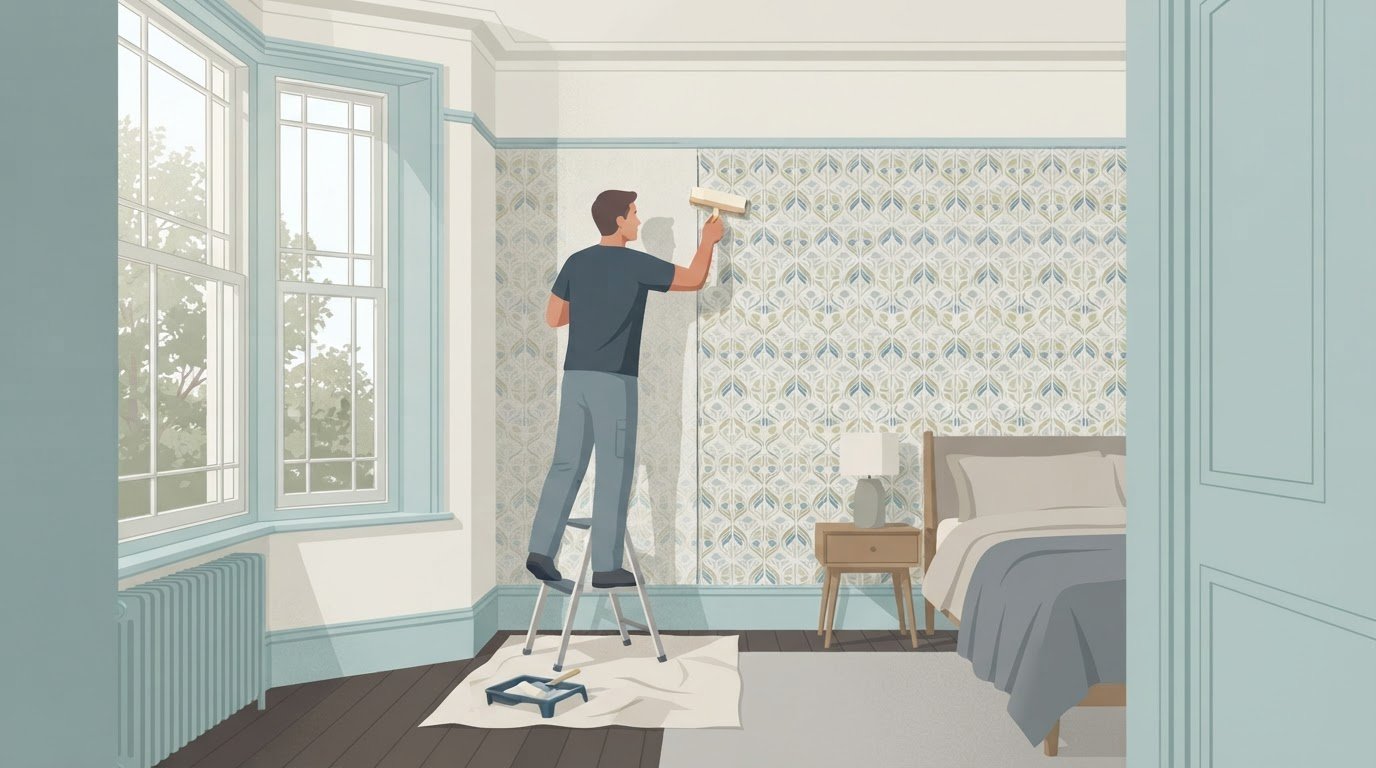
For wallpapering commercial properties, professionals also plan around the design. They measure each wall, account for pattern repeats and allow extra material for trimming and matching. A large geometric pattern, for example, needs careful alignment at the joins. The decorator applies adhesive according to the wallpaper type, positions each length and smooths it to limit bubbles and creases.
Residential wallpaper installation follows the same core principles, though room layout affects the approach. In a bedroom, furniture and fittings may restrict access to corners and edges. A professional prepares the surface, plans the first vertical line, then hangs and trims each length with the pattern aligned. In a commercial meeting room, the process must also account for access, furnishings and disruption.
Installation time depends on wall area, surface condition, design complexity and drying requirements. A clean, even wall with a straightforward pattern needs less preparation than a damaged surface or a design requiring precise matching. Wallpaper installation may be quicker than painting, but drying and adhesive instructions still affect the schedule. No single duration suits every property.
Arrange access before work starts. Property managers can clear rooms and agree which areas will remain available, while the decorator plans the sequence around site use. Maintain ventilation without creating excessively hot or cold conditions. This supports the adhesive process and helps the finished covering settle properly.
Labour requirements depend on preparation, wall height, layout and pattern matching. Rather than treating wallpapering as a simple surface change, a professional accounts for each stage, from repairs and priming to final trimming. This assessment helps set a realistic work plan and reduce avoidable interruptions.
4. Commercial applications including hotels, restaurants, offices and healthcare
Start with the room’s purpose, size, natural light and existing décor. A hotel reception may suit a bold feature wall, while a compact office may benefit from a smaller-scale pattern. Wallpaper colours and designs can highlight key areas or define zones without building walls. Choose a finish that supports the room’s function as well as its appearance.
In a restaurant, a patterned wall behind seating can create a focal point. A boutique hotel might use a distinctive design in its lobby and quieter patterns in guest corridors. Large-scale prints make a stronger visual statement; smaller-scale patterns tend to feel subtler. Consider the furniture, lighting and view from the entrance before deciding where each design will have the most impact.
Offices can use contrasting wallcoverings to distinguish reception areas, meeting rooms and shared workspaces. A textured backdrop behind a reception desk, for example, can define the visitor area, while a restrained pattern keeps a meeting room visually calm. In healthcare settings, consider the space’s purpose, existing décor and lighting. Choose a design that suits the room, not just its appearance.
Retail displays need a considered backdrop. A strong colour or pattern can draw attention to products, while a quieter design lets merchandise stand out. Plan the wallcovering around display units, signage and sightlines so the finished layout supports the products rather than competing with them. Wallpaper can also add visual interest to furniture or other surfaces when the material is suitable.
Installation starts with a prepared surface and a clear layout. The decorator checks the wall, measures the lengths and plans pattern matching before applying adhesive. Depending on the wallcovering instructions, paste goes on the paper or directly onto the wall. Each length is positioned against the planned vertical line, smoothed into place and trimmed at the edges. Accurate joins are especially important with bold geometric prints.
Different designs can work together when they share a colour or scale. A restaurant could pair a patterned feature wall with painted surrounding walls, while an office might combine a subtle wallcovering with another texture. Plan transitions at corners, doorways and furniture edges. This helps the scheme feel deliberate, whether wallpaper covers one focal area or several connected spaces.
Before choosing a design, consider how natural light changes its appearance during the day and how people see the room from entrances and seating. A pale finish can look different beside dark furniture than in a light interior. Professional planning brings together colour, pattern, surface and room use, helping the wallcovering enhance the space without disrupting its practical layout.
5. Commercial wallpaper services
Commercial wallpapering is a planned decorating project, not simply hanging lengths across a wall. A professional assesses the site, wall surfaces, access, furnishings and intended finish before setting out the work. In a hotel reception, a textured feature wall can add character; in an office, a restrained design may better suit shared spaces. The scope should connect the chosen finish to how each room functions.
Assess a commercial decorator’s experience and how clearly they explain the work sequence. A useful project scope identifies the areas included, proposed wallcovering, preparation requirements and approach to pattern alignment. It should also set out access arrangements and care guidance, so property managers understand what the work involves.
Accurate measurements help the installer plan each wall and allow extra material for trimming and pattern matching. Repeating designs need particular care: a poorly chosen starting point can leave joins visibly out of line. Doors, windows, corners, fitted units and fixed furniture all affect where lengths begin and end, so account for them in the layout.
Before hanging starts, the professional identifies defects that could affect adhesion or show through the finish. The agreed scope should explain how cleaning, repairs, sanding and priming fit into preparation. A smooth, sound surface gives the adhesive and wallcovering a suitable base. Address damage to the wall before installation proceeds.
Site coordination matters in buildings that remain in use. A hotel corridor, restaurant dining area and office reception each have different access needs. The installer plans room access, furniture movement and the order of work around the property’s daily use. Clear arrangements help protect furnishings and keep work areas organised whilst decorating proceeds.
At handover, care guidance should match the wallcovering. Vinyl, fabric and other finishes have different cleaning requirements, so follow the relevant product instructions. A practical maintenance plan can flag areas to monitor, such as corridor corners or walls beside reception seating. Staff can then remove marks using methods suited to the surface.
Installation planning accounts for pattern complexity, surface preparation and drying conditions. These factors shape the work sequence and help managers organise room access. A professional can explain which areas should remain clear, how adjoining spaces will be protected and when each section is ready for normal use.
Before work begins, confirm the agreed design, rooms covered and access arrangements. Keep wallcovering details and care instructions with the property’s maintenance records. This gives managers a useful reference for future upkeep and helps maintain a consistent finish throughout the building.
We are a trusted Property Maintenance company providing reliable, high-quality services across London and Kent
We are a trusted Property Maintenance company providing reliable, high-quality services across London and Kent, supporting property owners and managers with decorating and wider upkeep. Painters and decorators can help plan wallcoverings, surface preparation and how the finished space fits into the property’s maintenance needs. This is useful when a commercial refresh also involves repairs or work across a let property.
Start by identifying the rooms, wall condition and finish you want. Property Maintenance Services, Home Repairs and Handyman support can help organise related work alongside decorating.
For help planning property maintenance or decorating, please contact We are a trusted Property Maintenance company providing reliable, high-quality services across London and Kent.
Plan the next stage of your property refresh
Make the wall finish part of a wider plan for how each space will be used. For a reception, coordinate the feature wall with signage and furniture; for a shared corridor, prioritise a finish suited to regular contact. A clear brief aligns the desired look with access, preparation and the building’s day-to-day needs.
Before wallpapering commercial properties, decide which areas need visual impact and which need straightforward upkeep. Include those priorities in the decorating plan, alongside any repairs or maintenance that could affect the finished walls. This gives the project a practical direction without treating every room alike.
We are a trusted Property Maintenance company providing reliable, high-quality services across London and Kent, including property maintenance support and decorating. To discuss your project, contact We are a trusted Property Maintenance company providing reliable, high-quality services across London and Kent. A clear plan is a positive first step towards your refresh.
Frequently Asked Questions
How does it work?
A commercial wallpaper project starts with a site assessment and clear scope of work. The decorator considers wall condition, access, furnishings, design requirements and how the premises will operate during installation. For sites in Dartford, Bromley, Maidstone, Medway, Bexleyheath, Sidcup, Orpington, Gravesend, Northfleet, London and Kent, these details help shape the work sequence and reduce disruption to staff, tenants or visitors.
Wallpaper vs Painting: Which One Should You Choose For Commercial Property?
Choose wallpaper for a patterned or textured finish, and paint when easy colour changes are the priority. A commercial corridor with a strong design brief may suit wallcovering, while a room needing frequent changes may be better suited to paint. Consider the existing surface, cleaning routine, desired appearance and future maintenance plan. The right option is the one that fits how that specific room is used.
What types of commercial wallpaper are suitable for offices, hotels and retail spaces?
Type-2 commercial wallcoverings are designed for commercial use, and vinyl is a popular option for its durability and ease of maintenance. Offices may suit restrained patterns that keep work areas visually calm; a hotel reception could use a bolder feature design. Retail backdrops should support the display, either drawing attention to products or allowing them to stand out.
What should you consider when choosing commercial wallpaper?
Consider the wall area, existing surface and chosen wallcovering. Pattern repeats affect measuring and matching, while furniture, access and room use influence the installation sequence. Preparation, including repairs and priming, also changes what the project involves. These factors help define the work required for a specific property.
How do commercial wallpaper installers prepare walls and install wallpaper?
Installers prepare the surface by cleaning it, repairing imperfections, sanding it smooth and applying primer where needed. They measure the walls, plan pattern alignment and use adhesive suited to the wallcovering and surface. Each length is positioned, smoothed and trimmed. In a hotel corridor, careful planning around doors and corners helps keep repeating patterns aligned.
How long does commercial wallpaper installation take, and can it be done outside business hours?
There is no fixed duration for every project: wall area, preparation, design complexity and drying conditions affect the schedule. Out-of-hours and weekend work is available for commercial clients and can help limit disruption to trading or office activity. The work plan should account for room access, furniture and when each area can safely return to use.
What are the risks of wallpapering over damp, damaged or uneven walls?
Wallpapering over a damp or damaged surface can hide a problem rather than resolve it. Uneven areas may show through the finish, and poor surface conditions can affect how the wallcovering sits. The decorator should assess the wall and address visible defects before installation. For example, loose plaster needs attention before achieving a smooth finish.

Comments